

Maddy summaryThis bill requires the Director of Homeland Security Investigations to produce annual, publicly accessible reports assessing threats from transnational criminal organizations (TCOs) to the U.S. Within 180 days of enactment and each year after, the report must detail TCO structures, drug smuggling trends (including seizures and drug types like opioids), gang-TCO collaborations, money laundering, and predictive trends for drug trafficking. The reports must be submitted to the House and Senate Homeland Security and Judiciary committees, with unclassified summaries posted online. The bill directly affects DHS, CBP, Coast Guard, and other federal agencies responsible for compiling the assessments, and informs congressional oversight of TCO threats.
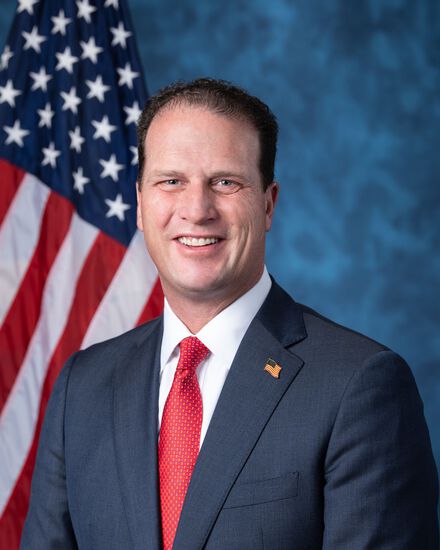
Rep. August Pfluger
Sponsored bills
Maddy summaryHRES 720 designates the week of September 24-30, 2023 (and annually thereafter) as "Gold Star Families Remembrance Week" to honor families who have lost loved ones in military service. It specifically recognizes the sacrifices of families of fallen service members and veterans, and encourages Americans to observe the week through community service and celebrating the lives of those who died protecting the nation. This resolution is procedural and symbolic, with no new funding, regulations, or policy changes - only a formal designation to honor these families. It directly affects Gold Star families (those with members who died in military service) and the broader public through its call for observance.
Maddy summaryHRES 684 is a symbolic congressional resolution passed by the U.S. House of Representatives on September 14, 2023, condemning New Mexico Governor Michelle Lujan Grisham's emergency order that temporarily suspended open and concealed carry firearm rights for 30 days. The resolution asserts the order violated the Second Amendment, citing Supreme Court precedents (Heller, McDonald, Bruen) and noting a federal judge had already blocked the order's firearm restrictions. It does not change any laws or impose legal consequences - it is solely a formal expression of disapproval from Congress. The resolution directly addresses the Governor's actions but has no effect on New Mexico's laws or citizens' rights.
Maddy summaryThis bill prohibits federal funding for colleges and universities that require students or staff to get a COVID-19 vaccine to enroll, work, or access services. It directly affects institutions of higher education receiving federal funds, such as those participating in student aid programs. The key provision blocks all federal financial support if an institution enforces such vaccine requirements as a condition of enrollment, employment, or benefits. The law does not ban vaccine mandates outright but ties federal funding to compliance with this prohibition.
Maddy summaryHR 5596 (Put Our Neighbors to Work Act of 2023) requires military construction contractors to prioritize hiring local workers by giving preference to entities hiring at least 51% of employees who live near the project site (within a state or 60-mile radius). It also creates a small business incentive: subcontract value is doubled for contracts awarded to small businesses located near the work site, improving their compliance with federal procurement goals. The bill mandates public transparency by requiring contractors to publish subcontract details online and report monthly to Congress on covered military construction contracts. These provisions apply to military construction, family housing, and facilities projects across all U.S. states, territories, and the District of Columbia.
Maddy summaryHR 5577, the FACE Act Repeal Act of 2023, would repeal a federal law (Section 248 of Title 18, U.S. Code) that made it a crime to block access to abortion clinics or threaten clinic staff. This repeal would remove criminal penalties for obstructing access to clinics, affecting abortion providers, clinic staff, and individuals attempting to access or block clinic entrances. The bill specifically targets the repeal of this prohibition, applying to prosecutions pending or initiated after the law's enactment. It does not change other abortion-related laws or create new policies.
Maddy summaryHR 1435, the Preserving Choice in Vehicle Purchases Act, amends the Clean Air Act to restrict states from implementing vehicle emissions rules that limit the sale or use of new gasoline-powered cars. It directly affects states with stricter emissions standards (like California) by adding a new definition that blocks state rules "directly or indirectly" limiting internal combustion engine vehicles as defined in federal regulations as of January 1, 2023. The bill requires the EPA to revoke existing state emissions waivers granted between January 2022 and the bill’s enactment if they don’t comply with this new definition. This creates a concrete federal standard preventing states from advancing policies that could reduce demand for conventional vehicles.
Maddy summaryHR 5495, the Political BIAS Emails Act of 2023, prohibits email providers from automatically labeling political campaign emails as spam without a user’s explicit action. It requires email providers to publish quarterly transparency reports showing spam rates for Republican and Democratic campaign emails separately, including how often algorithms flagged them without user input. Political campaigns can request detailed reports about their own email delivery rates and best practices for reaching inboxes, with limits on how frequently they can request this data. The Federal Trade Commission will enforce these rules as unfair or deceptive practices under existing law. The bill directly affects major email services and political campaigns, aiming to increase transparency in how political communications are filtered.
Maddy summaryHR 5507 prohibits the use of federal funds to establish a Disinformation Governance Board within the Department of Homeland Security. The bill directly affects the Secretary of Homeland Security by blocking any funding from being used for this specific board's creation. It is a straightforward funding restriction with no additional policy mechanisms or provisions beyond preventing the board's establishment.
Maddy summaryHR 5508, the "Respect for the Second Amendment Act," prohibits state and local governments from enforcing laws that restrict firearm ownership or use unless those laws align with the U.S. historical tradition of firearm regulation. The bill directly affects state and local laws governing gun possession, carrying, and ownership, requiring courts to block any regulation that fails this historical test. Key mechanisms include allowing the Attorney General or individuals harmed by such laws to sue for injunctions, with prevailing plaintiffs entitled to legal fees. The bill does not preempt stronger state gun rights protections but focuses on challenging state laws deemed inconsistent with the Second Amendment as interpreted by Supreme Court rulings like *Heller* and *Bruen*.