

Maddy summaryHR 8902, the FAFSA Act of 2024, terminates federal student aid eligibility for individuals convicted of assault against police officers or specific riot-related offenses (including inciting, organizing, or participating in riots involving violence). It requires affected individuals to repay any grants received under Title IV of the Higher Education Act, converting those grants into unsubsidized loans that accrue interest from the grant award date. These converted loans are ineligible for any forgiveness, cancellation, or repayment assistance programs under federal law. The bill applies to aid received for programs of study ongoing at the time of the conviction.
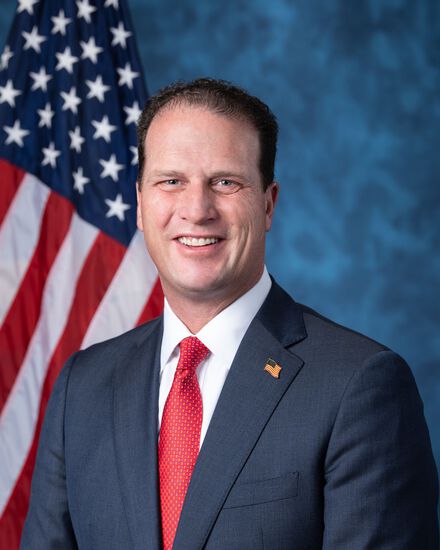
Rep. August Pfluger
Sponsored bills
Maddy summaryHRES 901 is a U.S. House resolution expressing support for democracy and human rights in Pakistan. It calls on the U.S. President and Secretary of State to collaborate with Pakistan to uphold democratic processes, human rights, and the rule of law. The resolution urges Pakistan to protect freedoms of speech, assembly, and press, and to avoid arbitrary detention or suppression of political participation. It also condemns efforts to undermine Pakistan's electoral or judicial systems, including harassment of citizens during protests or interference with elections.
Maddy summaryHR 8834, the Safeguarding Our Supply Chains Act, creates a Supply Chain Crime Coordination Center within Homeland Security to collect and analyze data on supply chain fraud and theft hotspots, including high-risk transportation routes and retail areas. It also establishes a multi-agency Task Force (including FBI, ICE, state/local law enforcement, and private sector partners) to coordinate efforts targeting organized crime groups stealing cargo, disrupting supply chains, and committing fraud. The Task Force will share intelligence, track theft trends, and work directly with affected businesses to address threats. The bill authorizes $100 million over five years for implementation and requires annual reports to Congress on the Task Force’s effectiveness in reducing these crimes. This law directly affects federal, state, and local law enforcement agencies, transportation and retail businesses, and supply chain operators.
Maddy summaryHR 8821, the HOPE with Fertility Services Act, requires group health plans and health insurance issuers that cover obstetrical services to provide comprehensive coverage for infertility treatments and fertility preservation when medical treatments (like cancer therapy) cause or risk iatrogenic infertility. It defines infertility broadly and mandates coverage for procedures like IVF, egg freezing, and ovulation induction, while allowing standard cost-sharing but prohibiting insurers from discouraging or penalizing these services. Insurers must annually submit analyses of their coverage rules for these treatments to the Secretary of Labor for 5 years after enactment, with potential civil penalties for noncompliance. The law applies to all applicable plans starting January 1, 2026.
Maddy summaryThis bill (HJRES 169) is a congressional disapproval resolution targeting a U.S. Fish and Wildlife Service rule that would have listed six freshwater mussels as endangered and one as threatened, with critical habitat protections. It directly aims to block the rule's implementation, preventing federal protections for species like the Guadalupe Fatmucket and Texas Fawnsfoot. The resolution would nullify the rule (published June 4, 2024) under a specific legal process, meaning the listed mussels would not receive the designated endangered or threatened status and habitat protections. The bill does not create new protections but seeks to halt an existing regulatory action.
Maddy summaryThis bill rescinds unspent funds from specific federal programs. It targets leftover money from pandemic relief (like the CARES Act and American Rescue Plan) and certain infrastructure initiatives (including education stabilization funds and transportation programs like the Congestion Mitigation Program). The rescission is limited to amounts already allocated for Israel, Ukraine, and Indo-Pacific security supplements under recent appropriations. Unspent funds must be returned to the Treasury, with no new spending created.
Maddy summaryHR 8770, the Cybersecurity Clinics Grant Program Act, establishes a federal grant program to fund cybersecurity education at eligible institutions including junior/community colleges, HBCUs, HSIs, and other minority-serving colleges. The program requires grantees to develop hands-on workshops for students and communities, create practical cybersecurity curricula, and build student career pathways into the cybersecurity workforce. It directly supports under-resourced organizations like small businesses, local governments, and critical infrastructure providers by helping them improve their cyber defenses. The grant program will be administered by CISA and FEMA, with annual reports tracking fund use and graduate workforce placements.
Maddy summaryThis concurrent resolution (HCONRES 113) is a symbolic congressional tribute honoring former President George H.W. Bush on the occasion of his 100th birthday. It recognizes his life, public service, and legacy without creating any new laws or affecting specific individuals or groups. The resolution formally acknowledges his career achievements, including his military service, presidency, and contributions to policy like the Americans with Disabilities Act, while expressing Congress's gratitude to him and his family. As a commemorative resolution, it has no binding effect or policy impact.
Maddy summaryThe NEST Act (HR 8715) creates a federal pilot program to provide newborn supply kits to mothers in underserved communities. The kits, containing essentials like diapers, postpartum supplies, blood pressure monitors, and health resources, are distributed through grants to community organizations or hospitals. Priority goes to mothers in areas with limited maternal care access (e.g., rural regions or high-mortality "Delta" communities) and those earning under 185% of the poverty line. The program, funded at $5 million annually through 2029, requires annual reports tracking distribution demographics and health outcomes to Congress.
Maddy summaryHR 5012 (SHINE for Autumn Act of 2023) authorizes federal funding to improve stillbirth research and data collection. It provides $5 million annually for states to collect standardized stillbirth data (including risk factors) while protecting privacy, $1 million annually for developing public educational materials and data collection guidelines, and $3 million annually for medical fellowships training pathologists in perinatal autopsy and stillbirth research. The bill directly affects state health departments, medical professionals (like obstetricians and pathologists), and families who experience stillbirth by improving data quality for future research. It requires federal reports on guidelines and program effectiveness within five years but does not provide direct medical care or financial assistance to families.