

Maddy summaryHR 5713, the Homeland Security Fentanyl Enforcement Act, authorizes Homeland Security Investigations (HSI) agents and designated state/local officers to enforce drug laws related to fentanyl trafficking under the Controlled Substances Act for five years. It requires the Government Accountability Office (GAO) to review and report on coordination between the Drug Enforcement Administration (DEA) and HSI in drug investigations within 18 months, including whether investigations followed established coordination policies. The bill mandates the Homeland Security Secretary and Attorney General to address any coordination failures found in the GAO report, prioritizing existing interagency task forces. This bill focuses on improving interagency coordination to combat fentanyl smuggling by transnational criminal organizations, without altering DEA's core authorities or creating new drug penalties.
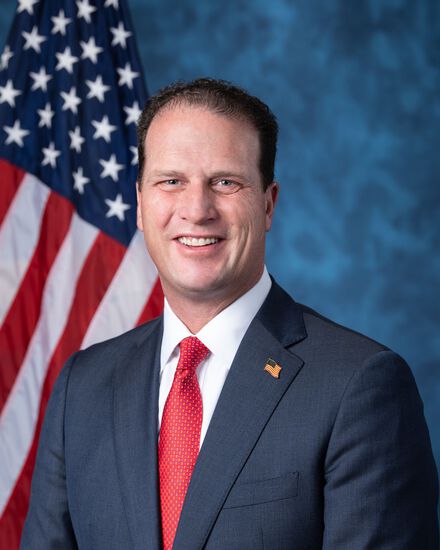
Rep. August Pfluger
Sponsored bills
Maddy summaryThe Maintaining Investments in New Innovation Act (HR 5547) extends the exclusivity period for certain advanced drugs from 7 to 11 years. It defines an "advanced drug product" as a drug using genetically targeted technology to change how genes work, such as drugs that suppress or activate gene function. The bill amends the Social Security Act to update the definition of "qualifying single source drug" to include these advanced therapies with the longer exclusivity period. This change directly affects drug manufacturers developing such advanced therapies and influences Medicare's drug coverage rules by delaying generic competition for these specific treatments.
Maddy summaryHR 5336 blocks the U.S. Department of Health and Human Services from finalizing or implementing a specific Centers for Medicare & Medicaid Services (CMS) rule. This rule, proposed in April 2023, would have changed how the government determines if an individual is "lawfully present" in the U.S. for eligibility in health insurance programs like Medicaid and the Marketplace. The bill directly prevents this rule from taking effect, meaning it would stop changes to eligibility rules affecting immigrants seeking health coverage through these programs. The key mechanism is a simple prohibition on finalizing the specific rule (88 Fed. Reg. 25313-25335) or any substantially similar rule.
Maddy summaryThe Preserving Access to Home Health Act of 2023 repeals a 2018 payment adjustment for Medicare home health agencies, restoring prior payment rates for 2024 and subsequent years. It requires the Medicare Payment Advisory Commission (MedPAC) to analyze how home health agencies' financial performance affects access to care, including reviewing spending and utilization data across Medicare, Medicaid, and other payers. Starting in 2025, the bill mandates home health agencies to report detailed data on visit volumes and payments by payer source (Medicare, Medicaid, private insurers) through updated cost reports. This data will help MedPAC assess payment policy impacts on access to home health services for Medicare beneficiaries.
Maddy summaryThis bill creates an exemption for Medicare Advantage plan physicians who had at least 90% of their prior authorization requests approved for specific services in the previous year. These doctors would be exempt from needing pre-approval for those same services in subsequent plan years, reducing administrative delays for patients. The exemption continues until revoked (based on updated approval rates) or the physician opts out. It also requires plans to allow providers to discuss treatment plans with a qualifying physician during the authorization process.
Maddy summaryThis bill prohibits Medicare from paying for certain custom-fitted or custom-fabricated orthotic and prosthetic devices delivered via "drop shipment" (direct shipping without in-person training from a qualified provider). It directly affects Medicare beneficiaries who need these devices, ensuring they receive necessary in-person fitting and training. The bill also expands which healthcare professionals (including physical therapists, occupational therapists, orthotists, and prosthetists) can prescribe these devices and updates definitions to clarify terms like "orthoses" and "prostheses." Final regulations implementing these changes must be issued within one year of the bill's enactment.
Maddy summaryThis bill requires Medicare to cover genetic counseling services provided by licensed genetic counselors at 85% of the physician payment rate. It defines "genetic counselor" as a state-licensed professional (or meeting federal criteria in non-licensing states) and mandates a new billing modifier for these services starting January 1, 2024. Medicare beneficiaries seeking genetic counseling would gain expanded access to these services under this coverage. The policy change applies to services furnished on or after the effective date, with implementation via interim rule.
Maddy summaryHR 3343 requires the Commerce Department to create a system tracking permit applications for installing broadband equipment on federal lands. Within 180 days, the Assistant Secretary must submit a plan detailing how agencies will monitor each application's status and reduce delays. This directly affects telecom companies seeking land permits and federal agencies managing public lands like national forests and Bureau of Land Management areas.
Maddy summaryHR 3033, the Solidify Iran Sanctions Act of 2023, repeals the expiration date (sunset) from the 1996 Iran Sanctions Act. This permanently maintains existing U.S. sanctions targeting Iran's weapons programs, ballistic missile development, and support for terrorism. The bill directly affects Iran's government and entities involved in these activities by ensuring sanctions remain in effect without needing periodic renewal. It does not impose new sanctions but preserves current policy by removing the automatic expiration provision.
Maddy summaryThe Border Reinforcement Act of 2023 requires the immediate resumption of border wall construction along the US-Mexico border using previously allocated funds, with annual goals to complete 200 miles of wall until operational control is achieved. It mandates a comprehensive 5-year technology investment plan for border security systems, including surveillance and detection technology, and sets staffing requirements for U.S. Border Patrol, including a target of 22,000 full-time equivalent agents by 2025. The bill also requires U.S. Customs and Border Protection to publish monthly operational statistics on border encounters, drug seizures, and other border security metrics. Additionally, it includes provisions for DNA collection at land borders, eradication of certain vegetation impeding border security, and a report on Mexican cartels as potential foreign terrorist organizations.