

Maddy summaryThe Innovative FEED Act of 2025 establishes a new regulatory category for "zootechnical animal food substances" - additives in animal feed that affect digestive byproducts, reduce foodborne pathogens, or alter an animal's gut microbiome without providing nutrition. These substances would be regulated as food additives (not drugs) under the Federal Food, Drug, and Cosmetic Act, requiring manufacturers to submit specific safety and efficacy data for approval. The bill mandates labeling stating "Not for use in the diagnosis, cure, mitigation, treatment, or prevention of disease in animals" and allows optional claims about intended effects on animal body function. It explicitly excludes existing drugs, hormones, ionophores, and other substances from this category, ensuring no mandatory use of these additives.
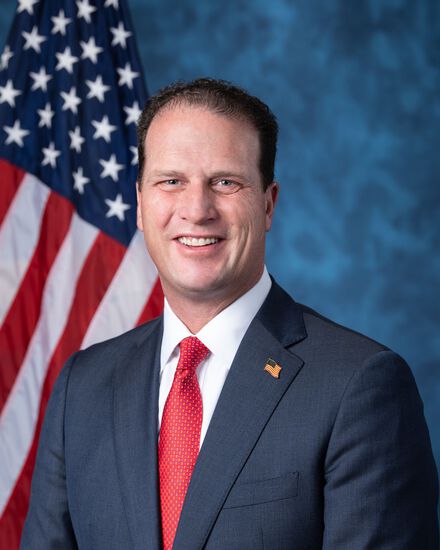
Rep. August Pfluger
Sponsored bills
Maddy summaryThis bill (HR 2199) prevents private health insurance plans from discriminating against patients with end-stage kidney disease (ESRD) who require dialysis. It amends the Social Security Act to prohibit plans from treating dialysis coverage differently than other medical services or applying network restrictions that disproportionately harm ESRD patients. The law clarifies that plans cannot deny or limit benefits for dialysis based on a patient’s diagnosis, while preserving a plan’s right to choose which dialysis providers are in their network. It directly affects ESRD patients and their private health insurance coverage, ensuring dialysis is treated equally with other covered medical services. The bill does not require plans to include specific dialysis providers but stops them from unfairly restricting access to necessary care.
Maddy summaryThis bill modifies Medicare's physician self-referral rules to improve access for rural communities. It creates a new exemption for "covered rural hospitals" (defined as facilities in rural areas more than 35 miles from another hospital or critical access hospital) from certain restrictions on physicians owning hospitals. The bill also removes a prohibition on expanding existing physician-owned hospitals, allowing such expansions after the law's enactment. These changes directly affect rural hospitals seeking Medicare participation and physicians who own or operate hospitals in underserved areas.
Maddy summaryThis bill increases livestock indemnity payments to 100% of market value for losses caused by Mexican gray wolf attacks, replacing previous partial reimbursement rates. It also establishes annual emergency relief funds for livestock producers affected by wolf depredations, using a formula based on herd size, historical attack data, management cost increases, birth rate declines, and prevention practices. The relief program requires the Secretary to develop a distribution formula within 180 days and submit annual reports to Congress. These provisions directly affect ranchers and livestock producers in states with Mexican gray wolf populations who experience wolf-related losses.
Maddy summaryHJRES 35 is a congressional resolution disapproving an Environmental Protection Agency (EPA) rule that established procedures for emissions charges on petroleum and natural gas systems. Specifically, it targets the EPA’s November 2024 rule titled "Waste Emissions Charge for Petroleum and Natural Gas Systems: Procedures for Facilitating Compliance, Including Netting and Exemptions," which would have required companies to pay fees based on emissions. The resolution, passed by both chambers in February 2025, nullifies the rule, preventing it from taking effect. This directly affects oil and gas companies subject to the EPA’s emissions regulations, removing a specific compliance mechanism they would have faced.
Maddy summaryHR 2128, the Reimbursing Border Communities Act of 2025, creates a federal grant program to reimburse eligible local governments within 200 miles of the U.S.-Mexico land border for costs related to border security measures, such as additional law enforcement wages. To qualify, communities must be local governments (not sanctuary jurisdictions), submit applications to the DHS Secretary, and cannot use funds for legal aid, housing, healthcare, or other services for immigrants. Grants are capped at $500,000 per community per year, with $25 million authorized annually from 2026-2036. The program requires annual reports to Congress detailing grant usage and implementation, including recommendations for future funding adjustments.
Maddy summaryThis bill reauthorizes federal funding for children's hospitals operating graduate medical education (GME) programs through 2030, extending current support until fiscal year 2030. It prohibits payments to any hospital that provided "specified procedures and drugs" to minors under 18 during the prior fiscal year, including surgeries like hysterectomies or puberty-blocking medications. Exceptions apply for medically necessary treatments, such as puberty suppression for precocious puberty or genetic disorders, and care for life-threatening conditions. The bill specifies annual funding levels: $124 million for hospital GME support and $261 million for other program payments from 2026-2030. It directly affects children's hospitals receiving federal GME funding, requiring them to comply with the new restrictions on certain medical services for minors.
Radiation Oncology Case Rate Value Based Program Act of 2025 or the ROCR Value Based Program Act This bill establishes a specialized payment program under Medicare for providers and suppliers of radiation oncology services. Specifically, the Centers for Medicare & Medicaid Services (CMS) must establish a program under which radiation therapy providers (i.e., hospital outpatient departments) and suppliers (i.e., physician group practices and freestanding radiation therapy centers) receive payments for each episode of care provided to individuals with specified types of cancer. An episode of care means the period beginning on the day radiation therapy planning is furnished to the individual and ending (1) for individuals with bone or brain metastases, 30 days later; and (2) for individuals with other cancer types, 90 days later. Participation in the program is mandatory for providers and suppliers that participate in Medicare, unless the provider or supplier is part of a state-based Center for Medicare & Medicaid Innovation model or qualifies for a significant hardship exemption. The CMS must set payment rates for the program based on national payment rates with specified adjustments (e.g., geographic adjustments). Providers and suppliers who provide certain transportation services for individuals under their care may receive an additional payment. Providers and suppliers must be accredited in accordance with certain standards, subject to payment reductions. The Government Accountability Office must report on (1) implementation of the program, and (2) underserved areas that are in need of more or newer radiation therapy resources.
Maddy summaryHR 2168, the BO’s Act, requires the Secretary of Health and Human Services to study home cardiorespiratory monitors used for infants. The study must assess the monitors' effectiveness in tracking heart rate and oxygen levels, evaluate new care models for safe infant sleep environments, and examine health insurance coverage criteria. A report on these findings must be submitted to Congress within one year of the bill’s enactment. This bill does not change current policy but aims to inform future decisions about monitor coverage and infant safety practices, directly affecting parents, healthcare providers, and insurers.
Maddy summaryThe FOCA Act of 2025 prohibits federal agencies from requiring or banning contractors from using union agreements in construction project bids or contracts. It directly affects federal agencies, contractors, and subcontractors working on federally funded or assisted construction projects (like buildings or infrastructure). The law requires bid documents to not favor or penalize contractors based on whether they have union agreements, aiming to promote open competition and prevent discrimination. This changes how agencies structure bids but does not affect union agreements themselves. The bill applies to all new contracts and subcontracts after enactment, with limited exemptions only for public health/safety emergencies or national security.