

Ethiopia Stabilization, Peace, and Democracy Act This bill imposes sanctions and addresses other issues related to the conflict in Ethiopia. The President must impose property-blocking sanctions (and visa-blocking sanctions in the case of an individual) against a foreign entity or individual that has taken certain actions to expand or extend the civil war or other conflicts in Ethiopia. The bill prohibits assistance, with certain exceptions, to Ethiopia's security forces unless the Department of State certifies to Congress that Ethiopia's government has ceased all military operations associated with the civil war and met other specified conditions. The Department of the Treasury must instruct U.S. representatives at international financial institutions to oppose, with some exceptions, such institutions providing loans or assistance to the governments of Ethiopia or Eritrea. Furthermore, the U.S. International Development Finance Corporation may not provide certain support for projects in Ethiopia. These restrictions must terminate after the State Department certifies that certain conditions, such as a cessation of military operations associated with the civil war in Ethiopia, have been met. The President may provide support for activities necessary to preserve evidence of atrocities in Ethiopia and to pursue accountability for such atrocities. Within 90 days of this bill's enactment, the State Department must report to Congress a determination of whether actions in Ethiopia by the armed forces of Ethiopia and Eritrea, the Tigrayan Peoples Liberation Front, and other armed actors constitute genocide, war crimes, or crimes against humanity.
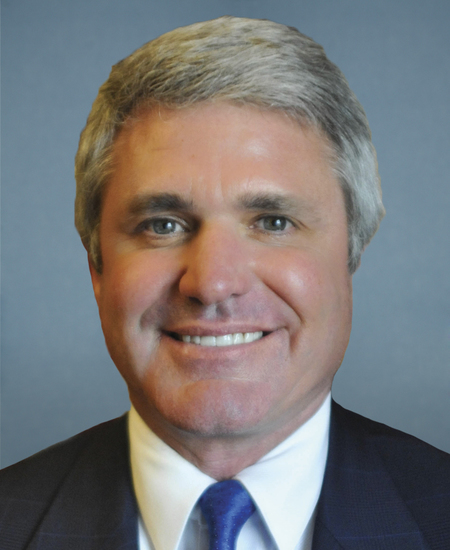
Rep. Michael T. McCaul
Sponsored bills
Guaranteeing Enemy Nations Omit from Criminalizing, Impeding, or Detaining Exceptional Global Athletes Magnifying Exploitation during Sporting events Act or the GENOCIDE GAMES Act This bill requires the President to impose sanctions on certain foreign individuals who materially supported a gross violation of internationally recognized human rights against a 2022 Olympic and Paralympic Winter Games participant. Upon receiving credible evidence of such a human rights violation, the President must impose property- and visa-blocking sanctions on any foreign individual associated with the International Olympic Committee (IOC), including the president of the IOC, who the President determines materially supported the violation of human rights, including by providing to participants false, reckless, or negligent assurances of human rights assurances by the government of China. This bill's requirements shall terminate on March 13, 2023.
Guaranteeing Ukrainian Autonomy by Reinforcing its Defense (GUARD) Act of 2022 This bill provides support for Ukraine and imposes sanctions related to Nord Stream 2, the pipeline constructed to increase exports of natural gas from Russia. The Department of State must periodically report to Congress a determination as to whether Russia's government meets the criteria to be designated a state sponsor of terrorism. The bill authorizes the State Department to provide Foreign Military Financing assistance to Ukraine in FY2022. The bill also authorizes providing Ukraine with lethal assistance, such as anti-armor weapon systems and anti-aircraft weapons systems. From FY2022-FY2026, Ukraine shall have priority access to excess defense articles. During the same time period, the bill also authorizes providing Ukraine with assistance, including (1) International Military Education and Training assistance; (2) assistance to strengthen cybersecurity and intellectual property enforcement; (3) support and training for banking reform, subsidy reform, corporate governance, and the privatization of state-owned enterprises; and (4) assistance to combat corruption and improve the rule of law. Within 15 days of this bill's enactment, the President must impose sanctions on any entity responsible for planning, constructing, or operating Nord Stream 2, as well as any corporate officer of such an entity. The bill also subjects the President's authority to waive certain sanctions to congressional review. The U.S. Agency for Global Media may expand broadcasting in countries of the former Soviet Union to combat Russian disinformation. The bill requires reports to Congress on various topics, including a strategy on using U.S. diplomacy to support Ukraine.
Upholding the Law at Our Border Act This bill requires the Office of Inspector General of the Department of Homeland Security (DHS) to periodically investigate and report on certain issues until there have been fewer than 35,000 apprehensions at the southwest border for three consecutive months. When required, the reports must address certain issues, including (1) the vetting procedures applicable to aliens seeking entry into the United States who were apprehended along the southwest border, (2) the total number of individuals not lawfully present who have been processed and released into the United States, (3) the number of such individuals who have received parole, and (4) an audit of the parole applications. The office must submit such reports (and provide briefings on the reports) to the President, Congress, DHS, and the Department of Justice.
Halt All Lethal Trafficking of Fentanyl Act or the HALT Fentanyl Act This bill places fentanyl-related substances as a class into schedule I of the Controlled Substances Act. A schedule I controlled substance is a drug, substance, or chemical that has a high potential for abuse; has no currently accepted medical value; and is subject to regulatory controls and administrative, civil, and criminal penalties under the Controlled Substances Act. Additionally, the bill establishes a new, alternative registration process for schedule I research that is funded by the Department of Health and Human Services or the Department of Veterans Affairs or that is conducted under an investigative new drug exemption from the Food and Drug Administration. The bill also makes several other changes to registration requirements for conducting research with controlled substances, including permitting a single registration for related research sites in certain circumstances, waiving the requirement for a new inspection in certain situations, and allowing a registered researcher to perform certain manufacturing activities with small quantities of a substance without obtaining a manufacturing registration.
This bill requires the President to impose sanctions for human rights abuses and actions to undermine democracy in Sudan. Specifically, the President must impose property- and visa-blocking sanctions on any individual or entity that is responsible for, complicit in, or engaged (or attempted to engage) in various actions, including actions that (1) undermine the transition to democracy in Sudan; (2) threaten Sudan's peace, security, or stability; (3) constitute gross violations of human rights in Sudan; (4) result in the misappropriation of Sudan's state assets; or (5) disrupt access to communications or the internet in Sudan. The sanctions shall also apply to entities affiliated with such sanctioned individuals and entities, including entities formed for the purpose of evading the sanctions.
Illegal Immigrant Payoff Prohibition Act This bill prohibits the payment of a settlement to an alien for a civil action brought against the United States in connection with the alien's inadmissibility to, or unlawful presence in, the United States.
Better Enforcement of Grievous Offenses by unNaturalized Emigrants Act or the BE GONE Act This bill expands, for immigration purposes, the definition of aggravated felony to include sexual abuse, sexual assault, and aggravated sexual violence. (Under current law, a conviction for an aggravated felony is grounds for deportation and may bar an individual from other immigration-related benefits.)
Havana Syndrome Attacks Response Act This bill requires the President to sanction foreign persons and governments for carrying out clandestine attacks on U.S. personnel that have caused brain injury. Specifically, the President must impose visa- and asset-blocking sanctions on any foreign person that has directed or carried out such an attack. If the President determines a foreign government carried out such an attack, the President must notify Congress and sanction that country by terminating any foreign assistance (except for humanitarian aid or food or agricultural commodities or products) and arms transactions, restricting commercial exports, and denying access to U.S. credit or other financial assistance. The President must remove these sanctions after 12 months, provided that (1) the country's government gives reliable assurances that it will not conduct future attacks, and (2) the executive branch does not have persuasive information indicating an attack occurred in the preceding six months. The bill also requires a congressional briefing and report about suspected clandestine attacks on U.S. personnel that have caused brain injury, including hypotheses concerning the identity of the perpetrators and the technical methods used to carry out the attacks.
DHS Transnational Criminal Investigative Units Act This bill provides statutory authority for the Homeland Security Investigations Transnational Criminal Investigative Unit Program within the Department of Homeland Security. The program coordinates homeland security investigations into transnational criminal organizations and cooperates with foreign law enforcement partners to facilitate the prosecution of transnational criminal organizations.