

Maddy summaryHR 7185 reauthorizes the High Intensity Drug Trafficking Areas (HIDTA) program through 2030, with specific focus on fentanyl. It allocates $302 million annually for HIDTA operations and adds $14.2 million yearly for grants to enhance fentanyl seizure efforts through competitive grants. The bill requires annual reports detailing fentanyl seizures and trafficking data, and directs the Attorney General to assign at least 16 assistant U.S. attorneys to prioritize fentanyl trafficking cases. This directly affects federal drug task forces, law enforcement agencies, and prosecutors working on fentanyl-related investigations.
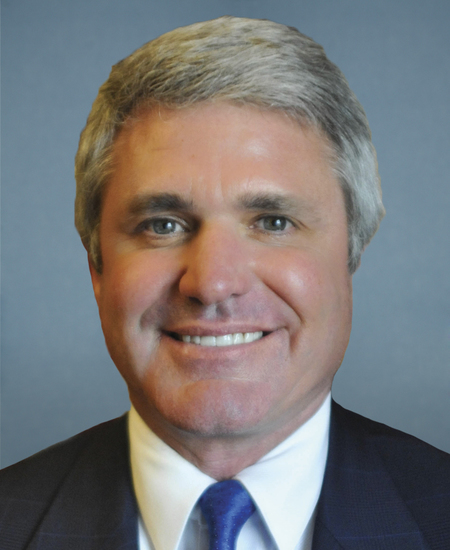
Rep. Michael T. McCaul
Sponsored bills
End Banking for Human Traffickers Act of 2024 This bill establishes requirements for finance and banking entities to detect and prevent human trafficking. The Financial Institutions Examination Council must review procedures to improve the capability of specified programs to target financial transactions relating to severe forms of human trafficking. The Interagency Task Force to Monitor and Combat Trafficking must submit to Congress recommendations for the revision of anti-money laundering programs specifically targeting severe forms of human trafficking. The bill provides additional criteria to be considered by the Department of State to indicate a foreign country's serious and sustained efforts to eliminate human trafficking for purposes of certain foreign assistance. Specifically, the bill adds criteria regarding whether a foreign country has taken or is taking steps to implement a framework for preventing financial transactions involving severe forms of human trafficking.
Maddy summaryThis resolution condemns the ongoing violence in Sudan, including attacks on civilians and the use of sexual violence as a weapon of war, and calls for immediate diplomatic action to end hostilities. It directly urges the U.S. President to appoint a special envoy for Sudan and directs the Secretary of State to develop a sanctions strategy targeting military leaders, monitor arms sales, and support humanitarian aid access. Key provisions include requiring regular review of atrocities determinations, deepening coordination with the Treasury for sanctions, and urging regional partners to impose targeted sanctions on violators. The resolution focuses on U.S. policy actions to support civilians and accountability, without proposing new laws or funding.
Maddy summaryThe Death Tax Repeal Act would eliminate the federal estate tax and generation-skipping transfer tax for estates of people who die on or after the bill's enactment date, and for generation-skipping transfers made after that date. It would also establish a new $10 million lifetime gift tax exemption (adjusted annually for inflation) and replace the existing gift tax rate schedule with a revised structure. These changes would primarily affect high-net-worth individuals and their heirs, as the estate tax and gift tax typically apply to large estates or gifts exceeding the new exemption threshold. The bill's provisions would take effect on the date of enactment, with transitional rules for the year the bill is signed into law.
Maddy summaryHRES 955 is a resolution commending Taiwan for its democratic election history and supporting Taiwan's democratic institutions. It recognizes Taiwan's transition to democracy since the late 1980s, including 7 presidential and 9 legislative elections held since then, all deemed free and fair. The resolution specifically expresses support for Taiwan's upcoming January 13, 2024, elections and condemns interference by the Chinese Communist Party. It affirms U.S. commitment to a strong partnership with Taiwan across multiple domains and supports Taiwan's self-defense and liberty. As a procedural resolution, it does not create new law but formally expresses congressional support for Taiwan's democratic development.
Maddy summaryHR 6950, the Working Dog Health and Welfare Act of 2024, requires federal agencies and their contractors managing working dog programs to implement specific health and welfare recommendations from a 2022 Government Accountability Office report within 180 days of the law's enactment. It directly affects all federal agencies (including Congress and courts as defined), their contractors, and the Department of State when providing working dogs to foreign partners. Key mechanisms include mandatory implementation of the GAO's recommendations, a 60-day reporting requirement to Congress on steps taken, and ensuring new programs established after enactment follow these standards. The bill focuses on concrete policy changes to standardize care for working dogs used in federal operations, without altering existing program structures or outcomes.
Maddy summaryHR 6941, the Criminalize Fleeing from Immigration Enforcement Act of 2024, would make it a federal crime for individuals to flee or evade law enforcement officers enforcing specific immigration laws, including unauthorized entry (INA §275), re-entry after deportation (INA §276), or document fraud (INA §274). It directly affects people who flee officers identified as enforcing these immigration provisions or flee immigration checkpoints. The bill would impose penalties of up to five years in prison or fines for fleeing, with up to eight years for fleeing in a vehicle exceeding the speed limit. This amendment to Title 18, U.S. Code, creates a new criminal offense without changing existing immigration enforcement procedures.
Maddy summaryHR 6734 prohibits the use of federal funds to finalize, implement, or enforce the Bureau of Alcohol, Tobacco, Firearms, and Explosives' (ATF) proposed rule (2022R-17) defining "engaged in the business as a dealer in firearms." This bill directly affects the ATF by blocking funding for this specific regulatory rule, which was proposed in August 2023. The legislation does not create new requirements but prevents federal resources from being used to advance this particular ATF regulation.
Maddy summaryThis bill amends existing law to authorize the Starr-Camargo Bridge Company to expand the bridge near Rio Grande City, Texas, including adding adjacent spans and implementing multimodal tolls. It extends the construction deadline from 3 to 60 years and the operational period from 5 to 65 years. The changes specifically apply to the Starr-Camargo Bridge and its operators, without affecting the separate San Benito International Bridge (formerly known as the Free Trade International Bridge). The bill clarifies the company’s rights for expansion, control, operation, and maintenance of the bridge.
Maddy summaryHR 6664 requires the FDA to apply pediatric drug testing requirements to orphan drugs (treatments for rare diseases) that were previously exempt. It directs the FDA to issue guidance within 18 months on how these requirements will work, including when waivers for impractical studies are allowed, and increases annual funding for pediatric studies to $50 million. Drug sponsors developing orphan medications must now provide more pediatric safety data, while the FDA gains clearer enforcement rules for compliance. The bill also mandates an FDA report on compliance and a government study on the law's impact on rare disease drug development.