

Maddy summaryThis bill permanently removes a 2026 expiration date for a tax exclusion allowing employers to pay employees' student loans through educational assistance programs without those payments being counted as taxable income. It directly affects employees who receive employer-sponsored student loan repayment assistance and employers offering such programs. The key provision amends the Internal Revenue Code to make this tax exclusion permanent, applying to all future payments made after the bill's enactment. This change simplifies the tax treatment for both employers and employees participating in these student loan repayment programs.
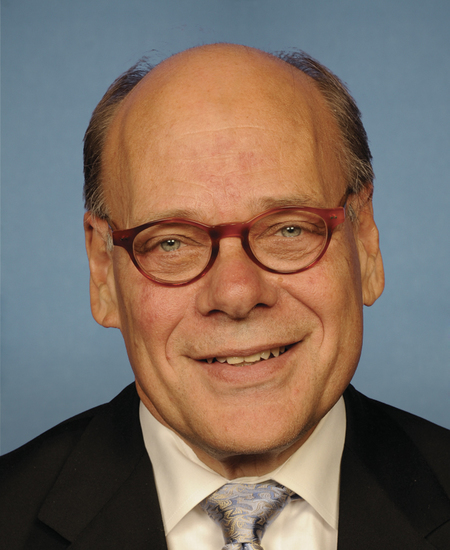
Rep. Steve Cohen
Sponsored bills
Maddy summaryH.J. Res. 193 proposes a constitutional amendment to eliminate legal immunity for federal officials, including the President, from criminal prosecution for actions taken while performing official duties. It also prohibits the President from granting a pardon to themselves. The amendment would apply to all federal officers (such as the President, Vice President, and members of Congress) except for Congress members acting in their legislative role as defined in the Constitution. If ratified by 38 states, this change would become part of the U.S. Constitution, requiring no further congressional action.
Maddy summaryThis bill directs the Secretary of Agriculture to conduct a feasibility study on designating the Benton MacKaye Trail as a national scenic trail. The study, to be completed within one year of the bill's enactment, will assess whether the 287-mile trail - which traverses Georgia, Tennessee, and North Carolina through federal lands, wilderness areas, and national forests - should receive this designation. The study must be developed in consultation with the Benton MacKaye Trail Association and other interested organizations. It does not change current trail management or funding but evaluates the potential for formal national scenic trail status.
Maddy summaryHRES 1375 is a non-binding resolution recognizing extreme weather as a critical threat to children's health and well-being, emphasizing that children face unique vulnerabilities due to their developing bodies, higher exposure to pollutants, and heightened risks during events like heatwaves, wildfires, and poor air quality. It expresses Congress's view that solutions must be developed and deployed rapidly and equitably, with specific attention to children's physical and mental health needs. The resolution suggests concrete measures such as improved air filtration in schools, accessible public alerts for extreme heat, expanded cooling centers, and better infrastructure for child-friendly emergency spaces, though it does not create new laws or mandates.
Maddy summaryHR 9104, the Access to Birth Control Act, requires pharmacies that normally stock contraception to provide birth control or related medications without delay if in stock, or immediately offer alternatives like referrals to other pharmacies or expedited orders if unavailable. It prohibits pharmacists from intimidating customers, misrepresenting availability, breaching confidentiality, or refusing to fill valid prescriptions for birth control. Pharmacies violating these rules face civil penalties up to $1,000 per day or private lawsuits. The law specifically applies to pharmacies that routinely carry contraception and excludes cases where a valid prescription is missing or payment cannot be made. It aims to address documented refusals to dispense birth control, particularly following the Dobbs decision.
Maddy summaryThe CHOICE Act creates a new public health insurance option available through health insurance marketplaces (Exchanges) starting in 2026. It directly affects consumers seeking coverage and healthcare providers who must participate if they serve Medicare or Medicaid patients. Key provisions include the Secretary establishing geographically adjusted premiums, using Medicare reimbursement rates for providers if negotiations fail, and requiring the public option to offer bronze/silver/gold plans while complying with existing ACA rules. The bill aims to expand choices and competition in the insurance market without replacing private plans.
Maddy summaryThe Revitalizing Downtowns and Main Streets Act creates a 20% tax credit for converting non-residential buildings into affordable housing. To qualify, buildings must be at least 20 years old and nonresidential, with conversion costs exceeding 50% of the building's adjusted basis or $100,000. The converted housing must be rent-restricted for 30 years for residents earning 80% or less of area median income (60% in certain designated areas), with a $12 billion national credit limit. Special provisions apply for economically distressed areas and rural historic preservation projects, primarily affecting developers who convert vacant commercial buildings in downtown or main street areas into affordable housing.
Maddy summaryHR 9004, the POST Act of 2024, amends the Higher Education Act to tighten the "85/15 rule" for for-profit colleges receiving federal student aid. It requires these institutions to derive at least 15% of their revenue from non-federal sources (like tuition or specific contracts), with clearer definitions of what counts as valid revenue - excluding funds like book sales, most federal matching payments, and income share agreements unless strictly structured. The bill also mandates annual reports to Congress by the Secretary of Education, detailing each institution's revenue sources from federal aid versus other streams. This directly affects for-profit colleges seeking eligibility for Title IV federal student financial aid programs.
Maddy summaryHR 9011, the Ukraine Democracy Defense Lend-Lease Act of 2024, extends the U.S. government's authority to provide military equipment to Ukraine and Eastern European countries affected by Russia's invasion through fiscal year 2026 (previously ending in 2023). It requires the Secretary of Defense to submit a report within 90 days of using this authority, detailing the specific defense equipment provided and outlining a strategy for recovering and returning that equipment. The bill directly affects Ukraine's government and allied nations in Eastern Europe by enabling continued access to U.S. military aid. Key provisions include the extended funding period and mandatory transparency measures to track aid usage and future recovery.
Maddy summaryHRES 1353 is a resolution introduced by House members to impeach Supreme Court Associate Justice Clarence Thomas. The resolution outlines three articles of impeachment alleging Thomas failed to disclose gifts and financial transactions with donor Harlan Crow over 15 years, refused to recuse from cases involving his spouse's financial interests, and participated in cases concerning the 2020 election results despite his spouse's involvement in efforts to overturn them. These allegations claim Thomas violated federal ethics laws requiring judicial disclosure and recusal to maintain impartiality. The resolution would be referred to the Senate for trial if passed by the House, but it is not a law that would directly affect anyone beyond the impeachment process.