

Maddy summaryThis bill requires federal, state, and local law enforcement agencies to collect standardized data on all instances of deadly force use by officers, including victim demographics (race, gender, age, religious affiliation), incident details (date, location, alleged crime), and agency justification. Agencies must submit this data to the Department of Justice using a uniform form, with records retained for four years. Failure to comply results in a 10% reduction to Byrne JAG grants for the following fiscal year. The collected data, excluding personally identifiable information, will be published by the Bureau of Justice Statistics for public access and congressional review.
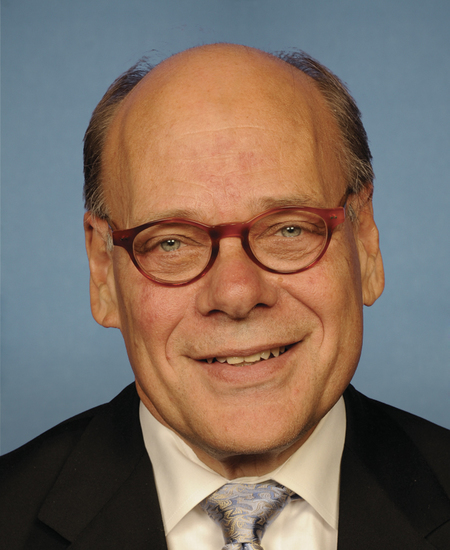
Rep. Steve Cohen
Sponsored bills
Maddy summaryHR 9675, the Homeward Bound Act, delays and revises federal rules governing dog imports for specific groups. It postpones the application of a 2024 HHS rule for 18 months, directly affecting military personnel stationed abroad, U.S. diplomats/consular staff, their families, and individuals with service animals seeking to import dogs from rabies-low-risk countries. The bill requires the HHS Secretary to revise regulations within 10 days to allow all-age dog imports at any U.S. port of entry from these countries and waive microchipping requirements for dogs born before the law's enactment. These changes aim to simplify import processes for covered individuals while maintaining rabies risk standards.
Maddy summaryHR 9691 establishes the Julius Rosenwald and Rosenwald Schools National Historical Park as a unit of the National Park System. The park will preserve specific sites, including the San Domingo School in Maryland and the St. George Rosenwald School in South Carolina, plus a Chicago headquarters at the former Sears complex. It aims to commemorate Julius Rosenwald's philanthropy - particularly his partnership with Booker T. Washington to build over 5,000 schools for African-American students in the segregated South - and his broader legacy of social justice. The bill directs the Secretary of the Interior to administer the park, develop a management plan, and create a national network connecting related Rosenwald School sites for educational interpretation.
Maddy summaryHR 6319 (the 911 SAVES Act of 2023) requires the Office of Management and Budget to reclassify public safety telecommunicators as "Protective Service Occupations" within 30 days of enactment. This change corrects their current misclassification in the federal Standard Occupational Classification (SOC) system, which is used for statistical data on jobs. The bill directly affects how these professionals - critical in emergency calls involving missing children, active threats, and officer safety - are officially categorized in government workforce data. It does not create new benefits or funding but aims to better recognize their lifesaving role through accurate federal job classification.
Maddy summaryHR 4693, the Tennessee Valley Authority Salary Transparency Act, requires the Tennessee Valley Authority (TVA) to publicly disclose the salaries of its employees earning above the GS-13 General Schedule pay rate (the highest pay grade for most federal civilian jobs). This bill amends the TVA Act of 1933 to raise the salary threshold for mandatory public disclosure from $1,500 annually to the GS-13 rate, meaning higher-paid TVA staff must now have their compensation made public. The change directly affects TVA employees whose base pay exceeds the GS-13 rate, increasing transparency for those positions. The bill does not alter TVA's operations or funding, only the disclosure requirements for specific employee compensation.
Maddy summaryHR 9650 requires federal agencies to purchase WaterSense-labeled water-efficient products (like fixtures or appliances) when procuring water-consuming items, unless cost or availability prevents it. It establishes an EPA grant program to provide rebates or incentives for households to buy WaterSense products, prioritizing low- and middle-income families through eligible entities like state governments or utilities. The bill also makes these rebates non-taxable income for individuals and expands existing tax exclusions for water conservation measures. These changes directly affect federal agencies, local governments, and households purchasing water-efficient products.
Maddy summaryThis bill directs the Joint Committee on the Library to procure a statue of Benjamin Franklin and place it in the U.S. Capitol. The committee must secure the statue within two years of the bill's enactment and install it in a public-accessible location by January 1, 2026, for viewing during Capitol Visitor Center guided tours. It is a procedural measure with no policy changes or direct impact on constituents or legislation.
Maddy summaryThis bill modifies Medicaid and CHIP rules to let eligible out-of-state healthcare providers enroll without extra state screening. It applies to providers already in Medicare or their home state program, with low fraud risk, serving children under 21 with complex medical conditions. Providers would receive 5 years of enrollment under this streamlined process, eliminating state-level barriers. The change directly affects children seeking specialized care across state lines and the providers who serve them.
Maddy summaryHRES 1456 is a symbolic resolution designating September 17, 2024, as "Constitution Day" to honor the signing of the U.S. Constitution on September 17, 1787. It calls for the people of the United States to observe the day with ceremonies and activities, recognizing the Constitution's historical significance and foundational role in American governance. This resolution does not create new laws or affect any individuals or policies; it is purely a non-binding expression of support by the House of Representatives.
Maddy summaryHR 9620, the Police CAMERA Act of 2024, creates a federal grant program to help state, local, and tribal law enforcement agencies purchase and implement body-worn camera systems. It requires grantees to develop public policies on camera use, data security, privacy protections, and limitations on facial recognition technology - mandating community input for these policies. The bill also requires agencies to collect and report statistics on use-of-force incidents (disaggregated by race, ethnicity, gender, and age), complaints, and evidence usage, and to store footage securely with strict protocols for access and sharing. These grants cover up to 75% of program costs, with funds allocated for camera purchases, training, and data management, and include annual reporting and a federal study on the cameras' effectiveness.