

Maddy summaryThe American Dream and Promise Act of 2025 would create pathways to permanent residency for certain immigrant youth who entered the U.S. as children (Dream Act component) and for individuals from countries with Temporary Protected Status or Deferred Enforced Departure (American Promise Act component). To qualify, applicants must meet continuous physical presence requirements (since January 1, 2021 for Dream Act applicants, and for 3+ years for American Promise applicants), pass background checks, and satisfy educational or employment criteria. Conditional permanent resident status would be granted initially, with the option to convert to full permanent residency after meeting additional requirements like earning a degree, serving in the military for two years, or demonstrating three years of earned income. The bill includes fee exemptions for low-income applicants, establishes a grant program to assist applicants with legal help, and creates specific procedures for background checks and appeals.
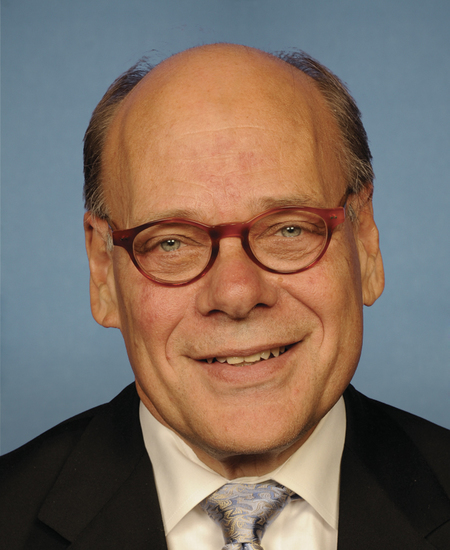
Rep. Steve Cohen
Sponsored bills
Maddy summaryHR 250 requires the Joint Committee on the Library to procure a statue of Benjamin Franklin by December 31, 2025, and place it in a permanent, public-accessible location within the U.S. Capitol by December 31, 2026. The statue must be positioned to be viewable during guided Capitol tours offered by the Capitol Visitor Center. This is a procedural bill focused solely on the acquisition and placement of the statue, with no substantive policy changes or direct impact on constituents or laws.
Maddy summaryHRES 166 is a non-binding House resolution expressing U.S. support for the Iranian people's desire for a democratic, secular, and nonnuclear republic. It condemns the Iranian regime's terrorism, regional proxy wars, internal suppression of ethnic and religious minorities, and human rights abuses - including executions and repression of women-led protests. The resolution calls for holding the regime accountable through sanctions, supports the Ten-Point Plan for Iran’s democratic transition, and urges protection for Iranian political refugees in Albania. It does not create new laws but affirms U.S. policy alignment with Iranian protesters' demands.
Maddy summaryThis bill awards a Congressional Gold Medal to the 761st Tank Battalion (known as the "Black Panthers"), the first predominantly Black armored unit in World War II's European Theater. It recognizes their combat service from 1944-1946, including key roles in the Battle of the Bulge and breaking the Siegfried Line, despite facing racial prejudice during and after the war. The medal will be displayed at the National Museum of African American History and Culture, with bronze duplicates available for sale to cover costs. The bill commemorates the battalion's 130,000 enemy casualties inflicted, 50% casualty rate, and their 1978 Presidential Unit Citation. It does not create new laws or affect current policies.
Maddy summaryHR 1637, the Protect Veteran Jobs Act, allows veterans who were involuntarily dismissed without cause from federal civil service positions between January 20, 2025, and the bill’s enactment date to seek reinstatement to their former role or a qualified position. It directly affects eligible veterans dismissed during this period and requires federal agencies to report quarterly on veteran removals, including the number and reasons for each dismissal. Agencies must submit these reports to specified congressional committees until January 20, 2029, when the reporting requirement ends. The bill aims to restore employment opportunities for affected veterans while increasing transparency around federal hiring and dismissal practices.
Maddy summaryThis bill changes rules for prescribing certain medications used to treat substance use disorders. It allows healthcare providers to use telehealth for the initial patient evaluation instead of requiring an in-person visit, but only for drugs approved by the FDA for addiction treatment (schedules III-V). The telehealth must meet specific standards, including real-time audio/video communication. This affects doctors and other practitioners who prescribe these medications for substance use disorders.
Maddy summaryHR 1638, the CROWN Act of 2025, prohibits discrimination based on hair texture or hairstyle that is commonly associated with race or national origin, particularly affecting Black individuals who wear natural or protective styles like braids, locs, cornrows, twists, or Afros. The bill explicitly expands protections under existing federal civil rights laws (including the Civil Rights Act of 1964 and the Fair Housing Act) to cover hair-based discrimination in federally funded programs, housing, public accommodations, employment, and equal rights. It requires schools, employers, and other entities receiving federal funds to eliminate grooming policies that disproportionately target these hairstyles. The law clarifies that such discrimination violates federal law and provides enforcement through existing civil rights mechanisms.
Maddy summaryThis bill amends Medicare rules to allow nurse practitioners and physician assistants to certify diabetic shoe coverage for Medicare beneficiaries with diabetes, expanding the current requirement that only physicians could provide this documentation. It directly affects Medicare patients needing specialized footwear due to diabetes and healthcare providers like NPs and PAs who would now be authorized to meet the certification requirement. The key change modifies Section 1861(s)(12) of the Social Security Act to insert "nurse practitioner, or physician assistant" in all relevant sections of the documentation rules. This update simplifies access to covered diabetic shoes by broadening which healthcare professionals can issue the necessary certification.
Maddy summaryThe Democracy in Design Act requires the General Services Administration (GSA) to ensure all new federal public building designs follow the 1962 "Guiding Principles for Federal Architecture" report. Within 180 days of enactment, the GSA must create binding regulations establishing minimum design standards for federal buildings, after publishing draft rules for public feedback. This law directly affects the GSA and federal agencies responsible for designing or constructing public buildings. It mandates adherence to historical design guidelines without altering existing building codes or funding mechanisms.
Maddy summaryEthan's Law requires gun owners to store firearms securely in homes where minors live or where residents are legally prohibited from owning guns. It makes it unlawful to leave firearms unsecured if a minor or ineligible person could access them, with fines of $500 per violation and harsher penalties if injury or death occurs. The bill creates a federal grant program to help states implement similar secure storage laws and treats unsafe storage as negligence in legal cases. It directly affects households with children or residents who cannot legally possess firearms, aiming to reduce accidental shootings and unauthorized access.