

Maddy summaryHR 1835 (MERIT Act) provides reinstatement or compensation to federal employees who were terminated during a specific mass layoff period (January 20, 2025, through the bill’s enactment date). Affected probationary employees - newly hired workers on a trial period or not yet permanent - can choose to return to a similar position with matching benefits or receive a lump-sum payment covering the pay difference between their terminated role and any new federal job they held during the layoff period. Agencies must notify affected employees within 30 days and offer reinstatement or payment within 90 days, with employees required to accept or decline within 30 days to avoid losing eligibility. The bill defines "mass termination" as 15+ separations in a 30-day period by a single agency.
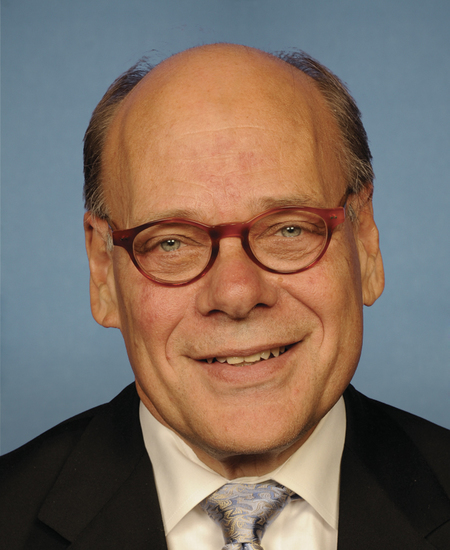
Rep. Steve Cohen
Sponsored bills
Maddy summaryHJRES 67 designates August as Slavery Remembrance Month to commemorate the arrival of enslaved Africans in 1619 and honor freedom fighters who opposed slavery. The resolution condemns slavery and its lasting impacts - including convict leasing, Jim Crow laws, and systemic racism - while encouraging public remembrance through ceremonies. It requests the President issue a proclamation urging Americans to observe the month with appropriate activities. The resolution also posthumously recognizes 15 Black Congress members from the Reconstruction Era as honorary cosponsors. This is a symbolic commemorative resolution with no binding policy changes.
Maddy summaryHRES 181 is a symbolic resolution recognizing Black History Month by highlighting the historical and ongoing contributions of Black labor to the U.S. economy and society. It commemorates Black labor from slavery through modern times, including agricultural work, unionization efforts (like A. Philip Randolph’s Brotherhood of Sleeping Car Porters), and contemporary issues like the racial wage gap (where Black workers earned $878 weekly vs. $1,059 for others in 2023). The resolution does not create new laws or policies but formally acknowledges these contributions to raise public awareness. It is sponsored by 70+ House members and aligns with the 2025 Black History Month theme focused on "African Americans and Labor." As a commemorative resolution, it has no direct effect on individuals or legislation.
Maddy summaryHRES 153 is a ceremonial resolution expressing condolences to the families and loved ones of the 67 victims who died in two aviation incidents: American Eagle Flight 5342 and U.S. Army flight PAT 25, which crashed near Washington, D.C.'s Reagan National Airport on January 29, 2025. It specifically honors the victims - many connected to Wichita, Kansas (known as the "Air Capital of the World") - and extends sympathies to affected communities including Wichita, Kansas, and the National Capital Region. The resolution also commends first responders who aided in the recovery efforts. As a non-binding expression of sympathy with no policy changes, it does not affect laws or regulations.
Maddy summaryThis bill directs the National Institutes of Health (NIH) to expand research on triple-negative breast cancer (TNBC), a highly aggressive form disproportionately affecting African-American and Hispanic women. It requires the Centers for Disease Control and Prevention (CDC) to create public education materials about TNBC incidence, treatment options, and racial disparities, and directs health agencies to provide updated TNBC information to healthcare providers. The legislation specifically targets gaps in understanding TNBC prevalence, treatment costs, and prevention methods among minority women. It authorizes funding for these research and education efforts from fiscal years 2026 through 2031.
Maddy summaryHR 1781 repeals four executive orders issued on January 20, 2025, which covered energy development, international environmental agreements, a declared energy emergency, and a pause on offshore wind projects. The bill would prevent federal agencies from using funds to implement these orders, effectively halting their enforcement. This directly affects agencies like the Department of Energy and Environmental Protection, which had been directing actions under these orders. The repeal takes effect immediately upon the bill's enactment.
Maddy summaryHR 1788, the Fair Grocery Pricing Act, prohibits food producers from using data analytics services (coordinators) to facilitate tacit price coordination among competitors. It directly affects food manufacturers and the data companies that provide pricing coordination services, making it unlawful for producers to contract with such services or for coordinators to enable price-fixing agreements. The bill empowers the Federal Trade Commission and Department of Justice to enforce these rules under existing antitrust laws and allows consumers to sue for triple damages plus legal fees if harmed by violations. It also invalidates pre-dispute arbitration agreements for these cases, ensuring affected consumers can pursue legal action.
Maddy summaryHR 1787 authorizes the U.S. Mint to produce commemorative coins honoring baseball legend Roberto Clemente, including $5 gold, $1 silver, and half-dollar coins, with specific specifications for weight, size, and metal content. The bill requires the coins to feature Clemente's image and commemorative inscriptions, and mandates a surcharge ($35 for gold, $10 for silver, $5 for half-dollar) paid to the Roberto Clemente Foundation for its educational, youth sports, and disaster relief programs. All coins must be minted in 2027, sold at face value plus surcharge and production costs, and will be legal tender. The bill focuses solely on the coin program, not broader policy changes.
Maddy summaryThe End Tobacco Loopholes Act standardizes excise taxes across all tobacco products to close previous rate disparities. It nearly doubles cigarette taxes (to $100.66 per pack), increases smokeless tobacco taxes significantly (e.g., from $1.51 to $26.84 per pound), and establishes a new tax on nicotine for vaping products ($100.66 per 1,810 milligrams). The bill also creates specific tax rates for "discrete single-use units" like nicotine pouches and adds inflation adjustments to future tax rates. This directly affects tobacco manufacturers, importers, and retailers who sell these products, requiring them to pay standardized tax rates on all tobacco and nicotine products.
Safe Schools Improvement Act This bill requires states to direct their local educational agencies (LEAs) to establish policies that prevent and prohibit bullying and harassment of elementary and secondary school students. In particular, these policies must prohibit bullying and harassment based on race, color, national origin, disability, religion, or sex. Sex includes sexual orientation, gender identity, and sex characteristics (including intersex traits). Further, LEAs must provide (1) students, parents, and educational professionals with annual notice of the conduct prohibited in their disciplinary policies; (2) students and parents with grievance procedures that target such conduct; and (3) the public with annual data on the incidence and frequency of that conduct at the school and LEA level. The Department of Education must conduct and report on an independent biennial evaluation of programs and policies to combat bullying and harassment in elementary and secondary schools. The National Center for Education Statistics must collect state data to determine the incidence and frequency of the conduct prohibited by LEA disciplinary policies.