

Keeping All Students Safe Act This bill prohibits the use of seclusion and limits the use of physical restraint in schools and Head Start programs that receive federal funding. Specifically, the bill prohibits the use of seclusion, which is the involuntary confinement of a student alone in a room or area from which the student is physically prevented from leaving. The term does not include a time out, which may involve separating the student from others in a non-locked setting. The bill prohibits the use of mechanical or chemical restraints or physical restraints that restrict breathing or are life threatening. The bill outlines the requirements for the use of physical restraint, including that the student's behavior must pose an imminent danger of serious physical injury to the student or other individual. Each state must ensure that a sufficient number of program personnel are trained and certified by a state-approved crisis intervention training program. Additionally, each program must establish procedures to follow after an incident involving physical restraint. Further, the bill establishes enforcement provisions, including a private right of action for a student who has been subjected to unlawful seclusion or restraint. The Department of Education and the Department of Health and Human Services must withhold payments from a program for unlawful seclusion or restraint. Finally, the bill requires each state educational agency (SEA) to establish, implement, and enforce policies and procedures required by the bill. It also creates a grant program to assist SEAs with these activities.
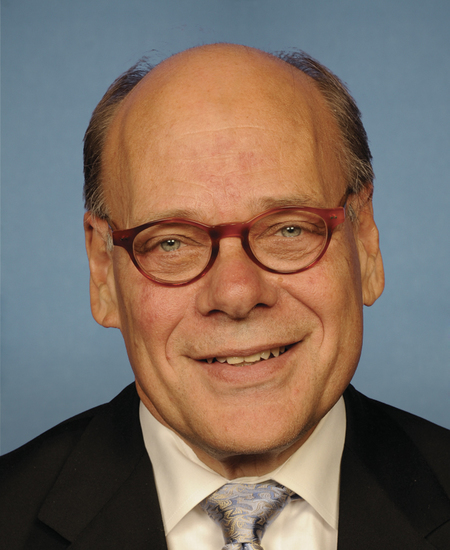
Rep. Steve Cohen
Sponsored bills
Healthcare for Our Troops Act This bill addresses TRICARE Reserve Select coverage and eligibility for Selected Reserve members of the Ready Reserve and their families. Among other elements, the bill provides eligibility for TRICARE Reserve Select to Selected Reserve members of the Ready Reserve who are eligible for or enrolled in the Federal Employees Health Benefits Program.
School Bus Safety Act of 20 21 This bill addresses safety features for school buses. Specifically, the bill directs the Department of Transportation (DOT) to implement rules requiring school buses to include a three-point safety belt at each designated seating position, a fire suppression system which addresses engine fires, a firewall that prohibits hazardous quantities of gas or flame to pass through the firewall from the engine compartment to the passenger compartment, an automatic emergency braking system, an event data recorder, and an electronic stability control system. DOT must also establish a grant program to assist local educational agencies to purchase school buses equipped with three-point safety belts or any of the other safety features under this bill and assist them in modifying existing school buses to be equipped with such features.
Mothers and Offspring Mortality and Morbidity Awareness Act or the MOMMA's Act This bill establishes various programs and requirements to reduce maternal mortality. It also increases federal tobacco taxes and equalizes the tax treatment of different tobacco products. Specifically, the Centers for Disease Control and Prevention (CDC) must provide technical assistance and best practices for collecting data, standardizing reporting, and preventing maternal mortality. The CDC must consult with the Health Resources and Services Administration (HRSA) on this assistance. The bill also provides statutory authority for CDC grants for state-based collaboratives to improve care immediately before and after birth and to improve maternal and infant health outcomes, and a HRSA program to improve the quality and safety of maternity care. Furthermore, the Department of Health and Human Services (HHS) must establish regional centers through health professional schools and training programs to educate health care providers about implicit bias and culturally competent care. In addition, the bill expands eligibility for Medicaid, the Children's Health Insurance Program (CHIP), and other benefits for pregnant and postpartum individuals. Specifically, it extends postpartum eligibility for Medicaid and CHIP for one year; provides coverage for oral health services for pregnant and postpartum individuals under Medicaid and CHIP; and extends postpartum eligibility for the Special Supplemental Nutrition Program for Women, Infants, and Children for two years. HHS must also take steps to publicize the benefits available to pregnant and postpartum individuals under Medicaid and CHIP, and the Centers for Medicare & Medicaid Services must provide guidance on Medicaid coverage for doula services.
Long-term Opportunities for Advancing New Studies for Biomedical Research Act or the LOANS for Biomedical Research Act This bill requires the Department of Health and Human Services (HHS), in consultation with the Department of the Treasury, to establish the Biobonds Program to support loans for clinical trials for eligible drugs and medical devices. Specifically, Treasury must contract with institutions to act as fiscal agents to carry out the program. Fiscal agents must (1) purchase loans made to borrowers engaged in eligible biomedical research activities, and (2) sell bonds comprised of such loans. HHS shall guarantee a portion of the bond payments. An eligible borrower under this program is one conducting (or seeking to conduct) research related to a drug or device that is (1) intended to meet an unmet medical need; and (2) under investigation in certain types of controlled clinical trials, including a trial to investigate the safety and effectiveness of the drug or device. HHS must issue rules relating to various aspects of the program, including rules concerning (1) which loans should be prioritized for purchase, (2) the terms and conditions of the loans, and (3) the size of each bond issuance. Treasury must issue rules relating to the program's underwriting practices and compensation for the fiscal agents. The Government Accountability Office must periodically report to Congress on the program, including an analysis of the risk to the government in guaranteeing the bonds.
Arctic Diplomacy Act of 2021 This bill establishes the position of Ambassador at Large for Arctic Affairs within the Department of State. The ambassador shall facilitate the development and coordination of U.S. foreign policy and activities related to the Arctic region, including policies and activities to (1) meet U.S. national security needs, (2) protect the environment, (3) increase cooperation among Arctic countries, (4) involve Arctic Indigenous people in relevant decisions, and (5) enhance scientific research and monitoring. Furthermore, the ambassador must establish an Arctic Region Security Policy. The policy must assess and implement plans and actions to (1) bolster U.S. diplomatic presence in Arctic countries, (2) enhance the resilience of Arctic countries to environmental change and increased civilian and military activity in the region, and (3) advance principles of good governance in the region.
Diversifying by Investing in Educators and Students to Improve Outcomes For Youth Act or the Diversify Act This bill revises the Teacher Education Assistance for College and Higher Education (TEACH) grant program. The TEACH program awards grants to undergraduate and graduate students who commit to teaching in a high-need field and in an elementary or secondary school that serves low-income students. First, the bill raises the maximum amount for TEACH grants. Second, the bill allows TEACH grants to cover the full cost of attendance. Currently, these grants may be used only for tuition, fees, and on-campus housing. The bill allows teaching in a high-need early childhood education program to count toward service requirements for the program. Next, the bill eliminates the process for converting a TEACH grant to a loan if a recipient does not complete the requirements of the program. Further, the bill prohibits the Department of Education (ED) from instituting or creating a monetary penalty for failure or refusal to complete the service requirement. In addition, the bill requires ED to send an electronic certificate to grant recipients who have completed their service requirement. The bill also exempts the TEACH program from sequestration, which is a process of automatic, usually across-the-board spending reductions under which budgetary resources are permanently cancelled to enforce specific budget policy goals.
Promoting Programming, Research, Education and Preservation in Civics and Government Act or the PREP Civics and Government Act This bill amends the National Foundation on the Arts and the Humanities Act of 1965 to include the study and interpretation of civics and government under the definition of humanities.
Jobs, On-the-Job 'Earn-While-You-Learn' Training, and Apprenticeships for Young African Americans Act This bill makes changes to the national apprenticeship system aimed at promoting diversity. Specifically, the bill establishes the Diversity and Inclusion Administrator in the Office Apprenticeship within the Office of Employment and Training Administration at the Department of Labor, requires every apprenticeship program that registers or renews an apprenticeship with the Office of Apprenticeship to submit a plan to increase participation by individuals who are African American, and requires the Diversity and Inclusion Administrator to award grants to create or expand diversity in registered apprenticeship programs.
Opportunity To Address College Hunger Act This bill requires institutions of higher education (IHEs) that receive grants to operate work-study programs to notify a student receiving work-study assistance that the student may be eligible for participation in the Supplemental Nutrition Assistance Program (SNAP). The Department of Education must provide guidance to states and IHEs on how to identify and communicate with students who are potentially eligible for SNAP.