This resolution supports (1) fair and equitable access to COVID-19 vaccines, and (2) investments in the vaccine supply chain and other efforts to meet global needs for vaccines.
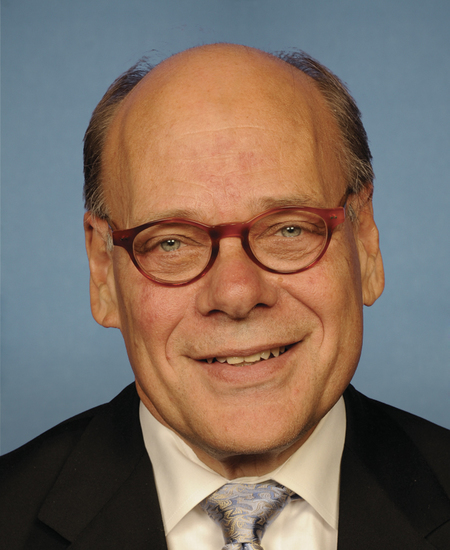
Rep. Steve Cohen
Sponsored bills
This resolution urges the United States to protect the human rights of unhoused individuals, to establish regulations and enforcement tools to protect unhoused individuals from violations of civil and human rights, and to establish blanket legal protections for third parties providing goods or services to unhoused individuals. The resolution also urges the United States to establish a process to award appropriate damages, attorney's fees, and costs to a prevailing plaintiff in an action alleging a violation of the human and civil rights of unhoused individuals. Relatedly, the resolution urges the United States to allow the court in such an action to consider housing status and apply leniency in compiling records, receipts, and documentation from those plaintiffs. The resolution also expresses the intention of the House of Representatives to address the unhoused crisis in the United States by providing funding and imposing requirements on the Department of Housing and Urban Development and the Department of Health and Human Services.
Shift Back to Society Act of 2021 This bill directs the Department of Education to establish a pilot program that awards matching grants to historically Black colleges and universities to provide educational programs for eligible offenders to facilitate reentry into the community. An eligible offender is a convicted criminal offender who has been released from incarceration for not longer than one year or who is scheduled to be released from incarceration within one year. The Government Accountability Office must report to Congress on the results of the pilot program.
Affordable Pricing for Taxpayer-Funded Prescription Drugs Act of 2021 This bill requires companies that receive federal funding for research (or a license of the rights to a patent or regulatory test data) for a biomedical product or service to agree to set reasonable prices for the resulting biomedical product or service. The Department of Health and Human Services (HHS) must determine a reasonable price based on a formula that ensures the U.S. price for the product or service is not more than the median price for the product or service in Canada and six other reference countries with, based on specified criteria, large economies and high incomes. Companies entering these agreements also must report to HHS certain financial information related to the biomedical product or service involved.
Farm System Reform Act of 2021 This bill places a moratorium on large concentrated animal feeding operations; requires country-of-origin labeling for beef, pork, and dairy products; and otherwise revises provisions related to the marketing of livestock, poultry, and meat.
Twenty-First Century Dams Act This bill addresses dam infrastructure and safety. First, the bill provides resources for programs related to state dam safety, the rehabilitation of high hazard potential dams, and the inspection of dams. In particular, the bill reauthorizes through FY2026 the National Dam Safety Program. In addition, the bill reauthorizes through FY2026 a program related to the rehabilitation of structural measures and a program related to water infrastructure. Next, the bill allows a new tax credit for maintaining and enhancing hydroelectric dams that is equal to 30% of the basis of any qualified dam safety, environmental, and grid resilience enhancement property placed in service in a taxable year. It also allows a 30% credit for qualified obsolete river obstruction removal expenditures for demolishing and removing certain nonpowered or hydroelectric dams. The bill directs the Department of the Army to establish a program to carry out dam removal projects. Further, the bill establishes the Dam Removal Council to (1) coordinate with participating federal agencies to annually notify all known dam owners of the availability of dam removal funding and provide guidance on the existing programs of participating agencies; (2) evaluate and submit to Army recommendations for dam removal projects, technical assistance programs, and funding allocations; and (3) develop a dam removal strategy. The bill requires certain dam assessments, including a joint assessment by the U.S. Geological Survey and the Department of Energy. The bill also authorizes specified federal agencies to undertake certain activities related to federal dam infrastructure.

School Food Modernization Act This bill provides for loan guarantees and grants to support healthy meals under the National School Lunch Program and School Breakfast Program. The bill directs the Department of Agriculture (USDA) to issue loan guarantees to local educational agencies (LEAs), school food authorities, tribal organizations, and other eligible entities to finance infrastructure improvements or equipment purchases to facilitate their provision of healthy meals through the school meal programs. USDA must also award competitive matching grants to assist LEAs, school food authorities, and tribal organizations in purchasing the durable equipment and infrastructure they need to serve healthier meals and improve food safety. USDA must give preference under both programs to applicants that demonstrate a substantial or disproportionate need for food service infrastructure or durable equipment, and shall establish fees for the loan guarantee program. In addition, USDA must award competitive matching grants to experienced third-party training institutions to provide school food service personnel with the training and technical assistance they need to (1) meet or exceed nutrition standards under the school meal programs, and (2) improve the efficacy and efficiency of the school meal programs.
This resolution establishes a House Permanent Select Committee on Aging.
Bringing Enhanced Treatments and Therapies to ESRD Recipients Kidney Care Act or the BETTER Kidney Care Act This bill requires the Centers for Medicare & Medicaid Services (CMS) to establish a demonstration program for Medicare beneficiaries with end-stage renal disease (ESRD). Under the program, renal dialysis facilities, kidney disease specialists, physician practices, and other health care practitioners may form an organization that partners with certain health care entities to provide integrated care to beneficiaries with ESRD. Such care must include all covered Medicare benefits as well as transition services for transplantations, palliative care, and hospice. Each organization must have a minimum number or percentage of participating beneficiaries (350 or 60% of beneficiaries served at the organization's facilities) and must also comply with certain fiscal, governance, and quality of care requirements. Additionally, the Government Accountability Office must study certain data that is reported to the CMS regarding pediatric dialysis care, as well as the effects of race-based corrections to a specified kidney function test on referrals of ESRD patients for transplant evaluations.
9/11 Responder and Survivor Health Funding Correction Act This bill increases funding for and otherwise modifies a federal program that provides medical monitoring and treatment to responders and survivors who suffer from health conditions related to the September 11, 2001, attacks on the World Trade Center. Among the changes, the bill allows certain health care providers other than physicians to determine whether an individual's health condition is related to the attacks, and it establishes a research program to study the impacts of the attacks on health and educational outcomes of individuals who were 21 years of age or younger when the attacks occurred.