

Preventing Overdoses and Saving Lives Act of 2021 This bill establishes a grant program for states, Indian tribes, and territories to respond to the opioid crisis. In awarding the grants, the Department of Health and Human Services (HHS) must give priority to recipients with the highest opioid dispensing rates. Recipients must use at least 20% of grant funds to implement a program that requires a prescription for an opioid overdose reversal drug along with an opioid prescription if (1) a patient is prescribed benzodiazepines, medication-assisted treatment, or high-dose opioids; or (2) the prescriber has reason to know of the patient's history with substance use disorders. As part of this program, recipients must also require continuing education on opioid-prescribing practices for prescribers and on recognizing opioid overdose fatalities for coroners. Recipients must use the remaining funds to develop a strategic plan for the jurisdiction's response to the opioid crisis.
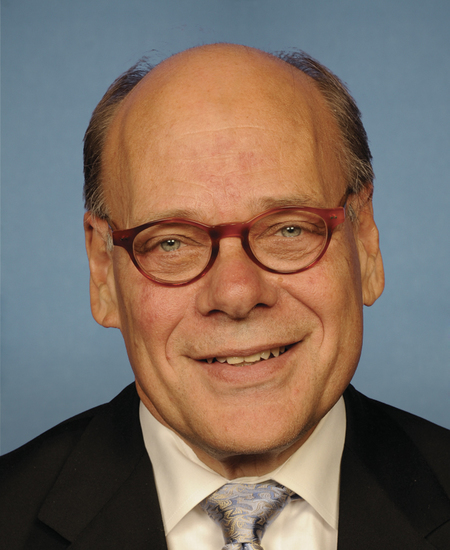
Rep. Steve Cohen
Sponsored bills
This resolution expresses the sense of the House of Representatives that the United States shall recognize kind actions in our country, encourage kindness, spread love, and foster a culture of being kind to one another.
Medicare Negotiation and Competitive Licensing Act of 2021 This bill establishes several requirements relating to the prices of prescription drugs. Specifically, the bill requires the Centers for Medicare & Medicaid Services (CMS) to negotiate with pharmaceutical companies regarding prices for drugs covered under Medicare. (Current law prohibits the CMS from doing so.) If the CMS is unable to negotiate the price of a drug, such drug is subject to competitive licensing in order to further its sale under health insurance programs, notwithstanding existing government-granted exclusivities. The negotiated prices also apply to other federal health care programs, private health insurance, and the uninsured; pharmacies that charge more than the negotiated price for uninsured individuals are subject to civil penalties. Manufacturers must also comply with specified reporting requirements relating to prices and licensing, subject to civil penalties. The bill also institutes an excise tax on drugs for which the price spikes beyond a certain limit, subject to specified exemptions, as well as on drugs for which the price exceeds the negotiated price.
Supporting Expanded Review for Veterans In Combat Environments Act of 2021 or the SERVICE Act of 2021 This bill expands eligibility for Veterans Health Administration mammography screenings to veterans who served in certain locations during specified periods, including those who were exposed to toxic substances at such locations. The specified locations and corresponding time periods include Iraq between August 2, 1990, and February 28, 1991, and from March 19, 2003, until burn pits (areas used for burning solid waste in open air without equipment) are no longer used in Iraq; the Southwest Asia theater of operations, including Kuwait, Saudi Arabia, Oman, and Qatar, from August 2, 1990, until burn pits are no longer used in such locations; and Afghanistan, Djibouti, Syria, Jordan, Egypt, Lebanon, and Yemen from September 11, 2001, until burn pits are no longer used in such locations; and other locations and time periods as determined by the Airborne Hazards and Open Burn Pit Registry. The bill specifies that the listed locations do not include bodies of water around or airspace above such locations.
Protecting Access to Lifesaving Screenings Act of 2021 or the PALS Act This bill makes a series of changes relating to health insurance coverage of screening mammography. Specifically, the bill requires that any provision of law referring to current recommendations of the U.S. Preventive Services Task Force (USPSTF) with respect to breast cancer screening mammography be administered as if (1) the provision referred to USPSTF recommendations last issued before 2009; and (2) those recommendations applied to any screening mammography modality, including any digital modality of such a procedure. This requirement shall also apply to the Veterans Health Administration's policy on mammography screening for veterans. In addition, the bill preserves Medicare coverage for screening mammography, without a requirement for coinsurance, and expands the definition of screening mammography to include any digital modality of such a procedure. Further, the Centers for Medicare & Medicaid Services may not decrease the frequency with which screening mammography may be paid by Medicare for a woman over 39 years of age. In 2009, the USPSTF updated its guidelines to recommend against routine screening mammography for women between 40 to 49 years of age and to recommend biennial, instead of annual, screening mammography for most women between 50 to 74 years of age. In 2015, through the appropriations process, a three-year moratorium was placed on implementing the guidelines; the moratorium was subsequently renewed until January 1, 2023.
Fair COLA for Seniors Act This bill bases cost-of-living adjustments for certain benefits available through federal and military retirement programs, Social Security, and specified programs for veterans on a price index that tracks the spending patterns of older consumers. The Bureau of Labor Statistics of the Department of Labor must publish that price index on a monthly basis.
Improving Medicare Coverage Act This bill temporarily expands eligibility for Medicare. It also temporarily establishes a premium and cost-sharing assistance program for low-income beneficiaries. Specifically, the bill lowers the age of eligibility for Medicare from 65 to 60. The Centers for Medicare & Medicaid Services must establish procedures to provide for automatic enrollment of qualifying individuals. Enrollment must be completed within 11 months of the bill's enactment. The bill also establishes a program under Medicare to assist low-income Medicare beneficiaries with premiums, coinsurance, deductibles, and other costs. Currently, such assistance is provided through Medicare Savings Programs, which are administered by state Medicaid programs. The bill also establishes a related special enrollment period under Medicare, expands eligibility for assistance to beneficiaries with income up to 200% of the federal poverty line, and provides for joint eligibility determinations with respect to the bill's program and the low-income subsidy program under the Medicare prescription drug benefit. The bill's provisions generally take effect six months after the bill's enactment and terminate five years later.
Prohibition of Medicaid Funding for Conversion Therapy Act This bill prohibits state Medicaid programs from covering conversion therapy. The bill defines conversion therapy as any practice or treatment that seeks to change a person's sexual orientation or gender identity in exchange for monetary compensation.
Manatee Protection Act of 2021 This bill requires the Department of the Interior to include the West Indian manatee ( Trichechus manatus ) in the endangered species list and give the species protections provided to endangered species.
Medicare Medically Necessary Dental Care Act of 2021 This bill allows for coverage of certain medically necessary dental services under Medicare. Specifically, the bill allows for coverage of dental services that are furnished (1) in conjunction with treatment relating to a prosthetic heart valve replacement, cancer of the head or neck, lymphoma, leukemia, or organ transplantation; and (2) within one year after the date of diagnosis or the date of the related surgical or medical treatment for the diagnosis, whichever is later.