

NCAA Accountability Act of 2021 This bill establishes due process and notice requirements for the investigations carried out by certain intercollegiate athletic associations and related organizations. Specifically, the requirements apply to interstate athletic associations, conferences, or other organizations with authority over intercollegiate athletics or that administer intercollegiate athletics and that have at least 900 member institutions. Such organizations must establish and administer due process requirements for the investigation of any member institution, student athlete enrolled in such member institution, or other individual for infractions of the athletic association's bylaws or failure to meet the conditions and obligations of membership. The Department of Justice must establish procedures for (1) individuals and entities to file complaints, (2) the investigation of complaints that have a substantial probability of validity, and (3) the investigation of other violations of this bill.
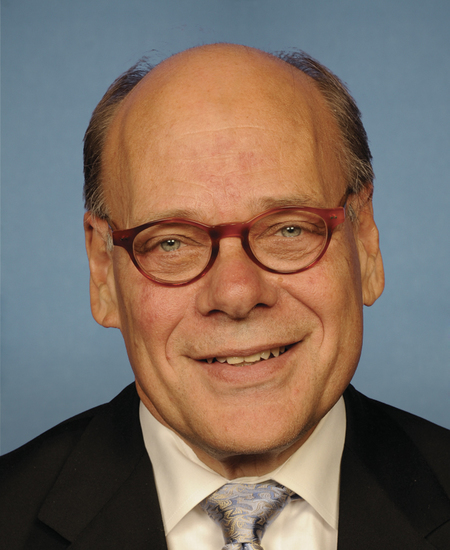
Rep. Steve Cohen
Sponsored bills
Expanding Access to Diabetes Self-Management Training Act of 2021 This bill expands Medicare coverage of diabetes outpatient self-management training. It also requires the Center for Medicare and Medicaid Innovation to test a model in which such training is provided virtually.
This resolution expresses that the House of Representatives applauds the Biden administration for reaffirming the U.S. commitment to the Paris Agreement on climate change and to our collective responsibility to globally combat climate change; encourages the Biden administration to implement measures to ensure global climate change remains a top priority for this and future administrations and to cement the United States as a global leader in the fight to mitigate its most severe consequences; voices strong commitment as legislators toward achieving the climate goals of the Paris Agreement, fulfilling the forthcoming pledges from the COP26 in Glasgow, Scotland, and advancing other international efforts to keep global warming to no more than 1.5 degrees Celsius and realize global net-zero carbon emissions by 2050 using a whole-of-government approach; and recognizes the critical responsibility of the United States and other developed nations to ensure all societies have the capabilities to transition to a clean energy economy, the resources to protect against climate-induced disasters, and the necessary assistance to endure climate-related challenges to food security, regional migration, and public health.
Access to Breast Cancer Diagnosis Act of 20 21 This bill prohibits private health insurance plans from imposing higher cost-sharing requirements on breast cancer diagnostic examinations than initial breast cancer screening examinations. Diagnostic examinations are generally required after an initial screening detects an abnormality and typically require additional mammogram images (e.g., x-rays).
Cady Housh and Gemesha Thomas Student Suicide Prevention Act of 2021 This bill reauthorizes through FY2028, and otherwise revises, grants administered by the Substance Abuse and Mental Health Services Administration (SAMHSA) to support youth suicide early-intervention and prevention strategies. Specifically, the bill requires SAMHSA to award a portion of such grants for statewide training programs on emotional well-being, mental health, and suicide awareness and prevention for elementary and secondary school students and staff.
Social Security for Future Generations Act of 2021 This bill increases specified benefits and taxes related to, and otherwise modifies, the Social Security program. Changes to benefits include increasing the primary insurance amount for certain beneficiaries; revising the method for calculating cost-of-living adjustments by using a price index that tracks the spending patterns of older consumers; extending benefits through age 22 to full-time students who are eligible children of deceased, disabled, or retired workers; establishing a new minimum benefit for certain lifetime low-earners; and establishing an alternative benefit based on combined household benefits for widows or widowers in two-income households. Changes to taxes include subjecting earnings in excess of $250,000 to Social Security payroll taxes. No taxes shall be applied to earnings between the contribution base (the maximum amount subject to the Social Security payroll tax, set at $142,800 for 2021) and $250,000. The bill preserves eligibility for Supplemental Security Income payments and other means-tested programs, despite any changes to an individual's Social Security benefits under the bill.
Young African Leaders Initiative Act of 2021 or the YALI Act of 2021 This bill provides statutory authority for the Young African Leaders Initiative (YALI), which seeks to build the capacity of young African leaders in sub-Saharan Africa in the areas of business, civic engagement, or public administration. The YALI program must support the participation of fellows from Africa in the Mandela Washington Fellowships for Young African Leaders and offer training through regional leadership centers in sub-Saharan Africa to individuals who have demonstrated strong capabilities in entrepreneurship, innovation, public service and leadership, and peace building and conflict resolution. The Department of State must oversee all U.S.-based activities carried out under the program, and the United States should continue to support program initiatives in sub-Saharan Africa. The State Department must also submit a plan for implementing the program and annual reports on program progress and recommendations for improvements or changes to the program.
Social Security 2100: A Sacred Trust This bill makes changes to Social Security benefits, taxes, and other aspects of the program, including by raising the primary insurance amount, increasing the maximum taxable earnings that are subject to Social Security payroll taxes, and requiring Social Security account statements to be mailed unless the individual recipient opts for electronic delivery.
Family Violence Prevention and Services Improvement Act of 20 21 This bill modifies, expands, and reauthorizes through FY2026 the Family Violence and Prevention Services program, which funds emergency shelters and supports related assistance for victims of domestic violence. Specifically, the bill requires the Department of Health and Human Services (HHS) to award grants and enter cooperative agreements with state and tribal domestic violence coalitions, and community-based organizations, to support prevention services. Depending on the type of organization, grant recipients must use funding to (1) provide technical assistance; (2) promote evidence-informed prevention strategies; (3) implement coordinated, community responses to reduce risk factors for family violence; and (4) develop prevention partnership strategies. Further, HHS must award specified grants to organizations that provide population-specific services in underserved communities and to community-based organizations that provide culturally specific domestic violence services to racial and ethnic minority groups. The bill also establishes a grants program for tribal domestic violence coalitions to support the provision of local, tribal, family domestic or dating violence services and requires HHS to award a grant for the administration of a hotline dedicated to serving Indians affected by domestic violence. In addition, the bill modifies certain program-wide definitions; changes the requirements for specified grant applications, eligibility criteria, and use of funds; and makes other technical revisions.
Original National Domestic Violence Awareness Month Resolution of 2021 This resolution supports the goals and ideals of National Domestic Violence Awareness Month. Further, it expresses the sense of the House of Representatives that Congress should continue to raise awareness of and support programs to end domestic violence.