Medical Marijuana Research Act This bill establishes a new, separate registration process to facilitate medical marijuana research. Specifically, it directs the Drug Enforcement Administration to register (1) practitioners to conduct medical marijuana research, and (2) manufacturers and distributors to supply marijuana for such research. Additionally, the Department of Health and Human Services must continue to produce marijuana through the National Institute on Drug Abuse Drug Supply Program and implement a specialized process for supplying marijuana products available through state-authorized marijuana programs to researchers until manufacturers and distributors can provide a sufficient supply of marijuana for medical research.
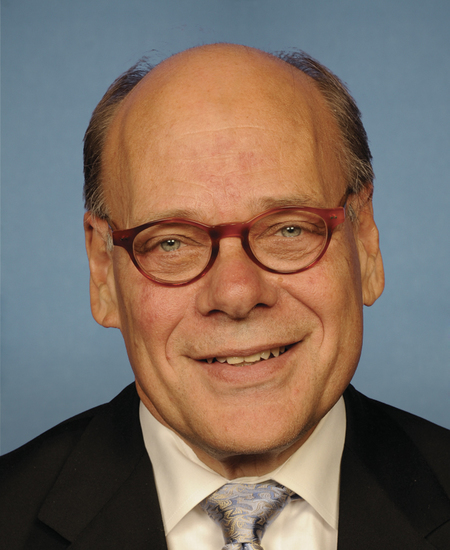
Rep. Steve Cohen
Sponsored bills
Ensuring Lasting Smiles Act This bill requires private health insurance plans to cover diagnosis and treatment of congenital anomalies and birth defects, such as reconstructive services and items. Coverage must include services and items that functionally improve, repair, or restore any body part that is medically necessary for normal bodily functions or appearance, as determined by the treating physician. Coverage limits and cost-sharing requirements for such services and items may not be more restrictive than those applicable to all medical and surgical benefits under the plan.
Marijuana Opportunity Reinvestment and Expungement Act or the MORE Act This bill decriminalizes marijuana. Specifically, it removes marijuana from the list of scheduled substances under the Controlled Substances Act and eliminates criminal penalties for an individual who manufactures, distributes, or possesses marijuana. The bill also makes other changes, including the following: replaces statutory references to marijuana and marihuana with cannabis , requires the Bureau of Labor Statistics to regularly publish demographic data on cannabis business owners and employees, establishes a trust fund to support various programs and services for individuals and businesses in communities impacted by the war on drugs, imposes an excise tax on cannabis products produced in or imported into the United States and an occupational tax on cannabis production facilities and export warehouses, makes Small Business Administration loans and services available to entities that are cannabis-related legitimate businesses or service providers, prohibits the denial of federal public benefits to a person on the basis of certain cannabis-related conduct or convictions, prohibits the denial of benefits and protections under immigration laws on the basis of a cannabis-related event (e.g., conduct or a conviction), establishes a process to expunge convictions and conduct sentencing review hearings related to federal cannabis offenses, directs the Government Accountability Office to study the societal impact of state legalization of recreational cannabis, directs the National Highway Traffic Safety Administration to study methods for determining whether a driver is impaired by marijuana, directs the National Institute for Occupational Safety and Health to study the impact of state legalization of recreational cannabis on the workplace, and directs the Department of Education to study the impact of state legalization of recreational cannabis on schools and school-aged children.

This resolution recognizes the accomplishments and example of Cesar Estrada Chavez. The resolution also encourages the people of the United States to commemorate his legacy and to always remember his rallying cry, "Si, se puede!" (which means "Yes, we can!").
Restorative Practices in Schools Act of 2022 This bill requires the Department of Education to award grants for local educational agencies to replace existing zero-tolerance disciplinary polices and punitive discipline in elementary and secondary schools with restorative practices. Additionally, the bill directs the Government Accountability Office to study and report on the use of discipline practices that funnel students out of school and toward the juvenile legal and criminal legal systems (i.e., the school-to-prison pipeline).
Cerebral Palsy Research Program Authorization Act of 2022 This bill expands research activities related to cerebral palsy (a group of disorders caused by abnormal brain development or damage that affects an individual's ability to move and maintain balance and posture). Specifically, the Centers for Disease Control and Prevention must carry out a cerebral palsy research program that addresses diagnosis and treatment, public health surveillance, and related matters. Additionally, the National Institute of Neurological Disorders and Stroke and the Eunice Kennedy Shriver National Institute of Child Health and Human Development must update an existing strategic plan for cerebral palsy research.
Cabin Air Safety Act of 2022 This bill directs the Federal Aviation Administration (FAA) to implement regulations regarding smoke or fume incidents on aircraft (excluding helicopters). Specifically, the bill requires flight attendants, pilots, aircraft maintenance technicians, airport first responders, and emergency response teams to receive annual training on how to respond to incidents on aircraft; the FAA to develop a standardized form and system for reporting incidents involving smoke or fumes; the FAA to conduct an investigation after a report is submitted about incidents of smoke or fumes if anybody on the aircraft required medical attention; and air carriers to install and operate onboard detectors and other air quality monitoring equipment situated in the air supply system to enable pilots and maintenance technicians to locate the sources of air supply contamination, including carbon monoxide.
This resolution expresses the sense of the House of Representatives that prior to introducing U.S. Armed Forces into hostilities, the House should also determine whether such introduction is for the purpose of a just cause, such as stopping a genocide or ethnic cleansing; whether the proposed action will be in response, and will be proportional, to the underlying just cause, and will be undertaken with the intent to reestablish peace; whether the presumed benefits of the proposed action outweigh the harm done; whether there is a reasonable probability that the proposed action will succeed; and whether all alternatives to military action have been exhausted.
Strengthen Kids' Mental Health Now Act of 2022 This bill establishes several requirements to support the provision of behavioral health services under Medicaid and other programs, particularly for children. For example, the bill temporarily requires payment for pediatric mental, emotional, and behavioral health services under Medicaid to align with Medicare payments to providers. The bill provides for a 100% Federal Medical Assistance Percentage (i.e., federal matching rate) for any associated additional expenditures. The Centers for Medicare & Medicaid Services must issue guidance on how state Medicaid programs may expand the availability of telehealth services and mental, emotional, and behavioral health services. In addition, the Health Resources and Services Administration must award grants to support (1) pediatric behavioral health care integration in communities, (2) pediatric mental health and substance use disorder workforce training, and (3) the infrastructure of pediatric hospitals and rural health clinics with respect to behavioral health services.
Prohibiting Punishment of Acquitted Conduct Act of 2021 This bill limits the consideration of acquitted conduct (e.g., conduct underlying criminal charges for which an individual was found not guilty) by a federal court at sentencing.