

Assault Weapons Ban of 2022 This bill makes it a crime to knowingly import, sell, manufacture, transfer, or possess a semiautomatic assault weapon (SAW) or large capacity ammunition feeding device (LCAFD). The prohibition does not apply to a firearm that is (1) manually operated by bolt, pump, lever, or slide action, except for certain shotguns; (2) permanently inoperable; (3) an antique; (4) only capable of firing rimfire ammunition; or (5) a rifle or shotgun specifically identified by make and model. The bill also exempts from the prohibition the following, with respect to a SAW or LCAFD: importation, sale, manufacture, transfer, or possession related to certain law enforcement efforts, or authorized tests or experiments; importation, sale, transfer, or possession related to securing nuclear materials; and possession by a retired law enforcement officer. The bill permits continued possession, sale, or transfer of a grandfathered SAW, which must be securely stored. A licensed gun dealer must conduct a background check prior to the sale or transfer of a grandfathered SAW between private parties. The bill permits continued possession of, but prohibits sale or transfer of, a grandfathered LCAFD. Newly manufactured LCAFDs must display serial number identification. Newly manufactured SAWs and LCAFDs must display the date of manufacture. The bill also allows a state or local government to use Edward Byrne Memorial Justice Assistance Grant Program funds to compensate individuals who surrender a SAW or LCAFD under a buy-back program.
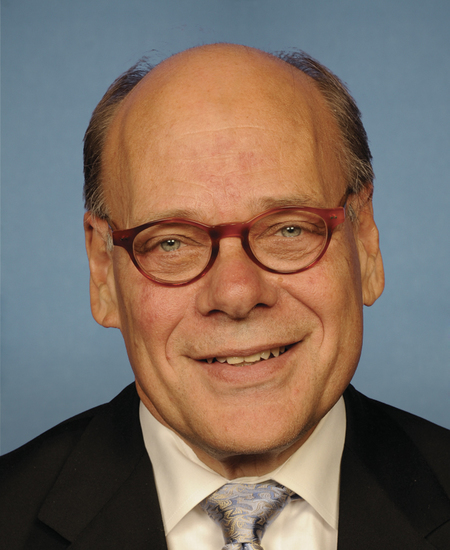
Rep. Steve Cohen
Sponsored bills
Banning Oil Exports to Foreign Adversaries Act This bill requires the Department of Energy (DOE) to prohibit the export or sale of petroleum products (e.g., crude oil) from the Strategic Petroleum Reserve to (1) China, North Korea, Russia, and Iran; (2) any other country the government of which is subject to sanctions imposed by the United States; and (3) any entity owned, controlled, or influenced by such countries or the Chinese Communist Party. However, DOE may issue a waiver of the prohibition if the export or sale of petroleum products is in the national security interests of the United States.
Restore Protections for Dialysis Patients Act This bill specifies that private health insurers may not limit, restrict, or condition benefits for renal dialysis services for individuals with end-stage renal disease as compared to other types of benefits for other medical conditions under Medicare secondary payer rules.
Summer Meals Act of 2021 This bill revises provisions related to the Summer Food Service Program (SFSP) of the Department of Agriculture (USDA), which provides meals to children and teens in low-income areas during the summer months when school is not in session. The bill redefines areas in which poor economic conditions exist , where the SFSP may operate, as areas in which at least 40% (currently, 50%) of the children have been determined to be eligible for free or reduced price school meals under the school lunch and breakfast programs. The bill reimburses service institutions (other than school food authorities) for up to one meal and one snack per child each day during after-school hours, weekends, and school holidays during the regular school calendar. Currently, such institutions are reimbursed for meals and snacks served to children over the summer months or to children who are on vacation under a continuous school calendar. USDA may award competitive grants to service institutions to increase participation in the summer food service program for children at congregate feeding sites through innovative approaches to limited transportation and mobile meal trucks. Service institutions that are participating in the summer food service program for children may serve up to three meals, or two meals and one snack, during each day of operation. Currently, this option is reserved for camps and service institutions that serve meals primarily to migrant children.
Net Neutrality and Broadband Justice Act of 2022 This bill expressly classifies broadband internet as a telecommunications service rather than an information service for purposes of regulation by the Federal Communications Commission. (Current law treats providers of telecommunications services as common carriers and subjects them to more stringent requirements.)
Preserving Access to Home Health Act of 2022 This bill restricts the Centers for Medicare & Medicaid Services (CMS) from decreasing payments for Medicare home health services based on certain adjustments until 2026. Current law requires the CMS to make certain permanent and temporary payment adjustments under the Medicare prospective payment system for home health services based on behavioral assumptions for 2020 through 2026. The bill restricts the CMS from making adjustments that decrease payments until 2026; the CMS must also ensure that any such necessary decreases are made before 2032.
Billionaire Minimum Income Tax Act This bill imposes a minimum tax on individual taxpayers whose net worth for the taxable year exceeds $100 million. The tax is equal to 20% of the sum of a taxpayer's taxable income, plus net unrealized gains for the taxable year. The tax may not exceed 40% of the amount by which the taxpayer's net worth exceeds $100 million.
Russia is a State Sponsor of Terrorism Act This bill designates Russia as a state sponsor of terrorism. (A country with this designation is subject to certain restrictions, including a ban on receiving U.S. defense exports and limits on receiving U.S. foreign assistance.)
Keeping Girls in School Act This bill authorizes the U.S. Agency for International Development (USAID) to enter into agreements to address social, cultural, health, and other barriers that adolescent girls face in accessing quality secondary education. The USAID shall seek to ensure that such activities meet various requirements related to monitoring and evaluating outcomes, collecting data, and using specified indicators and methodologies for international basic education. The Department of State shall periodically update and report to Congress a publicly available U.S. global strategy to empower adolescent girls, and the USAID shall periodically report to Congress on the activities initiated under this bill and efforts to monitor and evaluate such activities.
Advancing Telehealth Beyond COVID-19 Act of 2022 This bill modifies the extension of certain Medicare telehealth flexibilities after the end of the COVID-19 public health emergency. Specifically, the bill provides that certain flexibilities continue to apply until December 31, 2024, if the emergency period ends before that date. The bill allows beneficiaries to continue to receive telehealth services at any site, regardless of type or location (e.g., the beneficiary's home); occupational therapists, physical therapists, speech-language pathologists, and audiologists to continue to furnish telehealth services; federally qualified health centers and rural health clinics to continue to serve as the distant site (i.e., the location of the health care practitioner); evaluation and management and behavioral health services to continue to be provided via audio-only technology; and hospice physicians and nurse practitioners to continue to complete certain requirements relating to patient recertifications via telehealth. The bill also delays implementation of certain in-person evaluation requirements for mental health telehealth services until January 1, 2025, or the first day after the end of the emergency period, whichever is later.