Transnational Repression Accountability and Prevention Act of 2021 or the TRAP Act of 2021 This bill establishes requirements related to U.S. cooperation with International Criminal Police Organization (INTERPOL) communications. Specifically, no U.S. agency or department may extradite an individual based solely on an INTERPOL notice. In addition, the Department of Justice and the Department of State must take certain actions to support reforms to increase transparency of INTERPOL, including with respect to its communications. The bill also requires reports on countries that abuse INTERPOL communications for political motives and other unlawful purposes.
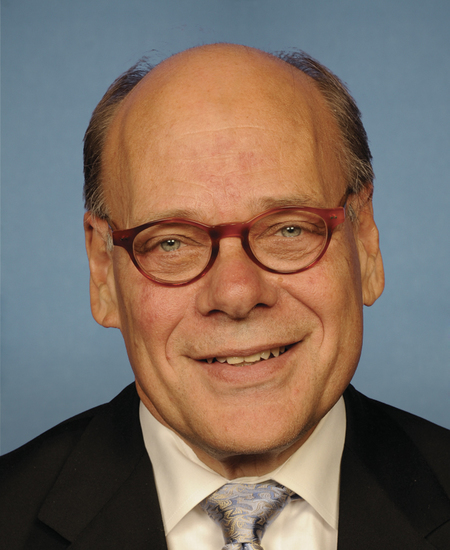
Rep. Steve Cohen
Sponsored bills
Supreme Court Ethics Act This bill establishes a new statutory requirement for the Judicial Conference of the United States to issue a judicial code of conduct for judges and justices of U.S. courts, including Justices of the Supreme Court. Currently, the Judicial Conference issues a code of conduct for judges of U.S. courts (but not for Justices of the Supreme Court).
Foreign Extortion Prevention Act This bill establishes a federal criminal offense involving bribery by foreign officials. Specifically, the bill makes it a crime for foreign officials to demand or accept anything of value personally or for another person or a nongovernmental entity to influence the performance of an official act or otherwise confer an improper advantage. The bill explicitly grants extraterritorial jurisdiction over the offense. A violation is subject to criminal penalties—a fine, a prison term of up to 15 years, or both. Finally, the bill establishes a Victims of Kleptocracy Fund in the Treasury and directs fines and penalties for violations to be deposited into the fund for anti-corruption initiatives.
Disabled Access Credit Expansion Act of 2021 This bill modifies the tax credit allowed to eligible small businesses for expenditures to provide access to disabled individuals to increase (1) the maximum allowable amount of such credit to $20,500, and (2) the limitation on the gross receipts of such businesses to $2.5 million for purposes of determining eligibility for the credit. The bill directs the Department of Justice (DOD) to carry out an ADA (Americans with Disabilities Act) Mediation Program to facilitate voluntary mediation to resolve disputes arising under the ADA and to provide training for mediators. DOD must report to Congress on its ADA Information Line (a toll-free line to provide information and materials to the public about ADA requirements).
Revealing and Explaining Visa Exclusions for Accountability and Legitimacy Act or the REVEAL Act This bill authorizes the Department of State to publicly disclose the identity of an alien who has been denied admission into the United States because that alien's entry would pose potentially serious adverse foreign policy consequences. The State Department may also reveal the grounds that it relied on to make such a determination. The President must annually report to Congress a list of individuals denied a visa on such foreign policy grounds and another list of the instances when the State Department chose to not publicly disclose the identity of such an individual.
Daniel Anderl Judicial Security and Privacy Act of 2021 This bill generally prohibits federal agencies and private businesses from publicly posting the personally identifiable information (e.g., home addresses) of federal judges and their immediate family members. It also (1) requires information to be removed upon written request from the federal judge concerned, (2) prohibits data brokers from purchasing or selling such information, and (3) establishes programs to protect such information at the state and local level and to enhance security for judges.
Ending Homelessness Act of 2021 This bill expands the housing choice voucher program and provides assistance to homeless individuals and families. Specifically, the bill provides FY2022-2025 funding for the expansion of the housing choice voucher program for certain extremely low income families. Furthermore, beginning in FY2026, the bill creates and funds an entitlement to housing choice vouchers for certain extremely low income families. Eligibility for the entitlement expands annually, extending to low-income families by FY2030. The bill also reduces the geographic area used to calculate an area's fair market rent for purposes of voucher payment standards and prohibits the use of criminal history in determining eligibility for certain housing assistance. Additionally, the bill prohibits housing discrimination on the basis of a renter's source of income or a renter's veteran status. The bill also provides additional FY2022-FY2026 funding for the Department of Housing and Urban Development (HUD) to assist the homeless, including to award emergency relief grants in jurisdictions with the highest need and award grants to provide outreach and coordinate services. Furthermore, the bill provides additional FY2022-FY2026 funding for the Housing Trust Fund, which provides affordable housing for extremely low-income and very low-income families. While this additional funding is available, HUD must ensure that priority for occupancy in assisted units is given to individuals and families who are homeless. Finally, the bill permanently reauthorizes certain homeless assistance grants and makes permanent the U.S. Interagency Council on Homelessness.
Housing is Infrastructure Act of 2021 This bill generally addresses housing affordability and infrastructure. The bill authorizes the Department of Housing and Urban Development (HUD) to provide grants, programs, and other support related to public housing, affordable housing preservation and construction, and mortgage access. The bill also establishes and funds the National Investment Authority (NIA) which must design, finance, and implement a strategy of long-term national economic growth and development. The NIA must select projects that coordinate investment of public and private capital in equitable, inclusive, and sustainable growth of the economy. Furthermore, the bill establishes the National Infrastructure Bank (NIB) to implement the strategy by engaging in credit market activities that support public and private investment in critical public infrastructure projects. The bill gives the NIA bond issuing authority and authorizes the Board of Governors of the Federal Reserve System to purchase these bonds. The Federal Reserve must lend funds on a short-term basis upon the request of the NIB and other subsidiaries. Additionally, the Department of the Treasury must provide for a line of credit not to exceed 100% of the NIA's total assets. Finally, the bill (1) authorizes HUD to provide support for fair housing organizations, and (2) requires consultation with a fair housing enforcement organization as part of an application for certain housing grants or funds.
John Tanner Fairness and Independence in Redistricting Act This bill establishes requirements regarding congressional redistricting, including that redistricting plans must be developed by an independent redistricting commission. A state that has been redistricted after an apportionment of Representatives may not be redistricted again until after the next apportionment, unless the state is ordered by a court to conduct a subsequent redistricting in order to comply with the Constitution or enforce the Voting Rights Act of 1965. Each state must establish an independent redistricting commission to develop redistricting plans that meet specified criteria. If such a plan is not enacted into law, a state's highest court may select a plan developed by the state's commission. If the state court does not select a plan, a U.S. district court must develop a plan. The Election Assistance Commission must make payments to states to carry out redistricting.
Combating Global Corruption Act of 2021 This bill requires the Department of State to address corruption, including related to the Nord Stream 2 pipeline (a national gas pipeline expected to increase Russia's natural gas export capacity). The State Department must annually publish a ranking of foreign countries based on their government's efforts to eliminate corruption. The bill outlines the minimum standards that the State Department must consider when creating the ranking. These considerations include, for example, whether a country has criminalized corruption, adopted measures to prevent corruption, and complied with the United Nations Convention Against Corruption and other relevant international agreements. Tier one countries meet the standards; tier two countries make some efforts to meet the standards; tier three countries make de minimis or no efforts to meet the standards. If a country is ranked in the second or third tier, the State Department must designate an anti-corruption contact at the U.S. diplomatic post in that country to promote good governance and combat corruption. The bill also requires the State Department, in coordination with the Department of the Treasury, to evaluate whether to impose asset- and visa-blocking sanctions against foreign persons engaged in significant corruption (1) in tier three countries, or (2) related to the Nord Stream 2 pipeline. The State Department must report to Congress about any sanctions imposed under this bill. The evaluation and reporting requirements concerning the Nord Stream 2 pipeline terminate after five years.