

Prevent All Soring Tactics Act of 2022 or the PAST Act of 2022 This bill addresses the practice of soring horses. The soring of horses includes various actions taken on horses' limbs to produce higher gaits that may cause pain, distress, inflammation, or lameness. Specifically, the bill expands soring regulation and enforcement at horse shows, exhibitions, sales, and auctions, including by establishing a new system for inspecting horses for soring. In addition, the bill increases penalties for violations.
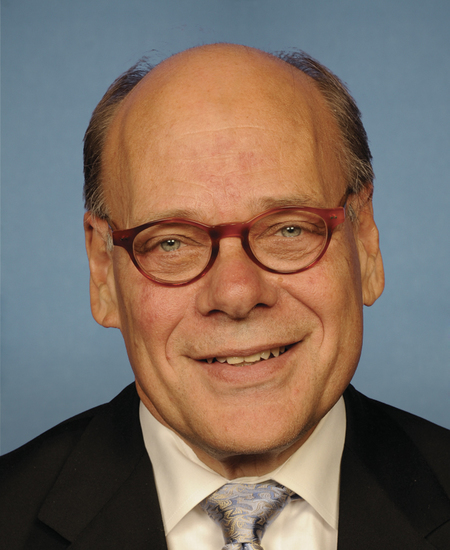
Rep. Steve Cohen
Sponsored bills
National Aviation Preparedness Plan Act of 2022 This bill directs the Department of Transportation (DOT) to develop a national aviation preparedness plan for communicable disease outbreaks, including to (1) create a process to identify appropriate personal protective equipment to reduce the likelihood of exposure to a communicable disease that has the potential to cause an epidemic or pandemic of infectious disease that would constitute a public health emergency of international concern (i.e., a covered communicable disease); and (2) improve coordination between airports, air carriers, and governmental entities with respect to preparing for and responding to communicable disease outbreaks. In developing the plan, DOT must consult with aviation industry and labor stakeholders such as air carriers. The Government Accountability Office must conduct a study assessing the plan, including (1) whether the plan meets the obligations of the United States under international conventions and treaties, and (2) the extent to which the U.S. aviation system is prepared to respond to an outbreak of a covered communicable disease.
Norman Y. Mineta Japanese American Confinement Education Act This bill increases the authorization of appropriations for the Japanese American Confinement Sites (JACS) grant program, which supports the preservation of U.S. confinement sites that were used to detain Japanese Americans during World War II (i.e., internment camps). It also establishes a program within JACS to provide grants to Japanese American nonprofits to educate individuals about the historical significance of these events.
Maddy summaryHRES 1459 is a symbolic House resolution formally acknowledging the service and sacrifices of veterans who served during the Korean War (1950-1953) and current Korean Defense Veterans stationed in South Korea. It recognizes the contributions of approximately 1.8 million U.S. military personnel who served under the UN Command, including the 36,574 U.S. service members who died. The resolution specifically honors the ongoing service of nearly 25,000 U.S. personnel currently stationed in South Korea to maintain the armistice. As a non-binding resolution, it does not create new benefits or policy changes but serves as a formal statement of congressional recognition.
Veterans Protection from Fraud Act This bill makes enhanced criminal penalties for telemarking or email marketing fraud offenses applicable to telemarking or email fraud offenses that target veterans.
Asunción Valdivia Heat Illness and Fatality Prevention Act of 2022 This bill directs the Occupational Safety and Health Administration to promulgate a standard that requires employers to implement certain measures for protecting workers from heat stress and related illnesses or injuries. Heat stress refers to the load of heat that a person experiences due to sources of heat or heat retention (including metabolic heat, environmental factors, and clothing or personal protective equipment) or the presence of heat in a work setting. Further, if an employer cannot reduce exposure to heat stress below hazardous levels through engineering controls (e.g., heat shields and insulation) or personal protective equipment (e.g., heat reflective clothing), the employer must implement a program that mitigates such exposure through access to appropriate hydration and cool-down spaces, acclimatization policies, and periodic paid rest breaks. Additionally, the bill establishes requirements concerning judicial review, implementation, enforcement, recordkeeping, and whistle-blower protections related to the standard. The bill also requires the Department of Labor to include questions about heat-related illness and injury in the National Agricultural Workers Survey (an employment-based, random-sample survey of U.S. crop workers that collects demographic, employment, and health information).
This concurrent resolution expresses opposition to the application of criminal laws to pregnancy outcomes and affirms that people deserve access to high-quality health care without fear of reprisal or punishment.
This concurrent resolution expresses the sense of Congress for ensuring the speediest end of the COVID-19 pandemic the United States and European governments should unite to enact a World Trade Organization Agreement on Trade-Related Aspects of Intellectual Property Rights waiver, require technology transfer, and otherwise facilitate access in low- and middle-income countries to high-quality COVID-19 mRNA vaccines; and vital U.S. partners, with shared values who also prioritize global cooperation and saving lives and livelihoods worldwide, should unite to remove all obstacles to global access to COVID-19 vaccines, diagnostics, treatments, oxygen, and other medical products to advance the common goal of quickly ending the COVID-19 pandemic. The resolution states that the U.S. government has an obligation to the American people, whose taxpayer funds helped to develop lifesaving COVID-19 vaccines, to ensure that doses are ultimately delivered to those most in need around the world so as to ensure the global COVID-19 vaccination necessary to end the pandemic.
This joint resolution proposes a constitutional amendment to prohibit the Constitution from being construed to forbid Congress or the states from (1) imposing reasonable viewpoint-neutral limitations on private campaign contributions or independent election expenditures; or (2) enacting systems of public campaign financing, including those designed to restrict the influence of private wealth by offsetting campaign spending or independent expenditures with increased public funding.
Maddy summaryHJRES 53 proposes a constitutional amendment to ban slavery and involuntary servitude as a criminal punishment. Currently, the 13th Amendment to the U.S. Constitution permits such punishments for crimes, creating a legal loophole. If ratified by 3/4 of state legislatures, this amendment would eliminate that exception nationwide, making it unconstitutional to impose forced labor or slavery as part of criminal sentences. The change would directly affect all states' criminal justice systems, particularly prison labor practices, by prohibiting these punishments for any offense.