Ending Taxpayer Welfare for Oil and Gas Companies Act of 2021 This bill addresses royalties related to the development of federal energy resources. Among other requirements, the bill increases the onshore royalty rates for new oil, gas, and coal leases; increases onshore rental rates for oil and gas leasing; modifies the current onshore oil and gas minimum bid from $2 to $10 and requires it to be adjusted every four years for inflation; and increases inspection fees and penalties on oil and gas operators.
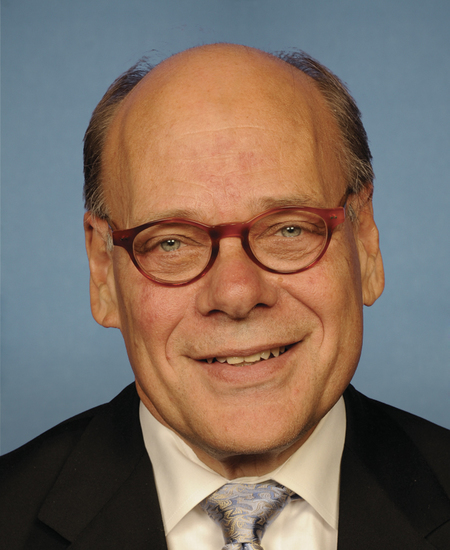
Rep. Steve Cohen
Sponsored bills
Restoring Community Input and Public Protections in Oil and Gas Leasing Act of 2021 This bill modifies several provisions related to oil and gas leasing on public lands. Among other requirements, the bill replaces the competitive auction process with a competitive-sealed bidding process. It also eliminates non-competitive bidding. Additionally, the bill increases royalty rates, rental rates, and the minimum bid amount. Further, the bill creates a fee for nominating lands for leasing. Lease sales must be held in each state no more than three times per year instead of quarterly. The bill also decreases lease term durations from 10 to 5 years. Certain lease information must be made available on public websites, including the names of all current and former lessees and operators. The bill also adds a number of new provisions related to protection of private surface estate owners. Finally, the bill establishes requirements to protect water resources, including by requiring oil or gas operators to replace certain water supplies affected by drilling, hydraulic fracturing (i.e., fracking), or production operations. In addition, the Bureau of Land Management must issue regulations governing the use of fracking under oil and gas leases for federal lands. The regulations must require (1) baseline water testing, and (2) public disclosure of each chemical used for fracking.

Restoring Resilient Reefs Act of 2021 This bill addresses the conservation and sustainability of coral reef ecosystems. Among other things, the bill reauthorizes through FY2024 and revises the Coral Reef Conservation Program; directs the National Oceanic and Atmospheric Administration (NOAA) to provide block grants to states to support state coral reef management and restoration; requires NOAA to establish standards for the formation of partnerships among government and community members for the stewardship of coral reefs; provides statutory authority for the U.S. Coral Reef Task Force to lead, coordinate, and strengthen federal government actions to preserve, conserve, and restore coral reef ecosystems; requires the Department of the Interior to provide grants upon the declaration of a coral reef emergency to implement emergency plans; authorizes Interior to provide scientific expertise, technical assistance, and financial assistance for the conservation and restoration of coral reefs; and establishes a National Coral Reef Management Fellowship Program.
This resolution urges the President to take actions to limit, suspend, or terminate Russia's participation in the organs and specialized agencies of the United Nations (U.N.), including the U.N. Security Council.
This resolution expresses that the House of Representatives is committed to building upon the 20 years of success of the George McGovern-Robert Dole International Food for Education and Child Nutrition Program, complementing humanitarian assistance efforts and development programs through the continued implementation of the McGovern-Dole Program to address global food insecurity and create conditions for peace and stability, and supporting U.S. farmers, millers, shippers, and commodity groups that provide agricultural commodities for use in the McGovern-Dole Program to help combat global malnutrition and food insecurity and advance global education.
Respect for Marriage Act This act provides statutory authority for same-sex and interracial marriages. Specifically, the act replaces provisions that define, for purposes of federal law, marriage as between a man and a woman and spouse as a person of the opposite sex with provisions that recognize any marriage between two individuals that is valid under state law. (The Supreme Court held that the current provisions were unconstitutional in United States v. Windsor in 2013.) The act also replaces provisions that do not require states to recognize same-sex marriages from other states with provisions that prohibit the denial of full faith and credit or any right or claim relating to out-of-state marriages on the basis of sex, race, ethnicity, or national origin. (The Supreme Court held that state laws barring same-sex marriages were unconstitutional in Obergefell v. Hodges in 2015; the Court held that state laws barring interracial marriages were unconstitutional in Loving v. Virginia in 1967.) The act allows the Department of Justice to bring a civil action and establishes a private right of action for violations. The act does not (1) affect religious liberties or conscience protections that are available under the Constitution or federal law, (2) require religious organizations to provide goods or services to formally recognize or celebrate a marriage, (3) affect any benefits or rights that do not arise from a marriage, or (4) recognize under federal law any marriage between more than two individuals.
International Violence Against Women Act of 2022 This bill requires a U.S. global strategy to prevent and respond to violence against women and girls. The bill establishes in the Department of State an Office of Global Women's Issues, which shall be headed by an Ambassador-at-Large for Global Women's Issues. The Ambassador-at-Large shall (1) coordinate U.S. government efforts regarding gender equality and the advancement of women and girls in foreign policy, and (2) develop or update periodically a U.S. global strategy to prevent and respond to gender-based violence. The bill establishes in the U.S. Agency for International Development the position of Senior Coordinator for Gender Equality and Women's Empowerment who shall coordinate policies, programs, and funding regarding gender equality and women's empowerment.
Emergency Vacating of Aircraft Cabin Act This bill directs the Federal Aviation Administration to issue a final rule establishing evacuation standards for transport category airplanes that accounts for certain factors, including the ability of passengers of different ages (e.g., infants, children, and senior citizens) to safely and efficiently evacuate an airplane.
This concurrent resolution commends the bravery, courage, and resolve of the women and men of Iran who are (1) participating in the current protests to defend their fundamental human rights, and (2) risking their safety to speak out against the human rights abuses committed by the Iranian regime. The resolution condemns (1) the brutal beating and death of Mahsa Amini; and (2) the violent suppression by the Iranian regime of women and men participating in the current demonstrations, including children, and calls for transparent accountability for all killings of protesters by Iranian security forces. Finally, the resolution encourages continued efforts by the Biden Administration to respond to the protests, including the recent sanctioning of the Iranian morality police.
Stop Transnational Repression Act This bill establishes a new criminal offense related to transnational repression (e.g., activities of foreign governments to harass, intimidate, or coerce individuals in the United States).