

Cut Red Tape For Online Sales Act This bill modifies requirements for third party settlement organizations to eliminate their reporting requirement with respect to the transactions of their participating payees unless they have earned $5,000 or more. A third party settlement organization is the central organization that has the contractual obligation to make payments to participating payees (generally, a merchant or business) in a third party payment network. The bill also requires entities that report income to to issue a plain-language description of the taxability of income reported on Form 1099-K.
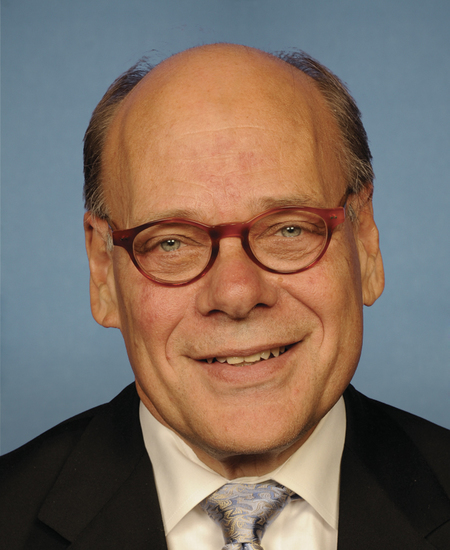
Rep. Steve Cohen
Sponsored bills
Maddy summaryThis bill directs the Department of Homeland Security to create a threat assessment on how terrorists and foreign actors use cyber harassment - including doxing - to threaten individuals. The assessment must detail tactics, notable incidents, and risk indicators for law enforcement, while coordinating with privacy offices. It requires DHS to share the report with Congress within 180 days and publish it online, with state/local law enforcement receiving it via fusion centers. The bill does not create new laws or penalties but focuses on information gathering about existing threats. (Procedural bill; summary limited to key action and scope.)
Maddy summaryHCONRES 44 is a non-binding congressional resolution urging the creation of a U.S. Commission on Truth, Racial Healing, and Transformation. It does not establish the commission itself but calls for its formation to acknowledge historical injustices against Black, Indigenous, and other people of color - including systemic discrimination in housing, Social Security, the GI Bill, and land policies - and to address ongoing racial inequities. The resolution emphasizes the need to dismantle the "belief in a hierarchy of human value" and promote racial healing as a national priority. It complements ongoing efforts like H.R. 40 (a bill to study reparations) but does not create new legal requirements or funding.
This resolution condemns the great replacement theory, which it describes as a white supremacist conspiracy theory that has been used to falsely justify racially motivated, violent acts of terrorism domestically and internationally.
Maddy summaryThe Fund the TSA Act sets a new aviation security fee of $7.60 per one-way air trip (capping round trips at $15.20) and requires annual inflation adjustments starting in 2026. It creates three dedicated funds from these fees: $250 million yearly (2024-2028) for airport security technology development (including $12.5 million for small businesses), $1.14 billion in 2024 for TSA worker salaries and benefits, and $130 million in 2024 for airport security programs like law enforcement reimbursements and exit lane security grants. These funds replace diverted revenues and directly support TSA operations, technology upgrades, and workforce needs. The bill affects air travelers (via the fee), TSA employees (through funding), and small businesses (through technology development opportunities).
Maddy summaryHR 3409, the Healthy Families Act, requires most employers to provide employees with paid sick leave. Employees earn 1 hour of paid sick time for every 30 hours worked, up to a maximum of 56 hours per year, which can be used for their own illness, caring for family members, or addressing domestic violence, sexual assault, or stalking situations. Smaller employers with fewer than 15 employees can provide unpaid sick leave instead of paid leave. The bill includes protections against retaliation for using sick leave and requires employers to inform employees about their rights under this law.
Maddy summaryHR 3416, the Youth Workforce Readiness Act of 2023, funds after-school and summer programs for youth aged 6-18 (including those in underserved communities) to build job skills and career pathways. It requires grants to community-based organizations partnering with employers, schools, and local agencies to provide career exploration, mentorship, work-based learning, and job training aligned with local industry needs. The program must track outcomes like school attendance, skill development, and job placement, with $100 million authorized annually for 2024-2028. It directly affects youth, community organizations, and local workforce boards through structured, measurable workforce readiness services.
Maddy summaryHR 3422, the Judiciary Act of 2023, would amend the structure of the U.S. Supreme Court by increasing the number of associate justices from eight to twelve. It would also raise the required quorum for court proceedings from six to eight justices. This bill directly affects the Supreme Court's operational structure and composition. The change is purely procedural, altering the Court's size and voting requirements without impacting other legal processes or specific groups of people.
Maddy summaryThe Strength in Diversity Act of 2023 creates a federal grant program to help school districts address racial and socioeconomic isolation in public schools (K-12). Eligible school districts, states, or consortia with significant segregation gaps can apply for planning or implementation grants to develop strategies like equitable school assignments, transportation plans, or teacher recruitment programs. Grants require community engagement, data tracking on academic outcomes and diversity metrics, and plans to sustain efforts after funding ends. The program aims to increase student diversity and improve outcomes for students of color and low-income students in segregated schools.
Maddy summaryHRES 81 is a non-binding resolution passed by the U.S. House of Representatives urging the President to support creating an international Special Tribunal to prosecute Russia’s leaders for the crime of aggression against Ukraine. It specifically references Russia’s 2022 full-scale invasion as a violation of UN Charter principles and General Assembly Resolution 3314, which defines aggression as unlawful military force against a sovereign state. The resolution calls for the President to take all available measures to advance this tribunal, emphasizing Ukraine’s sovereignty and the need to hold Russian officials accountable for war crimes. It does not create the tribunal itself but seeks U.S. diplomatic support for its establishment.