

Maddy summaryThe Downpayment Toward Equity Act of 2023 creates a federal program to provide down payment assistance to first-generation homebuyers, defined as individuals whose parents did not own a home. The program would provide grants to states (75% of funds) and eligible entities (25% on competitive basis) to help cover down payments, closing costs, and mortgage interest reductions, with maximum assistance of $20,000 or 10% of purchase price. To qualify, homebuyers must have household income up to 120-140% of median area income, be first-time homebuyers, and meet the "first-generation" definition. States must comply with fair housing requirements, and recipients must repay assistance if they don't occupy the home as their primary residence within five years, with exceptions for hardship.
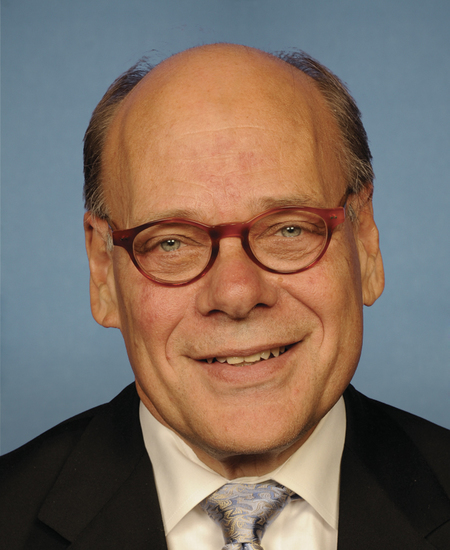
Rep. Steve Cohen
Sponsored bills
Maddy summaryHR 4234, the Sanctions Evasion Whistleblower Rewards Act of 2023, amends the State Department's rewards program to add new protections for whistleblowers reporting specific sanctions evasion. It creates a new reward category for individuals who identify people knowingly involved in: importing, exporting, or reexporting U.S.-controlled goods/services/technology to sanctioned countries to circumvent U.S. or U.N. sanctions; or providing training, advice, financial services, or significant transactions related to such evasion. This directly affects individuals with knowledge of these specific sanctions violations, including businesses or individuals operating in sanctioned regions. The key mechanism is expanding the existing State Department rewards program to include these new reporting categories, offering financial incentives for information leading to sanctions evasion enforcement.
Maddy summaryThis bill improves the VA Work-Study program for veterans and active-duty military members by expanding eligible work opportunities to include roles with state/local governments and nonprofits that support veterans. It establishes a higher minimum wage standard, requiring payments to meet the highest of federal, state, or local minimum wage rates. The bill also requires electronic time tracking for participants and annual public reporting on program data, including participant demographics, wages, hours worked, and participating schools. These changes apply to work-study payments made on or after January 1, 2026.
Maddy summaryThis bill establishes the John Lewis Civil Rights Fellowship Program within the Fulbright exchange system to honor civil rights leader John Lewis and advance U.S. foreign policy through global civil rights education. It creates a new fellowship for U.S. early- to mid-career professionals, selecting at least 25 annually for 10-month programs to conduct research or intern with approved organizations in countries participating in Fulbright exchanges. Fellows must complete a work plan, attend an orientation in Washington, DC, and present findings at an annual summit, with the State Department covering costs for travel, lodging, and expenses. The program requires annual reports on participant demographics and program effectiveness, and expires seven years after enactment.
Maddy summaryThe Equality Act (HR 15) would amend federal civil rights laws to explicitly prohibit discrimination based on sexual orientation and gender identity in public accommodations, housing, employment, credit, and jury service. It amends the Civil Rights Act of 1964 to include sexual orientation and gender identity as protected characteristics under existing sex discrimination provisions. The bill would require businesses, housing providers, employers, and government entities to provide equal access and services without regard to a person's sexual orientation or gender identity. It includes specific definitions for gender identity and sexual orientation to clarify protections across all covered areas. The law would apply to all entities covered by the Civil Rights Act of 1964, including those receiving federal funding.
Maddy summaryThis symbolic House Resolution (HRES 526) reaffirms U.S. commitment to refugee safety and well-being, introduced around World Refugee Day (June 20, 2023). It cites UNHCR data showing over 108 million displaced people globally and highlights historically low U.S. refugee admissions (11,411 in FY2021, 25,465 in FY2022). The resolution calls on U.S. officials to restore asylum protections, meet robust refugee admissions goals, support host countries, and advance refugee rights through international partnerships. It does not create new law but expresses bipartisan support for strengthening U.S. leadership in refugee protection.
Maddy summaryHRES 498 is a non-binding resolution recognizing June 28, 2023, as the 125th anniversary of the American Association of Colleges of Osteopathic Medicine (AACOM). It commends AACOM for its role in supporting 40 osteopathic medical colleges across 35 states, which educate over 35,000 future physicians and emphasize improving healthcare access in rural and underserved communities. The resolution highlights AACOM’s work in advancing osteopathic medical education and its focus on training physicians who prioritize preventive care and community health. As a commemorative resolution, it does not create new laws or policies but formally acknowledges AACOM’s contributions to U.S. healthcare.
Maddy summaryHR 4147 would provide $25 million annually (2024-2028) to fund training programs for healthcare students and professionals in states where abortion care is legally permitted. It requires grantees - such as medical schools and safety-net health providers - to expand clinical training in abortion care, with specific focus on serving racial/ethnic minorities, people with disabilities, and medically underserved communities. Key provisions include developing telehealth integration, interprofessional training for non-obstetrician providers, scholarships for students from underserved backgrounds, and strategic partnerships to improve access. The program must supplement - not replace - existing federal health workforce funding.
Maddy summaryHR 4121, the Right to Contraception Act, establishes a federal statutory right for individuals to access contraceptives and contraception services without government restriction or coercion, directly affecting all people seeking reproductive care and health care providers. The bill prohibits state or federal laws that limit access to contraceptives (defined broadly to include devices, drugs, and fertility methods), prevent individuals from obtaining or using them, or allow providers to refuse services based on personal beliefs. It preempts conflicting state laws, requires any restrictions to be justified by "clear and convincing evidence" of advancing access with no less restrictive alternative, and allows private lawsuits to challenge violations. The Act applies nationwide to all health care providers and individuals, protecting access regardless of factors like race, income, or location.
Maddy summaryHR 4076 establishes a joint U.S.-Israel program to fund health technology development, authorizing $4 million annually (2024-2026) through the U.S. Health and Human Services Department. It requires Israel to match U.S. funding and focuses on collaborative projects in artificial intelligence, vaccines, telemedicine, diagnostic tests, and data-driven personalized medicine for emerging infectious diseases. The program can either build on an existing U.S.-Israel agreement or create a new one under a 2008 science cooperation framework. This bill directly affects U.S. federal health agencies and the Israeli government, with funds restricted to joint projects meeting specific technological and health priorities.