

Maddy summaryHR 3152, the "Fight CRIME Act," aims to maintain international restrictions on Iran's missile-related activities by requiring diplomatic efforts to extend these restrictions before they expire in October 2023. The bill mandates annual reports detailing U.S. diplomatic strategies, potential impacts of expiration, and measures to deter missile technology transfers to Iran. It establishes sanctions against foreign individuals or entities that knowingly support Iran's missile or drone programs, including asset freezes and visa restrictions. These sanctions apply regardless of whether UN restrictions remain in effect after their expiration, directly affecting foreign entities involved in these activities.
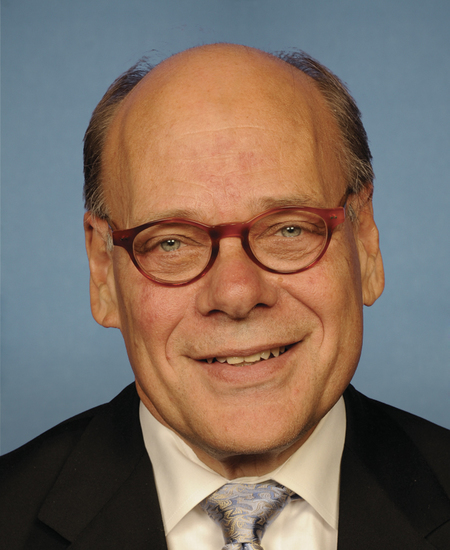
Rep. Steve Cohen
Sponsored bills
Maddy summaryThis resolution supports designating September 22 as "National Military and Veterans Suicide Awareness Day" to raise public awareness about suicide prevention among active-duty service members and veterans. It does not create new policies or funding but aims to highlight mental health challenges like PTSD and depression that contribute to higher suicide rates in these communities. The resolution emphasizes reducing stigma and encouraging help-seeking during Suicide Prevention Awareness Month (September). It directly affects military personnel, veterans, and the public by promoting national attention to this issue through a designated awareness day.
Maddy summaryHR 5351, the Nationwide Right to Unionize Act, repeals a federal law (Section 14(b) of the National Labor Relations Act) that currently allows states to enact "right-to-work" laws. This would prevent states from banning agreements requiring workers to pay union dues as a condition of employment, directly affecting workers in states with such laws. The bill's key mechanism is overriding state right-to-work statutes with federal law, ensuring union security agreements remain enforceable nationwide.
Maddy summaryHR 5322, the Time Off to Vote Act, requires most private employers (with 25+ employees) to provide two consecutive hours of paid leave for employees to vote in federal elections. Employers must grant this leave upon request, can schedule it during early voting periods if permitted by state law, and cannot include lunch breaks in the leave period. The bill prohibits retaliation against employees who take this leave and ensures it does not affect accrued employment benefits. Violations could result in civil penalties up to $10,000 per offense, enforced by the Department of Labor.
Maddy summaryThis bill expands SNAP eligibility for college students by modifying existing rules. It allows students attending higher education institutions (as defined by the Higher Education Act) to qualify for SNAP benefits if they have a zero expected family contribution (EFC) from FAFSA or meet specific criteria for independent student status under the Higher Education Act. The changes replace outdated language about "employment" with "attending school or working" and remove barriers that previously excluded many low-income students. This directly affects low-income undergraduate and graduate students who may face food insecurity while enrolled in college. The policy change takes effect 180 days after enactment.
Maddy summaryHCONRES 59 is a non-binding congressional resolution urging all countries to ban the dog and cat meat trade and enforce existing anti-trade laws. It directly affects foreign governments, not U.S. citizens, as it calls on them to adopt legal prohibitions and strengthen enforcement. The resolution cites animal cruelty concerns (including reports of stolen pets and inhumane slaughter) and public health risks (such as rabies and trichinellosis transmission linked to the trade). It does not change U.S. law, as domestic prohibition already exists under the 2018 Agriculture Act. The resolution affirms U.S. support for global animal welfare but has no legal force.
Maddy summaryThe School Food Modernization Act (HR 4483) provides funding to help schools upgrade food service infrastructure and equipment. It offers loan guarantees (up to 80% of loan amounts) and grants ($35 million annually) for local schools, tribal organizations, and consortia to improve kitchens, storage facilities, and durable equipment (like stoves or refrigerators valued over $500). The bill also allocates $10 million yearly for competitive grants to train school food staff on meeting nutrition standards, administered by third-party organizations like colleges or nonprofits. These provisions directly support schools serving meals under federal programs, aiming to enhance food safety, efficiency, and nutritional quality.
Maddy summaryHR 4277, the Saving America’s Pollinators Act of 2023, would immediately cancel all registrations for neonicotinoid pesticides (including imidacloprid and clothianidin) and ban their sale, use, and future registration. This directly affects farmers and crop producers who currently use these pesticides on over 150 million acres of crops like corn and soybeans, where seed coatings are widely applied. The bill also ends exemptions for seed-treated pesticides and requires the Environmental Protection Agency to revoke tolerances for pesticide residues in food within six months. Additionally, it mandates the U.S. Fish and Wildlife Service’s newly established Center for Pollinator Conservation to monitor native bee populations and coordinate federal actions to reverse pollinator declines.
Maddy summaryHR 4302, the Transparency in Energy Production Act of 2023, requires energy companies seeking or holding leases to develop operations on public or Indian lands to disclose standardized environmental data. This applies to both fossil fuel projects (like oil and gas) and renewable energy projects (like wind and solar), mandating annual reports that detail greenhouse gas emissions, water use, biodiversity impacts, and other metrics disaggregated by state and operation type. Companies must submit these reports to the relevant federal agency (Interior or Agriculture) at lease application and annually thereafter, with failure to comply risking lease denial or suspension. The data must be published online in a machine-readable format and included in regular congressional reports assessing environmental impacts, wildfire risks, supply chain sources, and lifecycle effects of energy production.
Maddy summaryHR 5217, the Refuge From Cruel Trapping Act, prohibits the possession or use of body-gripping traps (devices that kill or severely injure wildlife) within National Wildlife Refuges. It directly affects individuals and entities using such traps in refuges, with key exceptions allowing federal agencies to use them for controlling invasive species or protecting endangered species, Alaska refuge operations, and tribal subsistence hunting. Violations carry penalties including civil fines up to $500 per trap, up to 180 days in jail, and forfeiture of the trap and captured wildlife. The bill requires the Secretary of the Interior to issue implementing regulations within 120 days, though enforcement begins 120 days after enactment regardless of regulations.