

Health Share Transparency Act of 2023 This bill requires a health care sharing ministry (HCSM) to disclose specific information to individuals enrolling in the HCSM and to designated government agencies. (An HCSM is a faith-based organization with members who share a common set of ethical or religious beliefs and who contribute regular payments to cover the medical expenses of other members.) The bill requires an HCSM to disclose to an enrolling individual information such as (1) the average out-of-pocket expenses an enrollee incurs, (2) how to file a complaint or appeal a coverage determination, and (3) a list of the HCSM's non-reimbursable items and services. The bill also requires that an HCSM submit annual financial disclosures and program information to the Department of Health and Human Services (HHS), the Internal Revenue Service, and the Consumer Financial Protection Bureau. HHS is required to publicly post this information. Additionally, health insurance brokers contracting with an HCSM are required to provide an enrolling individual with information about health insurance coverage that is available through Medicare, Medicaid, or a health insurance exchange, as appropriate. HHS may apply civil monetary penalties to an HCSM that fails to comply with the bill's requirements. Further, the bill requires the Federal Trade Commission to publicly disclose information about consumer complaints regarding HCSMs.
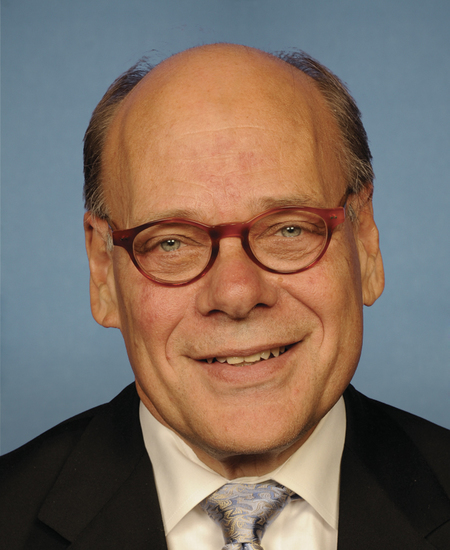
Rep. Steve Cohen
Sponsored bills
Maddy summary# Summary of the Government Surveillance Reform Act of 2023 This comprehensive legislative proposal aims to reform government surveillance practices in the United States with a strong emphasis on privacy protections, judicial oversight, and government transparency. The key components include: 1. **Cell Site Simulator Restrictions**: - Comprehensive ban on cell-site simulators (stingrays) except under specific circumstances requiring warrants - Requires judicial approval for most uses, with strict limitations on scope, duration, and minimization of incidental collection - Mandates disclosures about potential disruptions to emergency services - Includes detailed reporting requirements for government agencies 2. **Vehicle Data Protections**: - Prohibits warrantless access to vehicle data (including telematics and onboard sensors) - Requires warrants for most access, with specific exceptions for consent and emergencies - Creates detailed definitions and procedures for consent requirements 3. **Enhanced Foreign Intelligence Surveillance Oversight**: - Requires more detailed reporting by the Foreign Intelligence Surveillance Court - Mandates annual reports on accuracy and completeness of applications - Increases transparency around Section 702 collection - Requires reporting on queries targeting U.S. persons 4. **Data Broker and Service Provider Protections**: - Strengthens privacy protections for data held by data brokers - Requires court orders for government access to certain data - Includes minimization requirements for handling collected data - Prohibits warrantless use of data obtained through cell site simulators 5. **Transparency Requirements**: - Mandates detailed public reporting on surveillance activities - Requires annual reports on accuracy of applications - Increases granular reporting on targets and queries - Requires public disclosure of statistics on surveillance use The legislation represents a significant shift toward greater privacy protections and government accountability in surveillance practices, with detailed technical requirements for compliance and enhanced reporting obligations for government agencies. It would significantly impact how law enforcement and intelligence agencies conduct surveillance operations while attempting to balance public safety needs with constitutional privacy rights.
Maddy summaryHCONRES 75 is a non-binding resolution expressing Congress's support for issuing a new commemorative postage stamp honoring the Buffalo Soldiers. It directly affects the U.S. Postal Service by urging the Citizens’ Stamp Advisory Committee to recommend such a stamp to the Postmaster General. The resolution highlights the historical significance of the Buffalo Soldiers - African American soldiers who served in all-Black regiments from 1866 to 1948 - and references a previous 1994 stamp that was discontinued. It does not create a new law but formally requests the Postal Service consider this commemoration.
This concurrent resolution recognizes the difficult challenges Black veterans faced when returning home after serving in the Armed Forces, their heroic military sacrifices, and their patriotism in fighting for equal rights and for the dignity of a people and a nation. The concurrent resolution also recognizes the need for the Department of Veterans Affairs to continue to work to eliminate any health and benefit disparities for minority veterans.
Maddy summaryHR 6121, the Filipino Veterans Fairness Act of 2023, expands U.S. veterans benefits for individuals who served in the Philippine Army, Philippine Scouts, or recognized guerrilla forces during World War II. It directly affects Filipino veterans who previously faced challenges proving service due to limited documentation. The bill allows the Secretary of Veterans Affairs to consider alternative records beyond the National Personnel Records Center rosters when determining eligibility, requires annual reports to Congress on applications and approvals, and clarifies that the Filipino Veterans Equity Compensation Fund does not apply to these veterans. These changes aim to streamline access to benefits for this specific group of veterans.
Maddy summaryThis bill codifies the Young African Leaders Initiative (YALI) as a formal U.S. government program. It authorizes annual fellowships for African leaders aged 25-35 to participate in U.S.-based leadership training (including the Mandela Washington Fellowship) and establishes at least four regional leadership centers across sub-Saharan Africa for ongoing professional development in business, civic engagement, and public administration. The program requires annual congressional reports on progress and impacts, with implementation ending after five years. Directly affecting young African leaders (ages 18-35 for regional centers) in business, civic leadership, and governance, it provides structured training, networking, and technical assistance to strengthen U.S.-Africa partnerships.
Maddy summaryThis bill would authorize the U.S. government to confiscate Russian sovereign assets held in U.S. jurisdiction and use those funds to support Ukraine's reconstruction and humanitarian needs following Russia's invasion. It prohibits releasing these blocked assets until Russia fully compensates Ukraine or agrees to an international compensation mechanism. The bill establishes a "Ukraine Support Fund" to hold confiscated assets and requires regular congressional reporting on how these funds are allocated for Ukraine's recovery. It also includes provisions for international coordination with allies on sanctions and asset management related to Russia's invasion of Ukraine.
This resolution expresses support for the designation of National Vitiligo Awareness Day. (Vitiligo is a chronic condition that results in the loss of pigment in patches on the skin, hair, eyes, and inside of the mouth; the condition may lead to discomfort, itching, and pain.)
Maddy summaryHR 6204, the "See the Board Act," establishes a federal grant program to provide free eye care services to students in public elementary and secondary schools. The bill directs the Health and Human Services Secretary to fund nonprofit organizations that operate mobile eye clinics using portable equipment to deliver screenings, exams, and glasses directly at schools. This program covers costs for equipment, personnel, and operational expenses, targeting students in schools defined under the Elementary and Secondary Education Act. The initiative is authorized for fiscal years 2024 through 2029.
Maddy summaryHR 6076 establishes a $600 million program to fund energy efficiency improvements for small- and medium-sized manufacturers (defined as businesses with 750 or fewer employees in manufacturing sectors 31-33). Qualified entities like state energy offices, tribes, or nonprofits receive grants to provide subgrants directly to these manufacturers for projects that reduce electricity or natural gas use. The bill requires all iron and steel products used in funded projects to be "produced in the United States" (with limited waivers for cost or availability issues), and mandates labor compliance checks for contractors. It also requires manufacturers to develop energy management plans and share data on energy savings with program managers.