

Maddy summaryHR 6416, the "Russian War Crimes in Ukraine Tax Act," imposes a 100% tax on interest and dividends earned from frozen Russian and Belarusian sovereign assets held abroad. This tax revenue is directed into a new Ukraine Reconstruction Trust Fund, which must be used for Ukraine's reconstruction, humanitarian aid, economic development, and transparent governance. The bill requires U.S. financial institutions to withhold this tax from qualifying income and overrides international treaty obligations to ensure implementation. It also mandates annual reports on fund usage to Congress, specifying that all revenues from the tax must support Ukraine's recovery efforts as defined in the legislation.
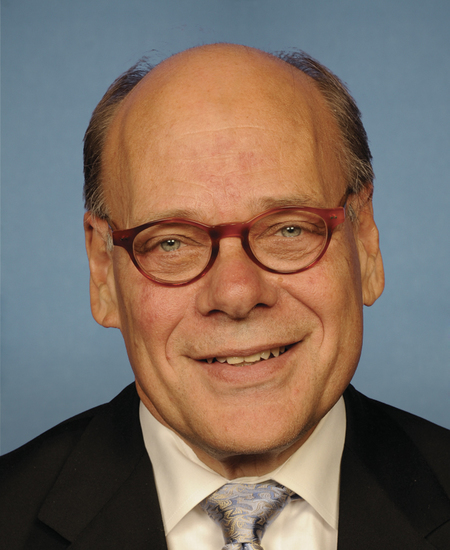
Rep. Steve Cohen
Sponsored bills
Maddy summaryHR 6720 creates a grant program administered by the U.S. Department of Agriculture to provide stabilization payments to farmworkers, meat processing workers, and grocery workers affected by natural or other disasters designated by the Secretary. Eligible entities - such as labor unions or membership organizations representing these worker groups - can apply for funding to support affected workers. The program is authorized to spend up to $50 million, with the Secretary required to report on its outcomes within four years. This bill directly affects workers in specific food industry sectors during disaster events, offering financial stabilization through grants administered by the Agricultural Marketing Service.
Maddy summaryHRES 904 is a House resolution supporting World AIDS Day goals. It encourages efforts to achieve zero new HIV transmissions, zero discrimination, and zero AIDS-related deaths by 2030, while commending existing programs like PEPFAR and the Ryan White CARE Act. The resolution also supports continued funding for HIV prevention, treatment, and research, with specific focus on communities disproportionately affected by HIV in the U.S. and globally. As a symbolic statement, it does not create new laws or allocate funds.
Maddy summaryHR 6664 requires the FDA to apply pediatric drug testing requirements to orphan drugs (treatments for rare diseases) that were previously exempt. It directs the FDA to issue guidance within 18 months on how these requirements will work, including when waivers for impractical studies are allowed, and increases annual funding for pediatric studies to $50 million. Drug sponsors developing orphan medications must now provide more pediatric safety data, while the FDA gains clearer enforcement rules for compliance. The bill also mandates an FDA report on compliance and a government study on the law's impact on rare disease drug development.
Maddy summaryHR 6654, the Farewell to Foam Act of 2023, bans the sale and distribution of expanded polystyrene foam food containers, packaging peanuts ("loose fill"), and coolers starting January 1, 2026. It directly affects food service providers (like restaurants and schools), manufacturers, distributors, and retailers who sell these foam products. The bill prohibits selling these items, with enforcement starting with a written warning for first violations, followed by escalating civil penalties ($250 for a second violation, up to $1,000 for fourth+ violations), while exempting small businesses with low annual revenue from repeated penalties within a 7-day period.
Maddy summaryThis bill authorizes the posthumous presentation of a Congressional Gold Medal to honor Marshall "Major" Taylor, a pioneering Black cyclist who broke racial barriers in the late 19th and early 20th centuries. It recognizes his athletic achievements, including world records and international championship wins, as well as his advocacy for equality in sports. The medal, designed by the Treasury Secretary, will be presented to Taylor's great-granddaughter, Karen Donovan, following the congressional authorization. As a commemorative act with no policy changes, it serves solely to honor Taylor's legacy as a trailblazer and role model.
Maddy summaryHR 6592, the Fight Book Bans Act, provides federal grants to reimburse public school districts for legal costs when they choose to keep instructional or library materials after parental objections. It directly affects school districts (covered local educational agencies) that select materials for students and handle challenges to their removal. The bill authorizes up to $100,000 per case in grants to cover attorney fees and court costs, provided the district didn’t remove the materials and wasn’t reimbursed by the state. Funding of $15 million is authorized for fiscal years 2024-2028. The grants are strictly for legal challenges to decisions not to remove materials, not for the content of the materials themselves.
Maddy summaryHRES 907 is a non-binding House resolution condemning rising antisemitism in the U.S., citing increased hate crimes (25% rise in 2022 per FBI data) and campus incidents (41% increase from 2021-2022 per ADL). It calls on all Americans, including campus leaders and government agencies, to combat antisemitism and urges implementation of the U.S. National Strategy to Counter Antisemitism. The resolution specifically requests increased funding for the Nonprofit Security Grant Program to strengthen safety protections for Jewish communities. It directly affects Jewish Americans, campus communities, and government agencies responsible for hate crime prevention and community safety.
Maddy summaryHR 6519, the "No PFAS in Cosmetics Act," prohibits the intentional addition of perfluoroalkyl or polyfluoroalkyl substances (PFAS) to cosmetics sold in the United States. It directly affects cosmetic manufacturers and suppliers who currently use PFAS for functional properties like water resistance. The bill amends the Federal Food, Drug, and Cosmetic Act to make cosmetics containing intentionally added PFAS "adulterated" and illegal to sell, effective January 1, 2025. It also repeals a prior provision from the Modernization of Cosmetics Regulation Act of 2022 that had addressed PFAS. This is a substantive regulatory change targeting product ingredients, not a procedural measure.
Maddy summaryThe Voluntary Information-Sharing System Act (HR 6509) creates a confidential, voluntary system for pipeline operators to share safety data related to gas, carbon dioxide, and hazardous liquid pipelines without fear of legal consequences. The system, managed by a Governing Board with balanced representation from government, industry, and public safety groups, will allow operators to share information about pipeline integrity, accident lessons learned, and safety practices while keeping submissions confidential. The bill explicitly prohibits using information shared through this system in litigation or enforcement actions, aiming to encourage broader participation to improve overall pipeline safety. It authorizes $10 million annually for the system starting in 2025, with a requirement for a report within two years assessing implementation and funding needs.