

Maddy summaryThis bill would provide federal grants to public housing agencies to modernize public housing through energy efficiency upgrades, infrastructure improvements, and renewable energy systems. It requires all public housing to become "zero-carbon homes" that produce enough renewable energy to meet their own consumption within 10 years. The bill includes specific requirements for workforce development, hiring from low- and very low-income communities (40% in year 1, 50% in year 2, 90% after that), and contracting with resident-owned businesses (20% in year 1, 30% in year 2, 50% after that). It also mandates resident and community engagement in planning, and requires public housing agencies to meet specific energy efficiency and water quality standards. The bill directly affects all public housing agencies managing housing for low- and very low-income residents across the United States, including tribal housing entities.
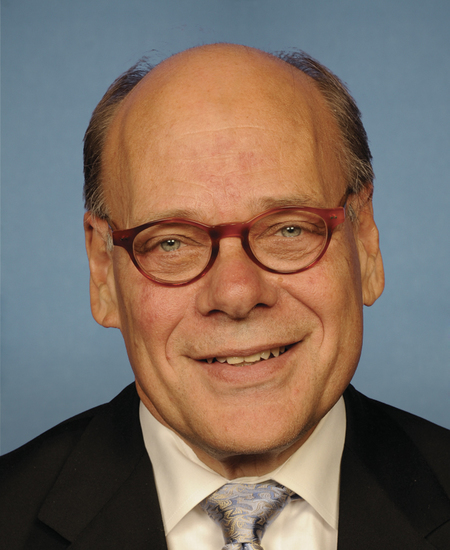
Rep. Steve Cohen
Sponsored bills
Maddy summaryHR 7790, the Women and Underrepresented Minorities in STEM Booster Act of 2024, authorizes $15 million annually (2024-2028) through the National Science Foundation to fund grants for programs increasing participation of women, underrepresented racial/ethnic groups (including Black, Hispanic, Native American, and specific Asian subgroups), LGBTQ+ individuals, and people with disabilities in STEM fields. The grants support concrete activities like mentoring programs, STEM internships, K-12 outreach, and faculty recruitment initiatives designed to address documented disparities in STEM degree completion and career retention. The bill directly affects eligible institutions (e.g., universities, nonprofits) that apply for competitive funding to implement these targeted programs. It focuses on measurable policy changes through federal funding for evidence-based retention strategies, not on outcome predictions.
Maddy summaryHR 6727 establishes the United States Foundation for International Conservation, a nonprofit organization that will provide grants to support long-term management of protected and conserved areas in eligible countries. The Foundation requires a 2:1 cost match from other sources, demands host country and community consent through binding agreements, and prioritizes areas with high biodiversity or species of significant importance. It will be governed by a Board of Directors including government officials and private sector experts, operate for 10 years with $1 million authorized for 2024 and $100 million annually from 2025-2035, and must follow international conservation standards while prohibiting funding for countries supporting terrorism or violating human rights.
Maddy summaryHRES 1087 is a non-binding resolution expressing the U.S. House of Representatives' position that the United States should not recognize Vladimir Putin as Russia's president if he attempts to remain in office beyond May 7, 2024. It states that the 2020 Russian constitutional amendments (which waived term limits for Putin) were illegitimate due to a flawed referendum process marked by alleged fraud and violations of international norms. The resolution does not create new law but formally declares the House's stance on Putin's potential extended rule, citing concerns about the referendum's legitimacy and Russia's actions in Ukraine. It directly addresses U.S. diplomatic recognition policy toward Russia's leadership.
Maddy summaryThis bill, the Judicial Integrity Act, updates federal conflict of interest rules to explicitly include federal judges and Supreme Court justices under the same standards that apply to other government officials. It requires these judges to avoid financial interests that could compromise their impartiality, such as investments in cases they oversee. The bill also creates a new process allowing the Judicial Conference of the United States to issue regulations exempting minor financial interests (like small stock holdings) from disclosure rules, after public notice and comment. This change aims to clarify judicial conduct standards while providing a structured way to handle trivial financial ties.
Maddy summaryHR 7634, the Plastic Pellet Free Waters Act, prohibits plastic pellets and pre-production plastic materials from being discharged into water through wastewater, spills, or runoff from specific facilities. It directly affects plastic polymer production facilities, plastic molding and forming facilities, and any point source (like packaging or transport operations) handling plastic pellets. The bill requires the EPA to issue a final rule within 60 days of enactment banning these discharges and updating all relevant wastewater, stormwater, and performance standards in permits and regulations. This creates a legal requirement for facilities to prevent plastic pellet pollution in waterways, targeting a major source of ocean plastic pollution.
Maddy summaryHRES 1074 is a symbolic House resolution reaffirming congressional support for a two-state solution to the Israel-Palestine conflict. It explicitly states the House supports Israel's right to exist as a Jewish, democratic state and recognizes Palestinians' right to sovereignty through a separate state. The resolution identifies a two-state solution as the best path to lasting peace and condemns efforts opposing this approach. As a non-binding resolution, it does not create new law or policy but formally expresses the House's position on this issue. It was introduced by multiple House members on March 12, 2024.
Maddy summaryHR 7629, the Protect Our Letter Carriers Act of 2024, allocates $1.4 billion annually (2025-2029) to the U.S. Postal Service for high-security collection boxes and replacing physical universal mailbox keys with electronic versions, directly affecting USPS operations and letter carriers. It requires the Attorney General to appoint specialized prosecutors in each district to coordinate investigations and prosecutions of postal-related crimes, such as assaults on carriers or mail theft. The bill also mandates the U.S. Sentencing Commission to adjust guidelines so that assaults or robberies against postal employees are treated with the same severity as assaults against law enforcement officers. These provisions aim to enhance safety through infrastructure upgrades, improved prosecution, and stricter sentencing for crimes targeting postal workers.
Maddy summaryThe American High-Speed Rail Act authorizes $35 billion annually for high-speed rail corridor development (with $3 billion for corridor planning), requiring at least 20% of project costs to come from non-Federal sources. It defines "high-speed rail" as services reaching 186+ mph and "higher-speed rail" as 110-186 mph, with no more than 20% of funds allocated to higher-speed rail projects. Key provisions include allowing advance acquisition of rail corridors before environmental reviews, creating tax exclusions for rail carriers selling property to high-speed rail projects, and requiring consideration of equity, sustainability, and economic development impacts in planning. The bill affects federal agencies, state and local governments, rail carriers, and communities along proposed rail corridors.
Maddy summaryThis bill establishes a new Office of Public Participation within the Tennessee Valley Authority (TVA) to improve public engagement in TVA's energy planning. It requires TVA to create a formal process for public input, including a 100-day public comment period before releasing draft energy plans and requiring responses to public inquiries within 15 days. The bill mandates that TVA's integrated resource plans include detailed modeling assumptions, show how public feedback influenced the plan, and address factors like resilience and public health impacts. These changes directly affect TVA's customers and communities in the Tennessee Valley region by increasing transparency and participation in energy decision-making.