

This resolution directs the Office of the Attending Physician to update the mask-wearing guidance (consistent with public guidance released by the Centers for Disease Control and Prevention) applicable to the Hall of the House of Representatives and committee meeting spaces for Members and staff who are vaccinated against COVID-19.
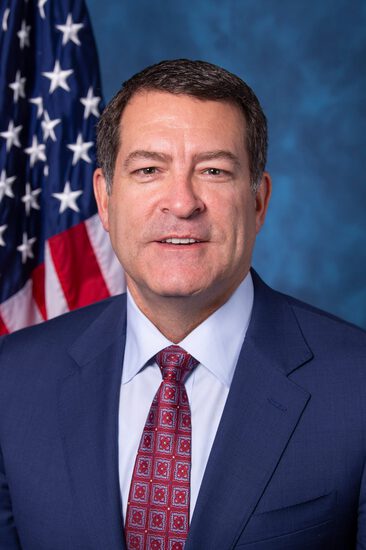
Rep. Mark E. Green
Sponsored bills
This resolution reaffirms the importance to U.S. national interests of combating corruption, strengthening democratic institutions, and supporting judicial independence in El Salvador. Further, it urges El Salvador to respect its democratic institutions, including by strengthening government transparency, and to uphold human rights.
Ghost Army Congressional Gold Medal Act This bill directs the Speaker of the House of Representatives and the President pro tempore of the Senate to award a Congressional Gold Medal to the 23rd Headquarters Special Troops and the 3133d Signal Service Company, known as the Ghost Army , collectively, in recognition of its service during World War II.
This joint resolution proposes a constitutional amendment prohibiting total expenditures from exceeding total receipts for a fiscal year. The prohibition excludes expenditures for repayment of debt principal and receipts derived from borrowing. For a national emergency, two-thirds of each chamber of Congress may authorize expenditures that exceed receipts for limited times. Debts incurred from the expenditures must be paid as soon as practicable. The amendment requires a two-thirds roll call vote of each chamber of Congress to increase the public debt limit. It also requires the President to submit a balanced budget to Congress annually. If the President does not submit a balanced budget for a fiscal year, any executive actions may be unilaterally overturned by a simple majority vote of each of chamber of Congress until the President submits a balanced budget.
Recognizing the Protection of Motorsports Act of 2019 or the RPM Act of 2019 [ sic ] This bill authorizes the modification of a vehicle's air emission controls for vehicles that are not legal for operation on a street or highway and are used solely for competition.
Journalism Competition and Preservation Act of 2021 This bill creates a four-year safe harbor from antitrust laws for print, broadcast, or digital news companies to collectively negotiate with online content distributors (e.g., social media companies) regarding the terms on which the news companies' content may be distributed by online content distributors.
Regulations from the Executive in Need of Scrutiny Act of 20 21 This bill revises provisions relating to congressional review of agency rulemaking. Specifically, the bill establishes a congressional approval process for a major rule. A major rule may only take effect if Congress approves of the rule. A major rule is a rule that results in (1) an annual effect on the economy of $100 million or more; (2) a major increase in costs or prices for consumers, individual industries, government agencies, or geographic regions; or (3) significant adverse effects on competition, employment, investment, productivity, innovation, or the ability of U.S.-based enterprises to compete with foreign-based enterprises. In addition, the bill establishes a congressional disapproval process for a nonmajor rule. A nonmajor rule may only take effect if Congress does not disapprove of the rule.
Border Visibility and Security Act This bill directs the Department of Homeland Security (DHS) to install surveillance technology and take other actions with respect to the U.S.-Mexico border. DHS shall deploy the most practical and effective technology available to achieve situational awareness and operational control of the border. Such technology may include radar surveillance systems, tunnel detection technology, and unmanned aerial vehicles. DHS is authorized to waive legal requirements as necessary in order to implement the necessary surveillance technology along the border. DHS shall also (1) construct a navigable road along at least 700 miles of the southwest border, (2) permanently eradicate certain foliage that grows along the Rio Grande river, and (3) report to Congress a comprehensive strategy about the barriers and technologies needed to secure operational control along the border. Drug cartel funds that have been criminally forfeited to the U.S. government shall be reserved for security measures along the U.S.-Mexico border.
Iran Sanctions Relief Review Act of 2021 This bill restricts the President's authority to unilaterally undertake certain actions with respect to Iran and increases congressional oversight of those actions. Specifically, the President must report to Congress before terminating or waiving sanctions related to Iran or taking a licensing action that significantly alters U.S. foreign policy with respect to Iran. Each report must (1) describe the proposed action and its rationale, and (2) indicate whether or not the action is intended to significantly alter foreign policy concerning Iran. If the intention is to alter that policy, the report must provide additional information about the policy objectives and anticipated effects of the action. After the President submits a report, the bill provides Congress with a 30-day period to review it; this period is extended to 60 days for reports submitted between July 10 and September 7. During this period, Congress may enact a joint resolution approving or disapproving the action. During the review period, the President may not take the action unless Congress passes a joint resolution of approval; if Congress enacts a joint resolution of disapproval, the bill prohibits the President from taking the action. The bill also outlines procedures for the introduction and consideration of these types of joint resolutions.
Sarah's Law This bill requires U.S. Immigration and Customs Enforcement (ICE) to detain an alien who is unlawfully present in the United States and has been charged with a crime that resulted in the death or serious bodily injury of another person. ICE shall make reasonable efforts to obtain information about the identity of any victims of the crimes for which such alien was charged or convicted. ICE shall provide the victim, or a relative or guardian of a deceased victim, with information about such alien, including name, date of birth, nationality, immigration status, criminal history, and a description of any related removal efforts.