

Maddy summaryHR 1501, the UAS Act, bans the Department of Homeland Security (DHS) from operating, procuring, or renewing contracts for unmanned aircraft systems (UAS/drones) or related components (like flight controllers, software, or detection systems) manufactured in or using technology from "covered foreign countries" (nations identified as foreign adversaries by U.S. intelligence). DHS can request a waiver for national security reasons, but must notify Congress within 14 days. The bill requires DHS to submit a security report to Congress within 180 days detailing existing UAS systems, threat assessments, and potential security risks from foreign-made UAS. This applies solely to DHS operations, not general public drone use.
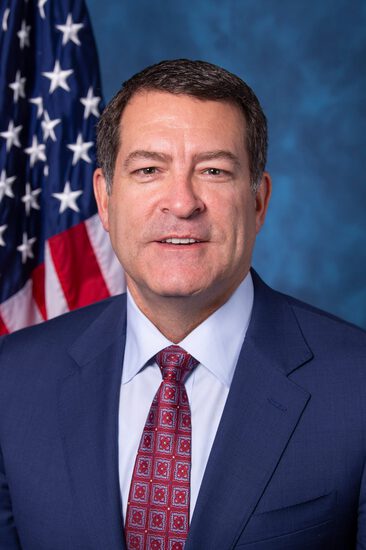
Rep. Mark E. Green
Sponsored bills
Maddy summaryThis bill withholds federal funding from elementary or secondary schools violating state laws regarding materials deemed harmful to minors. It allows states to redirect funds to 529 education savings plans for affected students, enabling families to use those funds for homeschooling, tuition, curriculum materials, or approved educational therapies. The law expands 529 plan eligibility to cover homeschool expenses and specific educational costs like tutoring and standardized test fees, effective after enactment. States must report annually on schools violating the law and program usage to Congress.
Maddy summaryHR 5319, the Ban Offshore Abortion Tourism Act, prohibits performing abortions that result in fetal death within U.S. maritime jurisdiction (e.g., international waters under U.S. authority). It targets abortion providers in these zones, with exceptions for life-threatening medical conditions, pregnancies from rape (requiring 48 hours of counseling or treatment first), or pregnancies from rape/incest involving minors (requiring prior reporting to authorities). The bill allows civil lawsuits against providers for violations, awarding triple damages, medical costs, and attorney fees, but explicitly protects women from prosecution or financial liability. It does not restrict abortion access in foreign countries or U.S. territorial waters.
Maddy summaryThis bill amends the Food and Nutrition Act to clarify that households must meet existing income and asset limits to qualify for food assistance benefits (like SNAP). It directly affects individuals and families applying for or receiving federal food aid by requiring strict adherence to current eligibility criteria under the law. The key provision explicitly states that households failing to meet these income and resource standards - already part of the program - cannot receive benefits. The amendment takes effect one year after enactment, with existing certification periods unaffected. This change enforces current rules without creating new restrictions.
Maddy summaryHJRES 83 is a congressional resolution seeking to block a specific immigration rule. It targets a rule issued by U.S. Citizenship and Immigration Services (USCIS) and the Executive Office for Immigration Review (EOIR) on May 16, 2023, which addressed "Circumvention of Lawful Pathways" in immigration processes. If approved, the resolution would nullify this rule, preventing it from taking effect under federal law. This action directly affects how USCIS and immigration courts apply this particular policy to immigration cases. The resolution uses a standard procedural mechanism (Chapter 8 of Title 5, U.S. Code) to disapprove the rule without altering broader immigration law.
This resolution condemns Iran for the 1988 massacre of political prisoners. It also urges the Biden Administration and U.S. allies to publicly condemn the massacre and to pressure Iran to provide information to the families of the victims.
Maddy summaryThis bill requires the Director of the Cybersecurity and Infrastructure Security Agency (CISA) to develop a framework for assessing risks in open source software components used by federal agencies. It mandates annual assessments of critical open source software, considering factors like security practices, deployment scope, and community health, and requires public sharing of results and tools. The law directly affects federal agencies (which must use these assessments) and the open source software community (which must be consulted in framework development). Key provisions include publishing risk frameworks, automating assessments, and conducting a study on extending assessments to critical infrastructure sectors.
Maddy summaryHR 4470 extends the authorization of the Chemical Facility Anti-Terrorism Standards Program (CFATS) under the Department of Homeland Security until September 30, 2025, instead of the previous expiration date of July 27, 2023. This bill directly affects DHS, which administers the program, and chemical facilities subject to its security standards. The key mechanism is a simple date extension for the existing program, maintaining current security requirements for facilities handling hazardous chemicals without introducing new rules or funding changes.
Maddy summaryHR 1456, the SCREEN Act, requires U.S. film companies seeking federal technical support or contracts for film production to disclose if they’ve submitted film content to Chinese officials for screening approval in the People’s Republic of China (PRC). Companies must also pledge not to alter film content in response to Chinese government requests and submit this agreement to the State Department. The bill mandates annual reports to Congress detailing films submitted to Chinese authorities, films altered due to such requests, and companies involved. It directly affects U.S. film producers receiving federal support for projects involving potential Chinese content negotiations, aiming to prevent U.S. content changes under Chinese pressure.
Maddy summaryThis bill directs the U.S. Treasury to mint commemorative coins marking the Marine Corps' 250th anniversary in 2025. It authorizes three coin types: $5 gold coins (max 50,000), $1 silver coins (max 400,000), and half-dollar coins (max 750,000), with surcharges of $35, $10, and $5 respectively. The surcharge proceeds will fund the Marine Corps Heritage Center's educational programs, with no net cost to taxpayers as the Treasury must recover all minting costs through the surcharges. The coins can only be issued during 2025, and the Treasury must ensure all costs are covered before distributing funds to the Heritage Foundation.