

Maddy summaryThe Death Tax Repeal Act would eliminate the federal estate tax and generation-skipping transfer tax for estates of people who die on or after the bill's enactment date, and for generation-skipping transfers made after that date. It would also establish a new $10 million lifetime gift tax exemption (adjusted annually for inflation) and replace the existing gift tax rate schedule with a revised structure. These changes would primarily affect high-net-worth individuals and their heirs, as the estate tax and gift tax typically apply to large estates or gifts exceeding the new exemption threshold. The bill's provisions would take effect on the date of enactment, with transitional rules for the year the bill is signed into law.
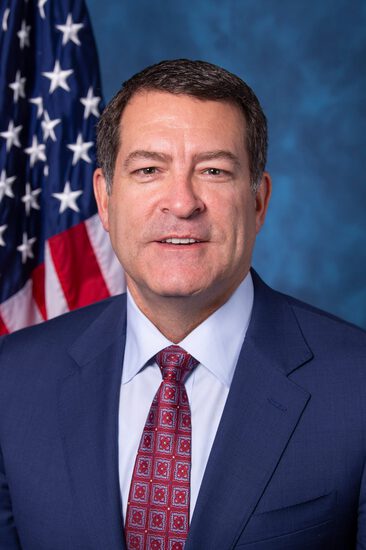
Rep. Mark E. Green
Sponsored bills
Maddy summaryThe RIFLE Act of 2024 changes how the federal government handles violations by firearms licensees, affecting gun dealers and manufacturers who hold federal licenses. It creates a graduated penalty system where non-willful violations require the Attorney General to work with licensees to fix issues before taking action, while willful violations may lead to license suspension or revocation only after proper notice, hearing, and evidence of continued noncompliance. The bill establishes new procedures for administrative hearings, defines "willful" violations more clearly, and gives licensees 90 days to liquidate inventory after license expiration or revocation, with extensions possible for reasonable cause. These changes aim to create a more transparent process for addressing violations while maintaining public safety standards.
Maddy summaryH.J.Res. 92 seeks congressional disapproval of a 2022 rule from the Food and Nutrition Service (FNS) that updated how discrimination complaints are processed in federal nutrition programs (like SNAP) following the *Bostock v. Clayton County* Supreme Court decision. The bill aims to block the rule’s implementation, which would have required agencies to handle discrimination complaints under the expanded protections established by *Bostock* (covering LGBTQ+ individuals). If passed, the resolution would make the FNS policy update ineffective, maintaining the previous complaint processing approach. This affects how federal nutrition programs address discrimination claims but does not change the underlying anti-discrimination law.
This bill allows creditors to consider an applicant’s immigration status for certain purposes when assessing an application for an extension of credit. In particular, considering an applicant’s U.S. immigration status for the purpose of determining the creditor's rights and remedies applicable to the particular extension of credit does not constitute discrimination.
Maddy summaryHR 357, the Ensuring Accountability in Agency Rulemaking Act, requires federal agencies to have rules signed by Senate-confirmed appointees (or senior appointees for initiation), aiming to increase oversight of regulatory decisions. It directly affects all federal agencies creating rules under standard procedures (covered by 5 U.S.C. § 553), ensuring higher-level accountability for rulemaking. Exceptions exist only if an agency head certifies that compliance would impede public safety/security, with required notifications to the OIRA Administrator and Federal Register publication. The Office of Information and Regulatory Affairs (OIRA) will monitor agency compliance with these requirements.
Maddy summaryThis bill extends the authorization period for the Department of Homeland Security's Countering Weapons of Mass Destruction Office from 5 to 7 years. It does not change the office's core mission but adds two new requirements: (1) a 180-day report on employee engagement plans, and (2) a one-year review by the Comptroller General on the office's program prioritization and coordination. The extension specifically excludes sections related to the Chief Medical Officer and medical countermeasures programs (sections 1931-1932). The bill primarily affects the DHS office's operational timeline and internal accountability, with no new policy changes for external stakeholders.
Maddy summaryThis bill requires the President to block transactions involving "covered Iranian funds" processed by foreign or international financial institutions. These funds refer specifically to money transferred from South Korea to Qatar under certain Iran sanctions waivers. The law imposes sanctions under existing U.S. authorities to block all U.S.-related transactions with institutions handling these funds. Sanctions can be lifted if Iran stops supporting terrorism and dismantles its weapons programs, as certified by the President. The bill directly affects global financial institutions processing these specific Iranian-linked transfers.
Maddy summaryThis bill would amend the census law to exclude non-citizen residents from the population count used to determine congressional representation. It directly affects states with significant non-citizen populations, as their number of House seats could decrease in future apportionments. The key provision changes the statutory language to explicitly exclude "individuals who are not citizens of the United States" from the population figure. This change would apply starting with the 2030 census and all subsequent decennial counts.
Maddy summaryHR 6504, the Protect American Gun Exporters Act, blocks the Department of Commerce from implementing a pause on new export licenses for specific firearm exports (items under Commerce Control List numbers 0A501, 0A502, 0A504, and 0A505). The bill directly affects U.S. gun exporters by preventing the Commerce Secretary from enforcing the October 2023 pause or similar restrictions on these exports. Key provisions prohibit the Secretary from taking any action to carry out the pause unless it follows standard regulatory processes, including a required impact analysis and compliance with the Administrative Procedure Act and Congressional Review Act. This bill does not create new export rules but stops the existing pause on certain firearm exports.
Maddy summaryHRES 793 is a resolution passed by the U.S. House of Representatives calling on Hamas to immediately release all 199 hostages taken during Hamas' October 7, 2023 attack on Israel. The resolution condemns Hamas for the attack, the taking of hostages, and threats against hostages, while stating that holding hostages violates international humanitarian law under the Geneva Conventions. It demands the immediate release of all hostages and expresses sympathy for victims and their families. As a symbolic resolution, it does not create legal obligations but formally expresses the House's position.