

Maddy summaryHR 8889, the Sunset Chevron Act, requires the Government Accountability Office (GAO) to compile a list of federal court decisions that upheld agency rules using Chevron deference (a legal doctrine where courts defer to agency interpretations of laws) and are still in effect. The GAO must organize this list by agency and assign each rule a sunset date - 30 days after the list's publication for the most recent rule, with older rules getting sunsets 30 days apart. This bill directly affects federal agencies whose rules are included in the GAO's list, as it triggers automatic expiration of those rules after specific dates. The key mechanism is the mandatory GAO review and the automatic sunset schedule, not new regulations or policy changes. The bill does not alter Chevron deference itself but creates a timeline for existing rules upheld under it to expire.
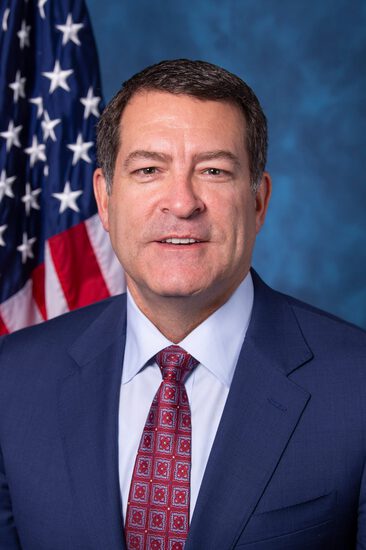
Rep. Mark E. Green
Sponsored bills
Maddy summaryThis bill rescinds unspent funds from specific federal programs. It targets leftover money from pandemic relief (like the CARES Act and American Rescue Plan) and certain infrastructure initiatives (including education stabilization funds and transportation programs like the Congestion Mitigation Program). The rescission is limited to amounts already allocated for Israel, Ukraine, and Indo-Pacific security supplements under recent appropriations. Unspent funds must be returned to the Treasury, with no new spending created.
Maddy summaryThe No Backdoors for Student Debt Cancellation Act (HR 8729) prevents the Department of Education from cutting off federal student aid programs (Title IV) for colleges that withhold student transcripts when a student has paid all tuition and fees and received federal aid for that specific term. It directly affects colleges participating in federal financial aid programs and ensures students who have met these conditions cannot have their transcripts withheld as a penalty. The key provision amends the Higher Education Act to bar the Secretary of Education from using transcript withholding as a reason to make an institution ineligible for Title IV funding. This policy change focuses on preventing colleges from losing federal aid access due to transcript practices tied to fully paid terms.
Maddy summaryHR 5403, the CBDC Anti-Surveillance State Act, prohibits the Federal Reserve from issuing or facilitating central bank digital currency (CBDC) directly or indirectly to individuals through financial institutions. It specifically bans Federal Reserve banks from offering digital products to individuals, maintaining individual accounts, or using CBDC for monetary policy implementation. The bill also clarifies that its restrictions do not apply to existing physical cash or private, permissionless digital payment systems. This bill directly affects the Federal Reserve's ability to develop or deploy a government-run digital dollar. The law aims to prevent the Federal Reserve from creating a digital currency that could enable transaction tracking or government oversight of personal financial activity.
Maddy summaryHRES 1262 is a ceremonial resolution commemorating the 100th anniversary of the U.S. Border Patrol's establishment on May 28, 1924. It honors the agency's history, service, and sacrifices - including over 57 million apprehensions and 155 agents who died in the line of duty - without creating new laws or affecting any policies. The resolution symbolically recognizes the Border Patrol's role in border security and recommends designating a National U.S. Border Patrol Day. As a purely commemorative measure, it has no direct impact on legislation, funding, or individuals.
Maddy summaryThis bill requires the U.S. Department of Defense and State Department to immediately deliver all previously approved military equipment and services to Israel within 15 days, reversing any pauses on arms transfers. It prohibits using federal funds to withhold, halt, or cancel defense article deliveries to Israel and mandates that unobligated security assistance funds for Israel must be spent by the end of 30 days. The bill also requires monthly reports to Congress detailing all security assistance provided to Israel since October 7, 2023, including specific items delivered and funding sources. The law directly affects U.S. agencies responsible for military aid and Israel as the recipient of the security assistance.
Maddy summaryThis bill amends the Law Enforcement Officers Safety Act (LEOSA) to expand where current and retired law enforcement officers can carry concealed firearms. It specifically allows qualified officers to carry in Federal facilities like post offices and courthouses (previously restricted), clarifies they may carry on public property and transportation, and updates firearms training requirements to accept certification from any state-certified instructor. The key change requires officers to meet recent firearms training standards (using flexible state-based criteria), rather than relying solely on their former agency's standards. This directly affects retired officers seeking to carry in more public spaces and federal buildings without needing prior agency certification.
Maddy summaryThe VITAL Act of 2024 imposes criminal penalties (up to 5 years in prison or fines) on medical research companies or sponsors who make false statements or conceal data in clinical vaccine trials (Section 2). It requires sponsors to certify no fraud occurred for emergency use authorizations of vaccines (Section 3), and modifies liability protections to allow lawsuits against manufacturers if fraud is proven (Sections 5-7). The bill establishes a new process for the Secretary of Health and Human Services to hold hearings on fraud claims, including public testimony, and sets rules for awarding damages (Sections 8, 7). This directly affects vaccine developers, sponsors, and manufacturers by increasing accountability for data integrity in clinical trials.
Maddy summaryThis bill strengthens oversight of administrative spending actions by requiring the Director to submit detailed waiver explanations and budgetary impact estimates to congressional Budget Committees for any executive branch action exempting spending from budget neutrality rules. It modifies the threshold for such exemptions to apply only to actions increasing direct spending by $1 billion over 10 years or $100 million in any single year. The bill also clarifies that the purpose of the administrative PAYGO rules is to maintain budget neutrality for discretionary spending decisions. These changes apply directly to federal agencies making administrative spending decisions that exceed the new thresholds. The bill repeals a sunset provision and adds new reporting requirements for budget submissions.
Maddy summaryHR 8001 requires the President to submit annual reports to Congress on Houthi capabilities, attacks threatening Red Sea/Gulf of Aden shipping, and violations of the UN arms embargo against Yemen. It mandates detailed assessments of Houthi military capacity, Iranian support, weapons systems, and the economic impact of attacks on global trade. The bill authorizes sanctions - including asset blocking and visa bans - against foreign entities supporting Houthi attacks on international shipping or supplying weapons to the Houthis. These sanctions directly affect foreign individuals and organizations deemed responsible for aiding Houthi aggression in the Red Sea region. The law expires five years after enactment.