Illegal Immigrant Payoff Prohibition Act This bill prohibits the payment of a settlement to an alien for a civil action brought against the United States in connection with the alien's inadmissibility to, or unlawful presence in, the United States.
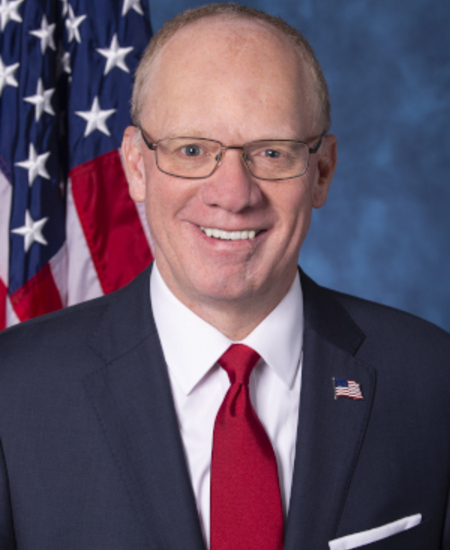
Rep. John W. Rose
Sponsored bills
Second Amendment is Essential Act of 2021 This bill directs the Department of Homeland Security to designate the business of importing, manufacturing, or dealing firearms, or importing or manufacturing ammunition, as a critical infrastructure sector. Additionally, the bill states that individuals who are employed by those entities are critical infrastructure workers. The term critical infrastructure means systems and assets, physical or virtual, so vital to the United States that the incapacity or destruction of such systems and assets would have a debilitating impact on security, national economic security, national public health and safety, or any combination of those matters.
H-2B Returning Worker Exception Act of 2021 This bill modifies the H-2B (temporary nonagricultural workers) nonimmigrant visa program, including by exempting certain workers from an annual numerical limit on such visas and requiring civil penalties for program violations. Under this bill, if a worker seeking a H-2B visa has been counted toward the 66,000 annual cap on such visas in one of the three preceding fiscal years, that worker shall not be counted against the cap again. Furthermore, the Department of Homeland Security (DHS) must impose a civil monetary penalty on an employer for (1) failing to meet requirements related to an H-2B visa petition, or (2) making a willful misrepresentation of material fact in such a petition. DHS must also ensure the establishment of an electronic platform (1) for employers to submit and request approval of an H-2B petition, and (2) to act as a single point of access for applicants and the relevant government agencies. The Department of Labor must maintain a publicly available online database of all job orders by H-2B employers. Furthermore, Labor may take certain actions to enforce program requirements, such as imposing penalties and seeking injunctions. The bill provides statutory authority for the current practice of limiting the program to workers who are nationals of countries approved by DHS. DHS may make exceptions to this limitation in individual cases if it is in the U.S. interest to do so. DHS shall select approved countries based on various factors, such as the rate of overstay by H-2B visa holders from each country.
Safe Access to Cash Act of 2022 This bill establishes a new federal statutory framework to govern robbery offenses involving ATMs and related conduct. Currently, the federal bank robbery statute makes it a federal crime to take or attempt to take by force and violence or by intimidation, money or other property from any bank, credit union, or savings and loan association. A violation is punishable by a statutory maximum prison term of 20 years (or 25 years, if the offense includes assault or use of a dangerous weapon). However, federal circuit courts have split on whether forcing someone to withdraw money from an ATM qualifies as an offense under the federal bank robbery statute. In United States v. Chavez, the Fifth Circuit Court of Appeals held that the bank customer, rather than the bank, had possession of the funds when the robbery occurred, so a necessary element of the federal bank robbery statute--that the money belonged to the bank--was not satisfied. In contrast, the Tenth, Seventh, and Fourth Circuits have held that directly forcing a bank customer to withdraw money from an ATM constitutes a federal bank robbery because the funds belonged to the bank when the withdrawal occurred. This bill establishes new statutory criminal offenses for ATM robbery and related offenses such as ATM theft. A violation is subject to the same criminal penalties as an offense under the federal bank robbery statute--a statutory maximum prison term of 20 years (or 25 years, if the offense includes assault or use of a dangerous weapon).

Bank Privacy Reform Act This bill eliminates provisions that require financial institutions to report certain financial information to specified government agencies. Currently, financial institutions are required to report certain financial transactions for the purpose of detecting illicit activity, such as money laundering or the financing of terrorism. Under the bill, such records are only obtainable through a search warrant. The bill also eliminates reporting requirements related to the beneficial ownership of certain corporate entities.
Russia and Belarus SDR Exchange Prohibition Act of 2022 This act prohibits the Department of the Treasury from engaging in any transaction involving the exchange of Special Drawing Rights (SDRs) held by Russia or Belarus and requires Treasury to take actions to oppose financial assistance to Russia or Belarus. The SDR is an international reserve asset maintained by the International Monetary Fund (IMF) based on contributions from IMF member countries. SDRs may be exchanged between member countries and may also be exchanged for currencies. Treasury must also (1) vigorously advocate for IMF member countries to prohibit transactions involving the exchange of SDRs held by Russia or Belarus, and (2) direct U.S. representatives to each international financial institution to oppose providing financial assistance to Russia or Belarus except to address the basic human needs of their civilian populations. The act's provisions shall be in effect until the earlier of (1) five years after this act's enactment, or (2) 30 days after the President reports to Congress that the governments of Russia and Belarus have ceased destabilizing activities directed at Ukraine's sovereignty and territorial integrity. The President may also waive the provisions upon reporting to Congress that doing so is in the national interest of the United States.
Nuclear Assistance for America's Small Businesses Act This bill provides assistance to eligible small businesses that seek to engage in the research, development, and deployment of advanced nuclear reactors. Upon the request of small businesses, the Nuclear Regulatory Commission must delay collecting a certain portion of application fees for construction permits, operating licenses, or combined licenses for advanced nuclear reactors.
Maddy summaryThis bill designates the Department of Veterans Affairs clinic in Mishawaka, Indiana, as the "Jackie Walorski VA Clinic" to honor former U.S. Representative Jackie Walorski, who served on the House Committee on Veterans' Affairs and advocated for veterans. The law requires all federal references - including laws, documents, and maps - to use the new name for the clinic, effective upon enactment. It does not change the clinic’s services, funding, or operations, as it is a purely commemorative naming resolution.
This resolution supports the designation of National 4-H Week. It also (1) recognizes the important role of 4-H in youth development and education, and (2) encourages all citizens to recognize 4-H for the significant impact the organization and members have made and continue to make by empowering young people with the skills needed to lead for a lifetime.
Protect Farmers from the SEC Act This bill prohibits the Securities and Exchange Commission from requiring the disclosure of greenhouse gas emissions related to agricultural products.