

Financial Stability Oversight Council Reform Act This bill subjects the budgets of the Financial Stability Oversight Council (FSOC) and the Office of Financial Research (OFR) to the annual appropriations process and establishes requirements for reports and a public notice and comment period. The budgets of the FSOC and the OFR are funded by assessments on financial institutions which are deposited into the Financial Research Fund and, under current law, are immediately available to be spent. This bill requires the funding from the Financial Research Fund to be made available by appropriations acts. The OFR must submit quarterly reports to Congress regarding its finances; workforce; and actions taken to achieve the goals, objectives, and performance measures of the office. The OFR must provide a public notice and comment period of at least 90 days before issuing any proposed report, rule, or regulation. The bill expands the duties of the OFR to include publishing an annual work plan; consulting with other federal departments and agencies with relevant expertise prior to preparing any public report with respect to a specified entity, class of entities, or financial product or service; and developing and implementing a cybersecurity plan. The Government Accountability Office must annually audit the cybersecurity plan and its implementation.
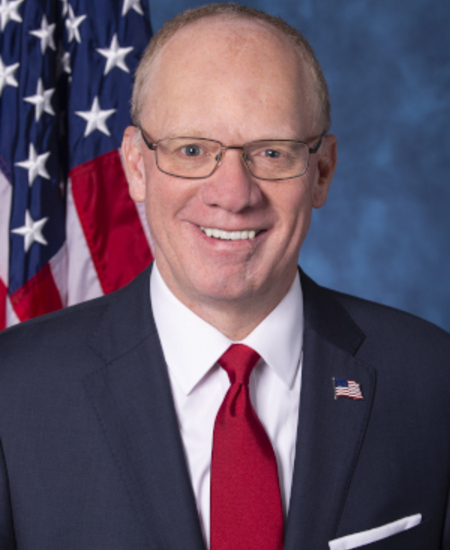
Rep. John W. Rose
Sponsored bills
Maddy summaryHR 6934, the Families’ Rights and Responsibilities Act, protects parents' fundamental right to direct their child's upbringing, education, and health care without government interference. It prohibits government actions that substantially burden these parental rights - including withholding benefits, imposing penalties, or excluding families from programs - unless the government proves a "compelling interest" and uses the "least restrictive means." The bill explicitly applies to all federal laws and requires courts to consider parental rights as a fundamental right under the Constitution, with exceptions only for actions causing serious child injury or death. It also adds parental rights to existing legal frameworks for recovering attorney fees in court cases involving these protections.
Maddy summaryHRES 946 is a symbolic House resolution recognizing "Gold Shield Families" - defined as the families of fallen police officers, firefighters, EMTs, correction officers, emergency dispatchers, and emergency service providers who died in the line of duty. The resolution formally honors their sacrifices and resilience, affirming that their hardships should not be forgotten. It includes no new funding, regulations, or policy changes; instead, it serves as a commemorative gesture expressing national gratitude. The resolution directs that a copy be sent to the President and made public to publicly recognize these families' contributions.
Maddy summaryHR 1147, the Whole Milk for Healthy Kids Act of 2023, allows schools participating in the National School Lunch Program to offer whole milk as an option during lunch. It amends the school lunch law to explicitly permit schools to serve flavored and unflavored whole milk alongside reduced-fat, low-fat, and fat-free milk choices for students. The bill also requires the Secretary of Agriculture to adjust meal regulations to account for saturated fat from whole milk, ensuring it doesn't count against meal fat limits. This change directly affects participating schools and the students who receive school lunches, expanding their milk beverage options.
Maddy summaryThis bill clarifies the Consumer Financial Protection Bureau's (CFPB) authority to enforce rules against "unfair, deceptive, or abusive acts or practices" (UDAAP) affecting consumers. It defines "abusive" acts as those intentionally interfering with consumer understanding or taking unreasonable advantage of consumer vulnerabilities, requiring the CFPB to provide a clear definition within 180 days. Financial institutions must now receive written notice and 180 days to correct potential violations before penalties are imposed, and the CFPB must conduct cost-benefit analyses for new rules. The bill also prohibits the CFPB from treating discrimination as part of UDAAP enforcement and limits penalties for past conduct to the most recent compliance rating period.
Maddy summaryHR 6734 prohibits the use of federal funds to finalize, implement, or enforce the Bureau of Alcohol, Tobacco, Firearms, and Explosives' (ATF) proposed rule (2022R-17) defining "engaged in the business as a dealer in firearms." This bill directly affects the ATF by blocking funding for this specific regulatory rule, which was proposed in August 2023. The legislation does not create new requirements but prevents federal resources from being used to advance this particular ATF regulation.
Maddy summaryThis bill authorizes the posthumous presentation of a Congressional Gold Medal to honor Marshall "Major" Taylor, a pioneering Black cyclist who broke racial barriers in the late 19th and early 20th centuries. It recognizes his athletic achievements, including world records and international championship wins, as well as his advocacy for equality in sports. The medal, designed by the Treasury Secretary, will be presented to Taylor's great-granddaughter, Karen Donovan, following the congressional authorization. As a commemorative act with no policy changes, it serves solely to honor Taylor's legacy as a trailblazer and role model.
Maddy summaryHR 6625, the Chinese Spy Balloon Assessment Act, requires the Secretary of Defense to submit a report to Congress within 90 days of the bill's enactment. The report must detail the national security effects of surveillance conducted by China via a high-altitude balloon shot down in U.S. airspace in February 2023, including impacts on military installations and an analysis of recovered technology's country of origin. This bill directly affects the Department of Defense and Congress by mandating a specific, time-bound assessment of a single incident. It does not create new policies or funding but establishes a procedural requirement for transparency about the 2023 balloon event. The report must be unclassified, though it may include a classified annex.
Maddy summaryHR 6578 establishes a 9-member bipartisan commission to study antisemitism in the United States. The commission will investigate current manifestations of antisemitism, evaluate government efforts to combat it, and report findings and recommendations to Congress within one year. It directly affects Jewish communities by examining incidents like the 300% surge in antisemitic activity reported by the Anti-Defamation League, and impacts federal, state, and local governments through its evaluation of existing policies. The commission terminates 120 days after submitting its report, with no predetermined conclusions or interference in ongoing law enforcement.
Maddy summaryThis bill would amend the census law to exclude non-citizen residents from the population count used to determine congressional representation. It directly affects states with significant non-citizen populations, as their number of House seats could decrease in future apportionments. The key provision changes the statutory language to explicitly exclude "individuals who are not citizens of the United States" from the population figure. This change would apply starting with the 2030 census and all subsequent decennial counts.