

Maddy summaryHJRES 127 is a congressional disapproval resolution targeting a Securities and Exchange Commission (SEC) rule requiring public companies to standardize climate-related financial disclosures. It seeks to block the SEC’s March 2024 rule (89 Fed. Reg. 21668), which would mandate consistent reporting on climate risks for investors. If passed, this resolution would prevent the SEC rule from taking effect, directly affecting publicly traded companies required to comply with the proposed disclosure standards. The bill uses a specific congressional process under Title 5, U.S. Code, to nullify the rule without creating new regulations.
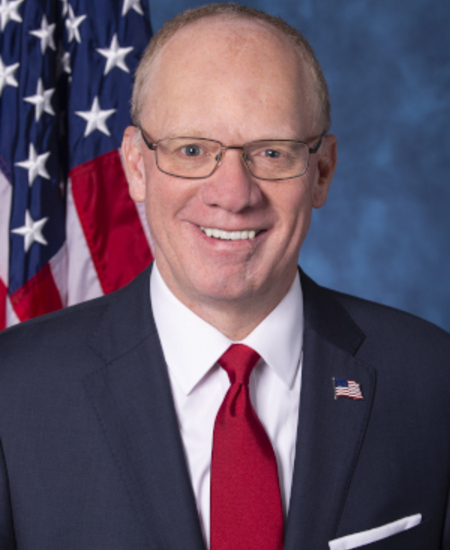
Rep. John W. Rose
Sponsored bills
Maddy summaryHJRES 122 is a resolution seeking to block a rule by the Consumer Financial Protection Bureau (CFPB) that would have regulated credit card penalty fees. The rule, published on March 15, 2024, aimed to limit how credit card companies charge fees for late payments or other violations. If approved, this resolution would disapprove the rule under a specific legal process, preventing it from taking effect. This directly affects credit card issuers (banks and financial institutions) by allowing them to continue current fee practices without the proposed restrictions.
Maddy summaryHRES 1394 is a non-binding resolution celebrating the U.S.-India partnership based on shared democratic values, religious pluralism, and human rights, while highlighting the contributions of the Indian diaspora in the United States. It specifically recognizes the 50th anniversary of BAPS Swaminarayan Sanstha's community work, including its spiritual centers (mandirs) and volunteer efforts across the country. The resolution does not create legal obligations but formally acknowledges these ties and achievements.
Maddy summaryThis bill defines "sex," "male," and "female" in federal law based on biological characteristics present at birth, specifically referencing reproductive anatomy (e.g., sperm production for males, egg production for females). It mandates that all federal agencies, courts, and laws interpret these terms strictly according to this biological definition, excluding self-identification or gender identity. The bill directly affects how federal programs, regulations, and legal decisions interpret terms like "sex," "gender," and "gender identity" in all federal contexts. Key provisions clarify that "gender" refers only to biological sex differences and explicitly states that gender identity does not override these definitions.
Maddy summaryHCONRES 122 is a non-binding resolution expressing Congress's view that Operation Legend - a 2020 federal-local initiative - successfully reduced violent crime in major cities like Chicago, Kansas City, and Memphis. It recommends that future presidential administrations consider deploying federal law enforcement agents to partner with local agencies in high-crime areas, similar to Operation Legend’s 2020 approach. The resolution also proposes providing grant funding to states and cities to hire more officers (including bonuses), impose stricter sentences for repeat offenders, and use bail/pretrial detention to keep dangerous individuals from reentering communities. It does not create new law but urges future administrations to prioritize these strategies to address ongoing violent crime surges.
Maddy summaryHRES 1371 is a House resolution condemning the Biden Administration and Vice President Kamala Harris for failing to secure the U.S. border. It cites statistics including over 9.7 million illegal immigration encounters since 2021 and the end of the Remain in Mexico program as evidence. As a symbolic resolution with no policy changes, it publicly expresses the House's disapproval of current border policies without altering any laws or enforcement actions.
Ensuring State Attorney General Accountability Act This bill prohibits a tax-exempt charitable organization from providing direct funding to state attorneys general for the purpose of a lawsuit, investigation, or remuneration of personnel.
Maddy summaryThis bill requires the HUD Inspector General to provide annual testimony before the House Financial Services Committee and Senate Banking Committee by October 1 each year. The testimony must cover specific areas: efforts to detect fraud/waste, audit and investigation capabilities, program improvement opportunities, and ongoing oversight activities. It directly affects HUD's Inspector General and the designated congressional committees by establishing a formal reporting requirement. The bill does not change HUD programs but mandates regular transparency about oversight work.
Maddy summaryThis is a commemorative resolution (HRES 1369) honoring Corey Comperatore, a volunteer firefighter, U.S. Army Reserves veteran, and community leader from Sarver, Pennsylvania, who died on July 13, 2024. The resolution formally mourns his passing and celebrates his life, noting he left behind his wife, Helen, and two daughters, Allyson and Kaylee. It recognizes his service to the Buffalo Township Volunteer Fire Department, his military service, and his role as a devoted member of Cabot Methodist Church. As a ceremonial resolution, it has no policy impact or direct effect on legislation or constituents beyond this formal acknowledgment.
Maddy summaryHR 6864, the HUD Accountability Act of 2023, requires the Secretary of Housing and Urban Development (HUD) to provide annual testimony to two specific congressional committees. The Secretary must report each year on the physical condition of all public housing, the financial health of FHA mortgage insurance funds, oversight of grantees for waste/fraud, and ongoing department activities. This bill directly affects HUD leadership and its accountability to Congress. It creates a new mandatory requirement for annual transparency regarding key HUD operations and financial safeguards. The legislation does not change HUD's programs but establishes a formal reporting mechanism.