

Access Technology Affordability Act of 2021 This bill allows a refundable tax credit equal to the amounts paid for qualified access technology for use by a blind individual who is the taxpayer, the taxpayer's spouse, or a dependent of the taxpayer. Qualified access technology is hardware, software, or other information technology with the primary function of converting or adapting information that is visually represented into forms or formats useable by blind individuals. The credit is limited to (1) costs that are not compensated by insurance or otherwise, and (2) an aggregate amount of $2,000 per blind individual in any period of three consecutive taxable years. The credit must be adjusted for inflation after 2021 and terminates after 2026.
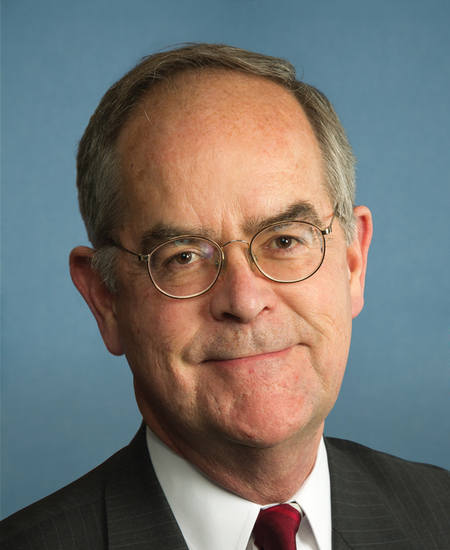
Rep. Jim Cooper
Sponsored bills
Presidential Tax Transparency Act This bill requires the President, the Vice President, and certain candidates for President and Vice President to disclose federal income tax returns for the ten most recent taxable years. The returns must be disclosed to the Federal Election Commission (FEC), which must make the returns publicly available after redacting information that is necessary for protecting against identity theft, such as Social Security numbers. If the tax returns are not disclosed to the FEC as required by this bill, the Internal Revenue Service must provide the returns to the FEC upon receiving a written request from the FEC.
Incentivizing Medicaid Expansion Act of 2021 This bill provides an enhanced federal matching rate to every state that expands Medicaid coverage for individuals who are newly eligible under the Patient Protection and Affordable Care Act, regardless of when such expansion takes place. Under current law, the enhanced Federal Medical Assistance Percentage (FMAP) is equivalent to 100% in 2014 through 2016, 95% in 2017, 94% in 2018, 93% in 2019, and 90% thereafter. The bill retains this enhanced FMAP, but bases it on a term of years rather than on specific dates. The bill applies retroactively.
Transparent Representation Upholding Service and Trust in Congress Act or the TRUST in Congress Act This bill requires a Member of Congress, as well as any spouse or dependent child of a Member, to place specified investments into a qualified blind trust (i.e., an arrangement in which certain financial holdings are placed in someone else's control to avoid a possible conflict of interest) until 180 days after the end of their tenure as a Member of Congress.
This resolution removes Representative Mo Brooks from office as a Member of the House of Representatives for his statements and actions related to the 2020 presidential election and the violent events at the U.S. Capitol on January 6, 2021.
This resolution expresses the sense of the House of Representatives that Congress should ensure that the U.S. Postal Service is not privatized and remains an independent establishment of the federal government.
Officer Eugene Goodman Congressional Gold Medal Act This bill directs the Speaker of the House of Representatives and the President pro tempore of the Senate to arrange for the presentation of a Congressional Gold Medal to U.S. Capitol Police Officer Eugene Goodman for his actions to protect the Senate chamber during the security breach at the U.S. Capitol on January 6, 2021.
This resolution requires a Member, Delegate, or Resident Commissioner of the House of Representatives to wear a mask in the Capitol complex until it is no longer recommended to do so by the Centers for Disease Control and Prevention. It also establishes a $1,000 fine for each violation of this requirement.
Vote at Home Act of 2021 This bill expands voting by mail in federal elections and provides for automatic voter registration through state motor vehicle authorities. Specifically, the bill prohibits states from imposing additional conditions or requirements on the eligibility of individuals to cast ballots by mail in federal elections, except states may impose a deadline for requesting and returning a ballot. Further, states must mail ballots to individuals registered to vote in a federal election not later than two weeks before the election. In addition, the U.S. Postal Service must carry ballots for federal elections expeditiously and free of postage. Finally, the bill provides for automatic voter registration of individuals through state motor vehicle authorities.
Election Day Holiday Act of 2021 This bill requires a federal election day to be treated as a holiday for federal employees.