Global Respect Act This bill imposes visa-blocking sanctions on foreign persons responsible for or complicit in violating the human rights of individuals due to actual or perceived sexual orientation, gender identity, or sex characteristics. The President must report and periodically update a list of foreign persons responsible for such human rights violations and apply sanctions accordingly. The Department of State must designate at least one senior officer who shall be responsible for tracking violence and discrimination against individuals based on actual or perceived sexual orientation, gender identity, or sex characteristics in foreign countries.
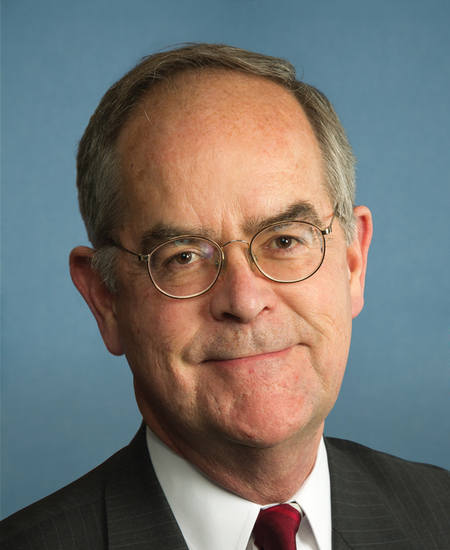
Rep. Jim Cooper
Sponsored bills
Federal Information Security Modernization Act of 2022 This bill addresses federal information security management, notification and remediation of cybersecurity incidents, and the roles of the Office of Management and Budget (OMB) and the Cybersecurity and Infrastructure Security Agency (CISA). CISA must perform, on an ongoing and continuous basis, assessments of federal risk posture. The bill requires evaluation by each agency of whether additional cybersecurity procedures are appropriate at least once every three years. An agency, as expeditiously as practicable and without unreasonable delay, and within 45 days after it has a reasonable basis to conclude that a breach has occurred, must (1) determine whether notice to any individual potentially affected by the breach is appropriate based on a risk assessment; and (2) as appropriate, provide written notice to each individual potentially affected. Notification may be delayed under specified circumstances. Each agency must provide any information relating to a major incident to CISA, the OMB, the Office of the National Cyber Director, the agency's office of inspector general, the Government Accountability Office, and Congress. An agency's contractors and grant recipients must notify the agency of an incident involving federal information within a specified time frame. Each agency shall develop training for individuals at the agency with access to federal information or information systems on how to identify and respond to an incident. CISA must establish a program to provide ongoing, hypothesis-driven threat-hunting services on the network of each agency. The bill establishes specified pilot programs to enhance federal cybersecurity.
Maddy summaryThis resolution (HRES 884) symbolically recognizes January 2022 as "National Mentoring Month" to highlight the value of mentoring relationships for youth. It does not create new laws or provide funding, but instead acknowledges mentoring's role in supporting young people's education, career development, and well-being. The resolution encourages promoting mentoring programs across communities, schools, and workplaces to address the "mentoring gap" where one in three youth lacks a supportive adult outside their home. As a procedural resolution, it has no direct legal effect on individuals or programs.
Refuge From Cruel Trapping Act of 2021 This bill prohibits, with specified exceptions, the use or possession of body-gripping traps in the National Wildlife Refuge System. The bill imposes on persons who possess or use such traps in the system (1) for a first offense, a civil fine of up to $500 for each body-gripping trap possessed or used; and (2) for subsequent offenses, a civil fine of up to $1,000 for each body-gripping trap possessed or used, imprisonment for up to 180 days, or both such a civil fine and imprisonment. The bill makes any body-gripping traps that are possessed or used in violation of this bill, and any wildlife captured by the use of such traps, including the pelts and raw fur, subject to civil forfeiture. Persons found to be in violation of such prohibition shall pay all associated court costs.
Albatross and Petrel Conservation Act This bill authorizes the United States Fish and Wildlife Service (USFWS) and the National Marine Fisheries Service (NMFS) to issue regulations to implement and enforce the Agreement on the Conservation of Albatrosses and Petrels, done at Cape Town, South Africa, on February 2, 2001. Specifically, the USFWS and the NMFS may take action to protect albatrosses and petrels and their habitats. The bill prohibits the taking of an albatross or petrel without a permit, authorization, or exemption. The FWS, in consultation with the NMFS, may authorize the taking of an albatross or petrel under exceptional circumstances or incidental to otherwise lawful activities. The bill gives the USFWS, the NMFS, and the Coast Guard authority to enforce this bill. Finally, the bill authorizes cooperation with other countries to achieve and maintain a favorable conservation status of albatrosses and petrels.
Comprehensive Resources for Entrepreneurs in the Arts to Transform the Economy Act of 2022 or the CREATE Act of 2022 This bill expands financial assistance for, and establishes measures to support, the creative economy and art entrepreneurs. Specifically, the bill requires (1) the Small Business Administration to develop loan criteria, evaluation procedures, and technical assistance programs for small business concerns that are owned by artists and support the creative economy; and (2) the Department of Commerce to ensure that traditional economic development tools, such as business incubators and grant programs, support the arts industry and creative economy.
Masks for All Act of 2022 This bill directs the Federal Emergency Management Agency (FEMA) to manufacture and distribute N-95 respirator masks to every individual in the United States and to provide N-95 masks to all individuals working in health care settings in the United States that are experiencing a shortage of such masks. FEMA must provide the masks at no cost to individuals and deliver them, to the greatest extent possible, using the U.S. Postal Service. Additionally, FEMA shall designate mask pickup sites in each community and shall provide masks to each site, allocated according to population; consider new designs for masks to improve comfort, fit, and size options; and submit to Congress a strategic plan that includes monthly, measurable targets to eliminate shortages and increase domestic production of N-95 masks and to fulfill all other requirements of this bill. The President shall make use of any and all available authorities (including emergency authorities) at the disposal of the federal government to procure and domestically manufacture N-95 masks and support the domestic manufacturing of N-95 masks.
PrEP Access and Coverage Act This bill requires private health insurance plans to cover prescription drugs that prevent HIV, including related screenings, diagnostic procedures, administrative fees, and clinical follow-ups, without any cost-sharing obligation for the plan holder. Further, insurance plans must not impose any preauthorization requirement for this coverage. These coverage requirements also apply to public health insurance programs, including Medicare, Medicaid, and the Children's Health Insurance Program. Additionally, the bill prohibits denying, limiting, or qualifying coverage or increasing premiums for disability insurance, long-term care insurance, or life insurance policies based on an individual taking medication for HIV prevention. The bill further requires the Department of Health and Human Services to award grants to states, or directly to eligible local organizations, to provide uninsured individuals and underinsured individuals access to prescription drugs and related services that prevent HIV. The Centers for Disease Control and Prevention also must develop a public awareness campaign that focuses efforts in communities with a high need for HIV prevention treatment.
This bill revises enforcement provisions under the Animal Welfare Act (AWA), including by directing inspectors to confiscate or destroy in a humane manner animals found to be suffering physical or psychological harm as a result of failure to comply with the AWA.
Cures 2.0 Act This bill addresses pandemic preparedness and public health issues, caregiver and patient engagement, drug development, insurance coverage, and biomedical research. The Department of Health and Human Services (HHS) must undertake research and other activities concerning COVID-19 and develop a strategy for future pandemics and declared emergencies. Additionally, the bill specifies actions to combat antimicrobial resistance. HHS may award grants for caregiver training. The bill also addresses diversity in clinical trials, collecting patient experience data during clinical trials, and coverage for care related to participation in specified clinical trials. The bill modifies the timeframe and requires additional guidance relating to expedited approval of certain breakthrough drugs, devices, or products. It also establishes two intercenter institutes within the Food and Drug Administration (FDA) focused on particular diseases that meet specified criteria. The bill also addresses (1) coverage in Medicare, Medicaid, and the Children's Health Insurance Program for telehealth, genetic and genomic testing, and other services; (2) electronic prescribing standards for Medicare drug benefits; and (3) access to Medicare and Medicaid claims data by certain registries. Furthermore, the bill prohibits the use of geographic tracking or biometrics in Medicaid electronic visit verification systems. The bill establishes the Advanced Research Projects Agency for Health (ARPA-H) within the National Institutes of Health to accelerate biomedical research and innovation through grants, contracts, cash prizes, and other means. The FDA may work with ARPA-H to expedite the development of medical products through specified activities.