

Maddy summaryHR 401, the "No Taxpayer Funding for the World Health Organization Act," prohibits the U.S. government from providing any assessed or voluntary contributions to the World Health Organization (WHO) starting on the day the bill becomes law. This directly affects the WHO, which would lose U.S. funding through these specific channels, and the U.S. government, which would no longer allocate taxpayer money for this purpose. The key mechanism is a statutory ban that overrides existing law, requiring immediate cessation of such payments without needing additional authorization. The bill does not impact other U.S. international health programs or the WHO's broader operations.
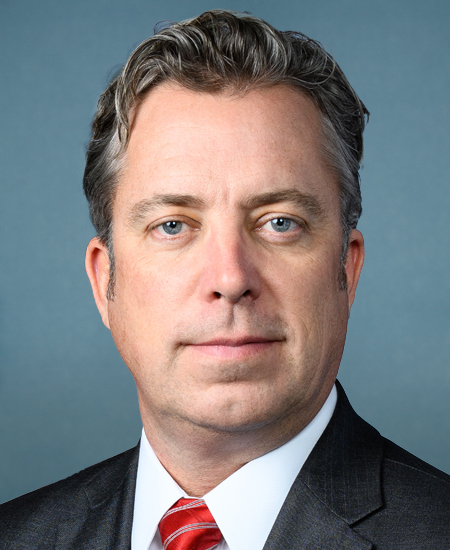
Rep. Andrew Ogles
Sponsored bills
Maddy summaryHR 335, titled "Repeal the NFA Act," seeks to eliminate the National Firearms Act (NFA) of 1934, a federal law regulating certain firearms like machine guns, short-barreled rifles, and suppressors. If enacted, the bill would remove the NFA from the Internal Revenue Code by repealing Chapter 53, which currently governs the taxation and registration of these firearms. This repeal would directly affect firearm owners and manufacturers subject to NFA regulations, removing federal requirements for registration and tax payments on specified weapons. The bill focuses solely on repealing existing law without introducing new provisions or exceptions.
Maddy summaryHR 361, the "Make Greenland Great Again Act," authorizes the President to begin negotiations with Denmark for the U.S. acquisition of Greenland starting January 20, 2025. It requires the President to submit any resulting agreement to specific congressional committees (Foreign Affairs and Foreign Relations) within five days, followed by a 60-day congressional review period. If Congress takes no action during that period, the agreement would automatically take effect. The bill does not change Greenland’s current status as part of Denmark’s Kingdom but proposes a diplomatic process for potential transfer. Note: This appears to be a symbolic or satirical proposal, as Greenland is an autonomous territory within Denmark’s Kingdom and not subject to unilateral acquisition.
Maddy summaryThis bill repeals multiple tax credits for renewable energy projects, including solar, wind, and clean transportation fuels, which currently provide financial incentives to businesses. It directly affects companies that claim these credits, such as renewable energy developers and manufacturers, by eliminating their eligibility for these tax benefits starting in 2025. Key provisions remove specific sections of the tax code (like Sections 45, 45Q, and 48) and adjust related references to reflect the repeal. The changes apply to taxable years beginning after December 31, 2024, with no new provisions added - only the removal of existing credits.
Maddy summaryHR 312, the Restoring Vehicle Market Freedom Act of 2025, repeals five tax credits related to clean and alternative fuel vehicles from the Internal Revenue Code. Specifically, it eliminates credits for previously owned clean vehicles, alternative motor vehicles, alternative fuel refueling property, new plug-in electric vehicles, and commercial clean vehicles. This change means individuals and businesses purchasing or installing qualifying vehicles or infrastructure will no longer be eligible for these tax incentives. The repeal applies to vehicles or property acquired or placed in service after the bill's enactment date.
Maddy summaryHR 283 authorizes the President, with coordination from the Secretary of State, to negotiate with Panama to reacquire the Panama Canal. The bill requires the President to submit a report to Congress within 180 days of enactment, detailing negotiation progress, challenges, and expected outcomes. This procedural bill focuses solely on initiating talks and reporting requirements, without specifying repurchase terms or funding. It directly affects U.S. executive branch actions and congressional oversight, not the canal’s current operations or Panama’s government.
Maddy summaryHR 311, the Restoring Fuel Market Freedom Act of 2025, repeals multiple existing federal tax credits for fuel producers and importers. It specifically eliminates tax credits for alcohol fuels (Section 40), biodiesel (Section 40A), sustainable aviation fuel (Section 40B), clean fuel production (Section 45Z), and alternative fuel mixtures (Section 6426). These repeals apply to fuels produced, sold, or used after the bill's enactment date, removing current tax incentives for these fuel types. The bill directly affects businesses producing or importing these fuels, as they will no longer qualify for the repealed credits.
Maddy summaryThis bill grants the Secretary of Homeland Security authority to temporarily suspend entry of certain individuals at U.S. borders to achieve "operational control" (defined as effective border management). It specifically applies to people seeking entry without proper documentation who would be denied entry under current law (e.g., lacking visas or asylum eligibility). The Secretary must block entry if they cannot detain or process these individuals as required by existing immigration law. States may also sue the government if they believe border security rules are violated.
Maddy summaryThis bill directs the Department of Homeland Security to implement the Migrant Protection Protocols (MPP) as outlined in a 2019 policy memo. It requires migrants seeking asylum at the U.S. border to remain in Mexico while their cases are processed, rather than being allowed to stay in the U.S. pending a hearing. The bill does not create new rules but mandates the reinstatement of a policy that was previously in effect from 2019 to 2021. This would directly affect asylum seekers arriving at the U.S.-Mexico border. The policy change would apply to all migrants covered by the existing MPP framework.
Maddy summaryThe Healthcare Freedom Act of 2025 would rename health savings accounts as "health freedom accounts" and make them available to all individuals, removing the previous requirement of having a high-deductible health plan. It increases the annual contribution limit to $12,000 (or $24,000 for joint returns) and expands eligible expenses to include direct primary care and health care sharing ministries. Employers could contribute to these accounts for new hires starting five years after enactment, with a transition rule for existing accounts. The bill would directly affect individuals using these accounts and employers who choose to participate in the new system.