

Israel Anti-Boycott Act This bill prohibits participation by certain entities and individuals in boycotts or requests for boycotts imposed by international governmental organizations (i.e., the United Nations and the European Union). Specifically, the bill applies to covered persons the prohibition of specified actions in compliance with or in support of a boycott against a country that is friendly to the United States and that is not itself the object of a U.S. boycott. The bill defines a covered person as a domestic concern, the U.S. government or a state government, or a representative or official of such domestic concern or government. The bill also adds to the list of specified prohibited actions the act of furnishing information to any foreign country or international governmental organization that furthers an imposed boycott. Under current law, a person who violates the prohibitions against such boycotts may be subject to a monetary fine or imprisonment; however, the bill removes imprisonment as a potential penalty for certain violations.
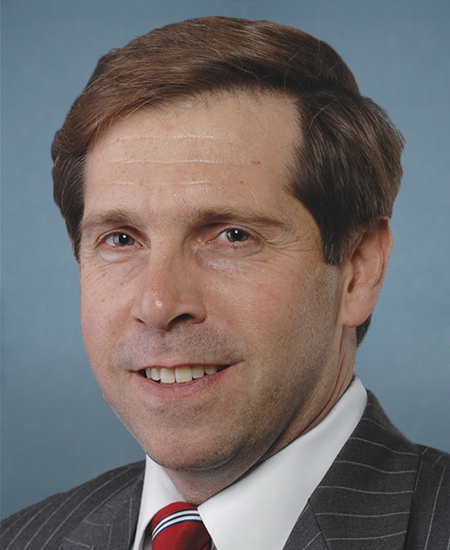
Rep. Charles J. "Chuck" Fleischmann
Sponsored bills
This joint resolution nullifies the rule titled Medicare and Medicaid Programs; Omnibus COVID-19 Health Care Staff Vaccination , which was issued by the Centers for Medicare & Medicaid Services on November 5, 2021. The rule requires health care providers, as a condition of Medicare and Medicaid participation, to ensure that staff are fully vaccinated against COVID-19.
Upholding the 1995 Jerusalem Embassy Law Act of 2021 This bill prohibits using federal funds to establish any diplomatic facility in Jerusalem other than the U.S. Embassy to Israel.
This resolution supports reopening the U.S. Capitol Building and House Office Buildings to visitors under the public visitation policies that were in place before the COVID-19 pandemic.
This resolution addresses the need for improvements to broadband infrastructure, particularly in rural areas, and the role of specified federal agencies in making such improvements.
Keep Schools Open Act This bill generally prohibits federal education funding for elementary or secondary schools, local or state educational agencies, or institutions of higher education (IHEs) that do not provide in-person instruction. Specifically, the bill prohibits a school, educational agency, or IHE from receiving federal education funds unless the school, educational agency, or IHE (1) demonstrates to the Department of Education (ED) that it provides in-person instruction to students, and (2) certifies to ED that it will not discontinue in-person instruction for students due to COVID-19. This prohibition does not apply to a school, educational agency, or IHE that provides distance education or other virtual instruction to students in the regular course of its operations for reasons that are unrelated to COVID-19.
Protecting Horses from Soring Act of 2021 This bill revises requirements concerning the inspection of horse shows, exhibitions, sales, and actions for sored horses (e.g., horses suffering from pain when moving due to substances or devices placed on their limbs). Specifically, this bill replaces a requirement for the Department of Agriculture to prescribe regulations governing the appointment of inspectors with a requirement for the Horse Industry Organization, which is established by this bill, to appoint inspectors.
Accelerating Access to Critical Therapies for ALS Act This bill establishes grant programs to address neurodegenerative diseases, such as amyotrophic lateral sclerosis (also known as ALS or Lou Gehrig's disease), and contains other related provisions. The Department of Health and Human Services (HHS) shall award grants to eligible entities for scientific research utilizing data from expanded access to investigational ALS treatments for individuals who are not otherwise eligible for clinical trials. The Food and Drug Administration (FDA) shall award grants to public and private entities to cover the costs of research and development of drugs that diagnose or treat ALS and other rare neurodegenerative diseases. HHS shall also establish the Public-Private Partnership for Neurodegenerative Diseases between the National Institutes of Health, the FDA, and at least one eligible entity (generally, an institution of higher education or a nonprofit organization). The partnership shall support the development and regulatory review of drugs that address ALS and other rare neurodegenerative diseases. The FDA shall publish on its website a five-year action plan for fostering the development of drugs that improve or extend the lives of people living with rare neurodegenerative diseases. The Government Accountability Office must report to Congress about the grants provided under this bill, including an analysis of the impact of such grants on research and development of treatments for ALS.
This bill designates the federal building at 167 North Main Street in Memphis, Tennessee (commonly known as the Clifford Davis and Odell Horton Federal Building), as the Odell Horton Federal Building.
This bill designates the building utilized as a U.S. courthouse located at 111 South Highland Avenue in Jackson, Tennessee, as the James D. Todd United States Courthouse.