Assistance for Rural Community Hospitals Act of 2022 or the ARCH Act of 2022 This bill extends certain payment adjustments for Medicare-dependent hospitals and low-volume hospitals until the end of FY2027 (the adjustments currently expire at the end of FY2022).
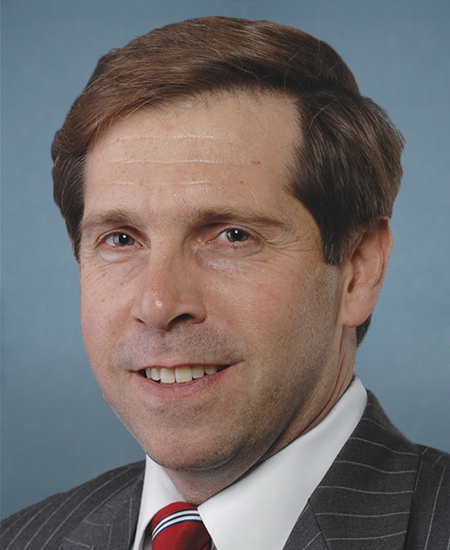
Rep. Charles J. "Chuck" Fleischmann
Sponsored bills
Harriet Tubman Bicentennial Commemorative Coin Act This bill directs the Department of the Treasury to mint and issue 50,000 $5 gold coins, 400,000 $1 silver coins, and 750,000 half-dollar clad coins emblematic of the legacy of Harriet Tubman as an abolitionist. The Secretary may issue coins under this bill only during the period of January 1, 2024, through December 31, 2024. All surcharges received by Treasury from the sale of such coins must be paid equally to the National Underground Railroad Freedom Center in Cincinnati, Ohio, and The Harriet Tubman Home, Inc. in Auburn, New York, for the purpose of accomplishing and advancing their missions.
National World War II Memorial Commemorative Coin Act This bill directs the Department of the Treasury to mint and issue up to 50,000 $5 coins, 400,000 $1 silver coins, and 750,000 half-dollar clad coins in commemoration of the National World War II Memorial in the District of Columbia. The design of the coins shall be emblematic of the memorial and the service and sacrifice of American soldiers and civilians during World War II. All surcharges received from the sale of such coins shall be paid to the Friends of the National World War II Memorial to support the National Park Service in maintaining and repairing the memorial, and for educational and commemorative programs.
This resolution expresses the sense of the House of Representatives that it is necessary to expand the use of nuclear energy in order to (1) meet the growing energy demands of the United States, and (2) promote American nuclear energy leadership while retaining U.S. economic viability in the worldwide nuclear energy marketplace.
National Strategy to Utilize Microreactors for Natural Disaster Response Efforts Act This bill directs the President to develop a national strategy to utilize microreactors to assist with natural disaster response efforts. A microreactor is a nuclear reactor with at most 20 megawatts of thermal energy generating capacity. Specifically, such strategy must include an assessment of the effectiveness of utilizing diesel generators to assist with natural disaster response efforts; a comprehensive, research-based, and long-term discussion of goals, objectives, and priorities for utilizing microreactors instead of diesel generators to assist with such efforts; a Department of Defense analysis regarding the use of such microreactors to assist with such efforts; recommendations on how the Nuclear Regulatory Commission may expedite the approval of designs for microreactors and issuing licenses; an assessment of the challenges and barriers to deploying microreactors to assist with such efforts and solutions; and recommendations on how to utilize microreactors as charging stations for electric vehicles in the event of a mass evacuation resulting from a natural disaster.
This resolution expresses that the House of Representatives reiterates its commitment to ensuring Iran will never acquire a nuclear weapon, supports the important work of the International Atomic Energy Agency (IAEA) in safeguarding nuclear material around the globe, and condemns Iran for its lack of transparency and cooperation with the IAEA on the unresolved matter of uranium particles discovered at undeclared sites in Iran and for its additional escalatory actions related to its nuclear program.
National Computer Forensics Institute Reauthorization Act of 2022 This bill reauthorizes through FY2032 the National Computer Forensics Institute within the U.S. Secret Service. The bill expands the mission of the institute to include educating, training, and equipping law enforcement officers and others on preventing (in addition to investigating) cybersecurity incidents, electronic crimes, and related cybersecurity threats. The bill requires the institute to develop and share information related to investigating cybersecurity incidents, electronic crimes, and related cybersecurity threats. The bill also requires the institute to report annually on its activities.
This resolution sets forth the rule for consideration of H.R. 1011 (Life at Conception Act), which declares that the right to life guaranteed by the Constitution is vested in each human being at all stages of life, including the moment of fertilization, cloning, or other moment at which an individual comes into being.
This resolution celebrates the 50th anniversary of the Federal Pell Grant program and expresses support for the designation of National Federal Pell Grant Day.
Recovering America’s Wildlife Act of 2022 This bill provides funding for the conservation or restoration of wildlife and plant species of greatest conservation need, including endangered or threatened species, and establishes related requirements. TITLE I--WILDLIFE CONSERVATION AND RESTORATION (Sec. 101) This title establishes and funds a subaccount of the Wildlife Conservation and Restoration Account, which was established under the Pittman-Robertson Wildlife Restoration Act. The subaccount must be used to support efforts of states, territories, or the District of Columbia to recover and manage wildlife and plant species of greatest conservation need. The Department of the Interior must use a portion of the funding from the subaccount for grants to state fish and wildlife departments, the District of Columbia fish and wildlife department, fish and wildlife departments of territories, nonprofit organizations, or regional associations of fish and wildlife departments. The grants must be used for innovative recovery efforts for species of greatest conservation need, species listed as endangered or threatened species, or the habitats of such species. Funding for the subaccount must supplement existing funds available to the states from funds distributed under the Dingell-Johnson Sport Fish Restoration Act and the Wildlife Conservation and Restoration Account. Recipients of the funding from the subaccount must match federal funds as specified by the title. The Government Accountability Office must study and report on the progress of states, territories, the District of Columbia, and Indian tribes in protecting species of greatest conservation need, endangered species, and threatened species. TITLE II--TRIBAL WILDLIFE CONSERVATION AND RESTORATION (Sec. 201) This title establishes and funds a Tribal Wildlife Conservation and Restoration Account to support Indian tribes' efforts to recover and manage wildlife and plant species of greatest conservation need. Indian tribes are not required to provide matching funds. TITLE III--ENDANGERED SPECIES RECOVERY AND HABITAT CONSERVATION LEGACY FUND (Sec. 301) This title establishes and funds through FY2026 the Endangered Species Recovery and Habitat Conservation Legacy Fund. The U.S. Fish and Wildlife Service must use the fund to (1) implement an Endangered Species Recovery Grant Program; (2) address its interagency consultation responsibilities under the Endangered Species Act of 1973; (3) work with nonfederal entities to conserve wildlife habitat and at-risk species, threatened or endangered species, or species proposed to be listed as threatened or endangered species; or (4) address the development and permitting of voluntary conservation agreements under such act. Amounts made available under the fund must supplement other federal amounts made available to carry out such activities. The President must annually submit to Congress, together with the annual budget of the United States, a list of threatened species and endangered species for which recovery plans will be developed or implemented with amounts from the Endangered Species Recovery and Habitat Conservation Legacy Fund. TITLE IV--REPORT (Sec. 401) Interior must also report on information concerning the amount of grants and contracts that were awarded or are allocated under this bill to Historically Black Colleges and Universities, Hispanic-serving educational institutions, tribally controlled colleges and universities, minority-serving educational institutions, minority-owned business enterprises, women-owned business enterprises, and community-based organizations that are principally administered by, operated by, or serving minority communities.