

This resolution expresses the sense of the House of Representatives that former President Trump did not engage in insurrection or rebellion against, nor give aid or comfort to the enemies of, the United States.
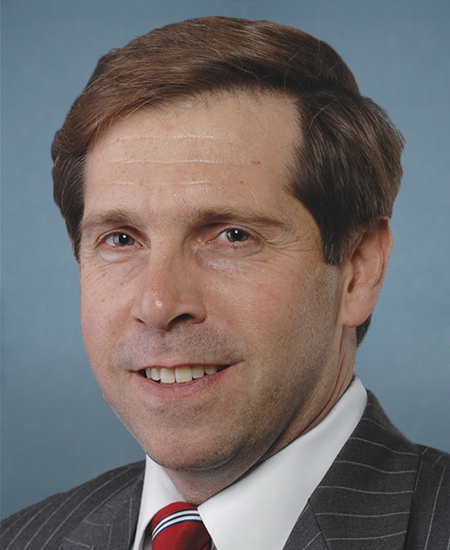
Rep. Charles J. "Chuck" Fleischmann
Sponsored bills
Maddy summaryThis bill appropriates over $15 billion in supplemental funding for U.S. security assistance to Israel following attacks in Israel. It includes specific allocations such as $5.2 billion for Israel's Iron Dome, David's Sling, and Iron Beam defense systems, as well as funds for military personnel, operations, and equipment across all branches of the military. The bill requires the Secretary of Defense and Secretary of State to submit regular reports to Congress detailing security assistance provided to Israel and designates all funding as "emergency requirements" under federal law. This funding directly supports U.S. security assistance programs with Israel to respond to regional security threats.
Maddy summaryHJRES 107 is a congressional resolution seeking to block a Federal Communications Commission (FCC) rule published on January 22, 2024 (89 Fed. Reg. 4128). The resolution aims to disapprove the FCC's rule implementing digital discrimination protections under the Infrastructure Investment and Jobs Act, which would have required internet providers to prevent discriminatory practices. If passed, this resolution would nullify the FCC rule, preventing it from taking effect under the Congressional Review Act (Chapter 8 of Title 5, U.S. Code). The bill directly affects the FCC's regulatory authority over digital discrimination enforcement in broadband services.
Maddy summaryHRES 979 is a non-binding resolution urging the FDA to streamline approval of less harmful tobacco alternatives (like e-cigarettes or heated tobacco products) for adult smokers who continue using tobacco. It calls on public health agencies, including the CDC, to educate consumers about harm reduction and promote science-based approaches to tobacco control. The resolution also directs U.S. agencies to encourage the World Health Organization to recognize harm reduction as a key strategy in global tobacco control efforts. It does not create new laws but seeks to shift policy toward prioritizing safer alternatives over solely focusing on smoking cessation. The resolution directly affects FDA regulatory processes, public health messaging, and international tobacco control policy coordination.
Maddy summaryHR 7182, the Defend Our Borders From Armed Invaders Act, would authorize the National Guard to stop individuals attempting to cross the U.S. border from Mexico by land if they are clearly carrying weapons. This bill amends federal law to explicitly allow the National Guard to take necessary actions against such individuals without requiring special federal approval. It directly affects National Guard operations along the U.S.-Mexico border and targets only those crossing with weapons, not all border crossers. The law overrides existing restrictions on National Guard use for domestic border security under 18 U.S.C. § 1385.
Maddy summaryHR 7044, the "Woman’s Right To Know Act," requires abortion providers to give patients a specific 24-hour in-person informed consent form before performing an abortion. The form must detail the unborn child’s gestational age, medical risks of the procedure, and developmental milestones (like heartbeat presence), and must be signed by the patient, provider, and a witness. Providers who fail to comply face civil penalties of $100,000-$250,000 per violation or lawsuits from patients seeking damages, including triple the abortion cost. Exceptions apply if compliance poses immediate life-threatening risks to the patient. The bill directly affects abortion providers and patients seeking abortion services, mandating specific disclosure requirements and enforcement mechanisms.
Maddy summaryThe Death Tax Repeal Act would eliminate the federal estate tax and generation-skipping transfer tax for estates of people who die on or after the bill's enactment date, and for generation-skipping transfers made after that date. It would also establish a new $10 million lifetime gift tax exemption (adjusted annually for inflation) and replace the existing gift tax rate schedule with a revised structure. These changes would primarily affect high-net-worth individuals and their heirs, as the estate tax and gift tax typically apply to large estates or gifts exceeding the new exemption threshold. The bill's provisions would take effect on the date of enactment, with transitional rules for the year the bill is signed into law.
Maddy summaryHRES 955 is a resolution commending Taiwan for its democratic election history and supporting Taiwan's democratic institutions. It recognizes Taiwan's transition to democracy since the late 1980s, including 7 presidential and 9 legislative elections held since then, all deemed free and fair. The resolution specifically expresses support for Taiwan's upcoming January 13, 2024, elections and condemns interference by the Chinese Communist Party. It affirms U.S. commitment to a strong partnership with Taiwan across multiple domains and supports Taiwan's self-defense and liberty. As a procedural resolution, it does not create new law but formally expresses congressional support for Taiwan's democratic development.
Maddy summaryThis bill expands eligibility for government-furnished headstones, markers, or medallions for Medal of Honor recipients. It directly affects veterans who have received the Medal of Honor but were previously excluded from this benefit due to a specific rule. The key change modifies eligibility rules to remove an exclusion (previously applying to certain recipients), ensuring all Medal of Honor recipients qualify for these headstones or markers. The bill also corrects a reference to the wrong section of law in the existing statute.
Maddy summaryHR 6734 prohibits the use of federal funds to finalize, implement, or enforce the Bureau of Alcohol, Tobacco, Firearms, and Explosives' (ATF) proposed rule (2022R-17) defining "engaged in the business as a dealer in firearms." This bill directly affects the ATF by blocking funding for this specific regulatory rule, which was proposed in August 2023. The legislation does not create new requirements but prevents federal resources from being used to advance this particular ATF regulation.