Federal Prisons Accountability Act of 2022 This bill modifies the appointment procedures and term of service for the Director of the Bureau of Prisons. Currently, the director is appointed by the Attorney General. This bill requires the director to be appointed by the President and confirmed by the Senate. The bill also limits the director to a single term of 10 years.
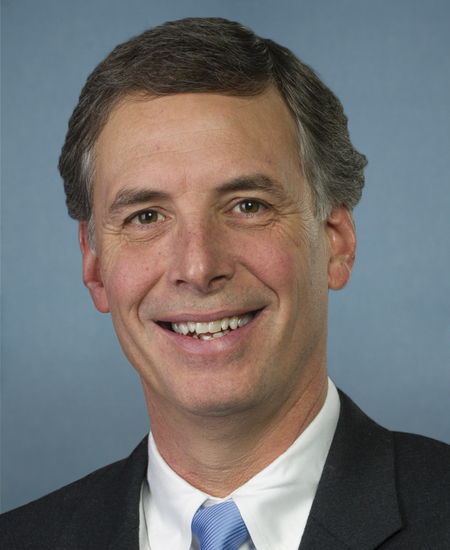
Rep. Tom Rice
Sponsored bills
COPS on the Beat Grant Program Reauthorization and Parity Act of 2022 This bill reauthorizes through FY2031 and makes changes to the Community Oriented Policing Services grant program. Among the changes, the bill reduces the required matching contribution for certain rural communities during the first three years of a grant and eliminates the preference for agencies that exceed the matching requirements; allows grant funds to be used to increase wages of career law enforcement officers in states or localities that have a median household income of less than 70% of the national median household income and qualify for a reduced matching contribution; and provides statutory authority for the Office of Community Oriented Policing Services within the Department of Justice. Additionally, the bill requires the Government Accountability Office to report on whether law enforcement workforces are representative of the communities they serve, the percentage of law enforcement employees who live in the community they serve, the average pay of officers compared to the cost of living in the community they serve, and recommendations for improvements.
Illegal Immigrant Payoff Prohibition Act This bill prohibits the payment of a settlement to an alien for a civil action brought against the United States in connection with the alien's inadmissibility to, or unlawful presence in, the United States.
Better Enforcement of Grievous Offenses by unNaturalized Emigrants Act or the BE GONE Act This bill expands, for immigration purposes, the definition of aggravated felony to include sexual abuse, sexual assault, and aggravated sexual violence. (Under current law, a conviction for an aggravated felony is grounds for deportation and may bar an individual from other immigration-related benefits.)
Taliban Rare Earth Minerals Sanctions Act This bill requires the President to impose sanctions on foreign individuals and entities that knowingly engage in a significant transaction that concerns the rare earth mineral sector of Afghanistan. The President must impose property-blocking sanctions on such foreign individuals and entities, as well as visa-blocking sanctions on the individuals.
Teleabortion Prevention Act of 2021 This bill restricts the use of telehealth for chemical abortions (also known as medication abortions). Specifically, it requires a provider who dispenses or prescribes medication for a chemical abortion to physically examine the patient, be physically present at the location of the chemical abortion, and schedule a follow-up visit. The bill provides an exception for a chemical abortion that is necessary to save the life of a mother whose life is endangered by a physical disorder, illness, injury, or condition. The bill establishes criminal penalties—a fine, a prison term of up to two years, or both—for a provider who does not comply with the requirements. A patient who undergoes a chemical abortion may not be prosecuted.
Havana Syndrome Attacks Response Act This bill requires the President to sanction foreign persons and governments for carrying out clandestine attacks on U.S. personnel that have caused brain injury. Specifically, the President must impose visa- and asset-blocking sanctions on any foreign person that has directed or carried out such an attack. If the President determines a foreign government carried out such an attack, the President must notify Congress and sanction that country by terminating any foreign assistance (except for humanitarian aid or food or agricultural commodities or products) and arms transactions, restricting commercial exports, and denying access to U.S. credit or other financial assistance. The President must remove these sanctions after 12 months, provided that (1) the country's government gives reliable assurances that it will not conduct future attacks, and (2) the executive branch does not have persuasive information indicating an attack occurred in the preceding six months. The bill also requires a congressional briefing and report about suspected clandestine attacks on U.S. personnel that have caused brain injury, including hypotheses concerning the identity of the perpetrators and the technical methods used to carry out the attacks.

Canadian Snowbird Visa Act This bill authorizes the Department of Homeland Security to admit into the United States qualifying Canadian citizens as long-term nonimmigrant visitors. A qualifying Canadian citizen is an individual who (1) is at least 50 years old, (2) maintains a Canadian residence, (3) owns a U.S. residence or has rented a U.S. accommodation for the duration of the individual's stay, (4) is not inadmissible or deportable, (5) will not engage in employment or labor for hire in the United States other than for a non-U.S.-based person or entity by whom the Canadian citizen was employed in Canada or for whom the Canadian citizen performed services in Canada, and (6) will not seek certain forms of assistance or benefits. A qualified individual may be admitted for up to 240 days during any single 365-day period. The spouse of such an individual may be admitted under the same terms, except that the spouse is not required to separately satisfy the requirement for owning or renting a residence in the United States. The bill grants an individual so admitted nonresident alien tax status.
Relief for Seasonal Businesses Act of 2021 This bill raises the annual numerical limit on H-2B (temporary nonagricultural workers) nonimmigrant visas and provides an exemption to this cap for certain applicants. Specifically, the bill raises the annual cap on such visas from 66,000 to 350,000. Furthermore, if a worker seeking an H-2B visa had been counted toward the annual cap in one of the three preceding fiscal years, that worker shall not be counted against the cap again.
Empowering Law Enforcement To Fight Sex Trafficking Demand Act of 2021 This bill allows grants under the Edward Byrne Memorial Justice Assistance Grant program to be used for programs to combat human trafficking.