

Maddy summaryThis bill allows states to adopt year-round daylight saving time (DST) through their own laws, removing the current federal requirement to revert to standard time in the fall. It amends federal law to let states choose whether to apply DST continuously (instead of switching back to standard time) for the entire state or within specific time zones. The bill also requires a GAO study on implementing year-round DST within two years of enactment. It does not mandate year-round DST but gives states the legal option to do so if they pass state legislation. This directly affects residents and state governments in any state that chooses to implement the change.
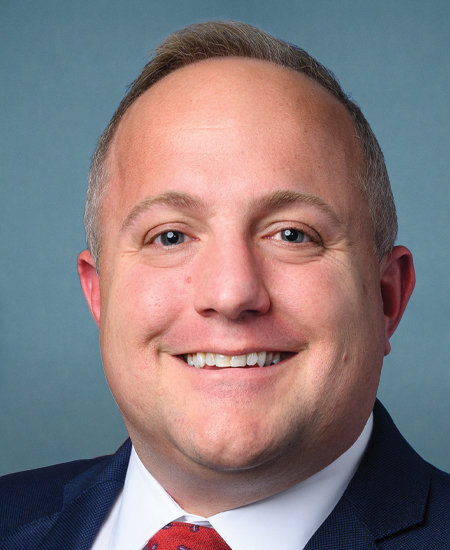
Rep. Russell Fry
Sponsored bills
Maddy summaryHR 140, the Protecting Speech from Government Interference Act, prohibits federal employees from using their authority to censor speech, particularly affecting individuals with pending applications (like grants or permits) or under investigation by the agency. It bans employees from advocating censorship of speech, suppressing speech of people involved in agency matters, or engaging in censorship while on duty in government spaces, wearing uniforms, or using government vehicles. Exceptions cover law enforcement actions against child pornography, human trafficking, or national security threats. Violations can result in penalties including removal, fines up to $10,000, or reprimands. The bill defines "censorship" broadly to include removing speech from platforms or adding disclaimers.
Maddy summaryHR 1210, the "Stop Fentanyl Border Crossings Act," amends the Public Health Service Act to give the Secretary of Health and Human Services new authority to block border entries. It directly affects countries with substantial fentanyl smuggling, allowing the Secretary to suspend the introduction of people and property from those nations if they determine it poses a serious public health danger. The key provision permits the Secretary to prohibit border crossings for a set period when fentanyl smuggling creates an increased risk of drugs entering the U.S., based on regulations they establish. This is a procedural change to existing public health law, not a new program.
Maddy summaryHR 1506, the Advisory Committees Free of ESG Act of 2023, prohibits federal agencies from creating or maintaining advisory committees based on environmental, social, or governance (ESG) factors. It bans committees focused on topics like climate change, greenhouse gas emissions, race or gender-based governance structures, or ideologies such as critical race theory. The bill requires immediate termination of any existing advisory committee violating this ban, with enforcement handled by the General Services Administration Administrator, agency Inspectors General, or through citizen lawsuits. This directly affects federal advisory committees that included ESG-related topics, mandating their dissolution under the new rules.
Maddy summaryThis bill expands the use of 529 college savings accounts to cover career training and credentialing costs. It allows funds to pay for tuition, fees, books, and testing expenses related to recognized postsecondary credential programs (like vocational certifications) that meet specific standards under the Workforce Innovation and Opportunity Act. The change directly affects workers seeking industry-recognized credentials - such as nursing certifications or IT certifications - instead of traditional degrees. It treats these expenses the same as traditional college costs for 529 account withdrawals, making it easier to save for career-focused training. The provision applies to expenses paid after the bill's enactment date.
Maddy summaryHR 1434, the "Stop Our Sexual Assault in the Military Act," requires active-duty members of the U.S. Armed Forces to receive monthly self-defense training focused on preventing sexual assault as part of their regular physical training. This training replaces one day of existing monthly physical training, without increasing the total required training days. The bill directly affects all active-duty military personnel by integrating this specific self-defense component into their standard monthly training schedule. It mandates this change through a new provision (Section 2018) added to Title 10 of the U.S. Code. The law focuses solely on implementing this training requirement, with no other substantive policy changes described.
This resolution supports the designation of National FFA Week. It also (1) recognizes the important role of the National FFA Organization (Future Farmers of America) in developing the next generation of leaders who will change the world, and (2) celebrates the 90th anniversary of the iconic FFA jacket.
Maddy summaryHR 1200, the National Right-to-Work Act, prohibits requiring workers to join a union or pay dues as a condition of employment in both private-sector workplaces (covered by the National Labor Relations Act) and railroad industries (covered by the Railway Labor Act). The bill amends key sections of these laws to eliminate provisions that allowed union security agreements, meaning workers in unionized settings would no longer be forced to pay dues to retain their jobs. This directly affects employees in unionized workplaces across the U.S., particularly those in industries with existing union contracts that included mandatory dues. The law changes the legal framework to ensure union membership and dues payment remain voluntary for all workers.
Maddy summaryHR 185 ends a Centers for Disease Control and Prevention (CDC) rule requiring foreign travelers entering the U.S. by air to show proof of a COVID-19 vaccination. The bill takes effect immediately upon enactment, terminating the specific requirement outlined in the CDC’s April 2022 order (and any similar future orders). It also prohibits federal funding from being used to enforce this rule. This change directly affects foreign air travelers entering the United States, removing a vaccination proof requirement for their entry. The bill does not impact domestic travel, other entry methods, or vaccination requirements for U.S. citizens.
Maddy summaryHRES 104 is a non-binding resolution introduced in the U.S. House of Representatives on February 8, 2023, that condemns the Chinese Communist Party's use of a high-altitude surveillance balloon over U.S. territory as a violation of U.S. sovereignty. The resolution specifically denounces China's false claims that the balloon was a weather balloon and calls for the U.S. government to take decisive action to prevent future foreign aerial surveillance in U.S. airspace. It requires the Biden administration to provide Congress with detailed briefings on the incident, including the timeline, potential intelligence collected, and plans to deter similar activities. As a symbolic resolution, it does not create new laws but formally expresses the House's stance on the matter.