

Maddy summaryHR 587 authorizes the President to award the Medal of Honor to Marine Corps veteran James Capers, Jr., for acts of valor during the Vietnam War. It bypasses standard time limits for Medal of Honor awards (typically 10 years after the act) to recognize Capers' actions from March 31 to April 3, 1967, for which he previously received a Silver Star. The bill directly affects Capers by enabling the upgrade of his existing Silver Star to the highest military honor. This is a procedural measure focused solely on honoring a specific individual's service, with no broader policy changes.
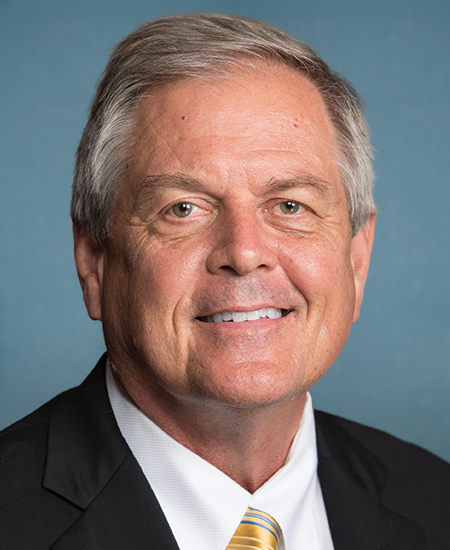
Rep. Ralph Norman
Sponsored bills
No Tax Dollars for the United Nation's Immigration Invasion Act This bill prohibits the federal government from making contributions to the United Nations (U.N.) International Organization for Migration, the U.N. High Commissioner for Refugees, or the U.N. Relief and Works Agency for Palestine Refugees in the Near East. The bill also requires the Government Accountability Office to report to Congress on federal funds provided to these U.N. agencies, including the amounts provided during FY2021 and FY2022 and any restrictions attached to such funding.
Maddy summaryThe Educational Choice for Children Act creates tax credits for individuals and corporations that contribute to scholarship granting organizations providing education scholarships. Individuals can claim a credit up to $5,000 or 10% of their income, while corporations can claim up to 5% of taxable income. The scholarships are available to students from households with income up to 300% of the area median income, and can be used for private school tuition, tutoring, and other educational expenses at elementary and secondary schools. The bill includes strict requirements for scholarship organizations to verify income, conduct audits, and prevent misuse of funds, while also prohibiting government control over these organizations and protecting private and religious schools from discrimination in the program. It establishes a $10 billion annual cap on the total tax credits available.
Maddy summaryThe Military Child Educational Freedom Act amends the tax code to allow active duty military families to deduct home school expenses as private school costs for federal income tax purposes. It specifically applies to military members or their spouses on active duty who use home schools recognized by state law as home or private schools. The bill changes the Internal Revenue Code definition of "private school" to include such home schools for education expense deductions. This change takes effect for tax years beginning after the bill's enactment.
This concurrent resolution calls on the President to abandon the One China policy in favor of one that recognizes Taiwan as an independent country that is not a part of China. The resolution also urges the President to bolster diplomatic and economic relations between the United States and Taiwan through specified means.
Maddy summaryHR 509, the Debt Cancellation Accountability Act of 2023, prohibits the federal government from canceling student loan debt for groups of borrowers (e.g., all teachers or all borrowers in a specific state) without explicit congressional approval. It directly affects borrowers with federal student loans under parts B, D, or E of the Higher Education Act by requiring the Education Secretary to submit detailed requests to Congress before any "class-based" cancellation exceeding $1 million total. The bill mandates that Congress must specifically appropriate funds for such programs, and the Secretary must justify the need, legal authority, and why group cancellation is used instead of individual reviews. Existing targeted programs (like those for specific professions) remain exempt if they assess eligibility on a case-by-case basis.
Maddy summaryThis bill expands foreign investment review to cover U.S. agriculture by requiring transactions involving foreign control of agricultural businesses to undergo scrutiny by the Committee on Foreign Investment (CFIUS). It classifies agricultural supply chains as both critical infrastructure and critical technologies, directly affecting foreign entities seeking to acquire or influence U.S. farms, food production, and supply chains. The bill mandates annual reports from the Secretary of Agriculture and the Government Accountability Office on foreign investments in agriculture, including risks to food security and intellectual property. These provisions aim to mitigate potential threats to U.S. food supply chains from foreign adversaries through enhanced oversight.
Maddy summaryThis bill requires healthcare providers to give the same medical care to infants born alive during abortions as they would to any newborn, and to immediately admit such infants to a hospital. It mandates reporting of non-compliance to law enforcement and imposes penalties including up to 5 years in prison for violations. Women who undergo abortions can file civil lawsuits seeking money damages for injuries, three times the abortion cost, and punitive damages if care standards are not met. The bill also clarifies that abortion includes intentionally killing an unborn child or terminating pregnancy without specific exceptions (e.g., after viability to preserve life or removing a dead fetus).
Maddy summaryHR 23, the Family and Small Business Taxpayer Protection Act, rescinds unobligated funds previously allocated to the Internal Revenue Service (IRS) under the Inflation Reduction Act of 2022. Specifically, it cancels unused balances from certain IRS funding provisions (sections 10301(1)(A)(ii), (iii), (B), (2), (3), (4), and (5)) of the Inflation Reduction Act. This bill does not change tax laws or directly affect taxpayers; it only redirects unspent IRS budget authority. The provision applies solely to funds that were not obligated by the IRS as of the bill’s enactment date.
Maddy summaryHR 473, the Parris Island Protection Act, prohibits using federal funds to close or realign the Marine Corps Recruit Depot at Parris Island, South Carolina. The bill directly affects the Parris Island facility, ensuring it remains the physical home of the Marine Corps Eastern Recruiting Region as stated in congressional findings. Its key mechanism is a funding restriction preventing any closure planning or activities related to the depot. The bill focuses on preserving the depot's operational role, not altering its climate adaptation efforts or environmental programs.