

This resolution condemns Iran for the 1988 massacre of political prisoners. It also urges the Biden Administration and U.S. allies to publicly condemn the massacre and to pressure Iran to provide information to the families of the victims.
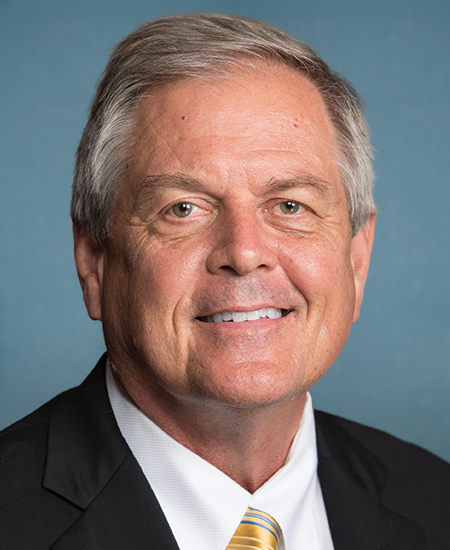
Rep. Ralph Norman
Sponsored bills
Maddy summaryHRES 628 would terminate the Office of Diversity and Inclusion within the U.S. House of Representatives. The bill specifically eliminates the office and amends House Rules (including Rule II and Rule X) to remove all references to it. This resolution would end the office's existence and its role in overseeing diversity and inclusion initiatives for House staff and operations. The change applies solely to the House's internal structure and does not affect other legislative functions or external policies.
Preserving Safety Net Integrity Act of 2023 This bill enacts with the force and effect of law the final rule of the Department of Homeland Security titled Inadmissibility on Public Charge Grounds and published on August 14, 2019. The bill also nullifies the final rule issued by DHS titled Public Charge Ground of Inadmissibility and published on September 9, 2022. The 2019 final rule made it more likely that a non-U.S. national ( alien under federal law) would be denied admission or lawful permanent resident status because that individual is likely to become a public charge (i.e., receive certain public benefits). The 2022 final rule nullified the 2019 final rule.
This bill requires the Department of State to make certain information regarding the 2021 withdrawal of U.S. personnel from Afghanistan available to Congress and to the public. Specifically, the State Department must provide Congress with the July 13, 2021, dissent channel cable regarding the likely consequences of a U.S. withdrawal from Afghanistan and the official State Department response to the cable. (The dissent channel is a tool that foreign service officers may use to communicate alternative or dissenting views about foreign policy matters with senior State Department officials. ) The unredacted cable and official response must be provided to Congress within five days of the bill's enactment, except that the names of the cable signatories may be redacted. The bill also requires the State Department to complete a declassification review of (1) the dissent channel cable and official response, and (2) the after-action review developed with respect to the Afghanistan withdrawal. After determining what information may be declassified, the State Department must publish such information online within 60 days of the bill's enactment.
Maddy summaryThis bill requires stricter background checks and monitoring for sponsors caring for unaccompanied migrant children. It mandates fingerprint checks, sex offender registry reviews, criminal history checks, and child abuse screenings for all adult household members before a child can be placed with them. The bill also prohibits placing children with undocumented sponsors (except biological parents or legal guardians), requires pre-release home visits, and mandates multiple unannounced post-release visits over two years. Additionally, it requires monthly reports to Congress tracking child placements, vetting status, and missing children cases since January 2021. These changes directly affect unaccompanied migrant children and their sponsors, aiming to prevent trafficking through enhanced safety protocols.
Build the Wall and Fight Fentanyl Act of 2023 This bill establishes accounts to fund the construction of physical barriers along the U.S. southern border and to provide grants to address fentanyl abuse. These accounts shall be funded from the sale of assets belonging to cartels that have been seized by the Drug Enforcement Administration, U.S. Immigration and Customs Enforcement, or U.S. Customs and Border Protection. The bill defines cartel as (1) an organization with operations in Mexico and the United States designated as a significant transnational criminal organization; (2) certain named organizations, such as the Sinaloa Cartel and the Juarez Cartel; and (3) other organizations as designated by the President.
Maddy summaryThis bill directs the U.S. Treasury to mint commemorative coins marking the Marine Corps' 250th anniversary in 2025. It authorizes three coin types: $5 gold coins (max 50,000), $1 silver coins (max 400,000), and half-dollar coins (max 750,000), with surcharges of $35, $10, and $5 respectively. The surcharge proceeds will fund the Marine Corps Heritage Center's educational programs, with no net cost to taxpayers as the Treasury must recover all minting costs through the surcharges. The coins can only be issued during 2025, and the Treasury must ensure all costs are covered before distributing funds to the Heritage Foundation.
Maddy summaryHR 4860, the PROTECT the Second Amendment Act, prevents landlords in specific federally assisted housing from banning or restricting residents' lawful possession of firearms in their private units or during travel between units and common areas. It directly affects tenants in housing funded by HUD or USDA programs, including public housing, Section 8 vouchers, and housing for veterans or people with disabilities. The bill prohibits landlords from imposing firearm bans or additional conditions on residents who lawfully carry firearms within their dwelling units or while moving through common areas to reach their units. This changes current policies in these housing programs by explicitly allowing firearm possession where state law permits.
Publish Overdose and Suicide Tracking For American Safety Today Act of 2023 or the POST FAST Act of 2023 This bill requires the Centers for Disease Control and Prevention to publish data about suicides and drug overdoses in the United States for a given month within 60 days of the end of that month.
Maddy summaryHR 4776, the Protecting Free Speech Act, ends a specific Department of Homeland Security (DHS) program called the Disinformation Governance Board and prevents federal funding for any similar entity. The bill directly affects DHS by terminating the board's operations and prohibiting the use of federal funds to create or support any replacement program with comparable functions. It does not create new free speech protections but formally removes this particular DHS initiative and blocks future funding for equivalent efforts. The bill focuses on eliminating an existing program rather than changing broader speech policies.