

Maddy summaryThe Laken Riley Act (HR 7511) would require federal authorities to detain non-citizens charged with or convicted of burglary, theft, larceny, or shoplifting offenses. It also creates new legal standing for state attorneys general to sue federal immigration officials in federal court if they believe immigration enforcement decisions (like releasing aliens or granting parole) cause financial harm exceeding $100 to the state or its residents. The bill amends immigration laws to expand detention requirements for certain property crimes and allows states to seek court orders to enforce immigration policies. It does not create new criminal penalties but modifies existing immigration enforcement procedures. The bill’s findings and political language about the Laken Riley case are not part of its policy provisions.
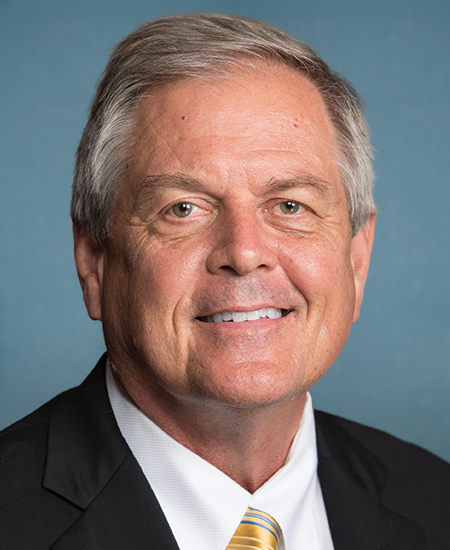
Rep. Ralph Norman
Sponsored bills
Maddy summaryThe Appropriations Transparency Act of 2024 requires the Congressional Budget Office to provide detailed cost breakdowns for bills reported by the House and Senate Appropriations Committees. Specifically, these estimates must include total budget authority, comparisons to spending allocations, outlay projections, rescissions, offsetting receipts, changes to mandatory programs (CHIMPs), direct spending, and categorization details. The bill directly affects the Appropriations Committees by mandating these specific disclosures in all cost estimates for their reported bills. This aims to clarify how funding is allocated and spent, though it does not change actual funding levels or program provisions. The bill also adjusts House Rule XIII to ensure these detailed estimates are not blocked by procedural rules.
Maddy summaryHRES 1057 is a non-binding House resolution introduced on March 5, 2024, that formally denounces public calls for a cease-fire in Gaza. It specifically demands an end to U.S. funding for Hamas through the UNRWA aid agency, condemns efforts to establish an independent State of Palestine, and calls for halting all U.S. assistance to Palestinian entities until investigations into alleged terrorism funding are completed. The resolution does not change laws or policies but serves as a symbolic statement expressing congressional opposition to cease-fire advocacy and certain aid programs. It directly addresses public discourse and policy debates, not specific individuals or organizations.
Maddy summaryThe Secure Payments Act of 2024 requires the Federal Reserve to study the impacts of the proposed "Reg II" rule (which would cap debit card interchange fees) on consumers, merchants, and small banks. Specifically, it mandates a study of how fee changes affect access to low-cost bank accounts, merchant costs, fraud mitigation, and the affordability of banking products in underserved communities. The Fed must also conduct a quantitative analysis of the rule's effects on small banks' capital and earnings. The Federal Reserve cannot finalize the Reg II rule until after it completes this study, issues a report to Congress, and considers the findings - including whether fee caps benefit low- and moderate-income customers. This bill delays the final rule to ensure the impacts are fully assessed before implementation.
Let Injured Americans Be Legally Empowered Act or the LIABLE Act This bill prohibits COVID-19 vaccine manufacturers from being immune under federal law from lawsuits relating to their vaccines. Specifically, the bill prohibits any federal law from providing immunity for COVID-19 vaccine manufacturers from civil suits or liability, or limiting liability, with respect to the administration or use of their vaccines. Additionally, individuals may not be precluded from bringing a civil suit against a COVID-19 vaccine manufacturer because the individual sought or received compensation through specified federal vaccine injury compensation programs, nor does the bill preclude individuals from seeking compensation through these programs. The bill applies to vaccine administrations that occur before, on, or after the bill's date of enactment.
Maddy summaryHRES 1046 is a ceremonial resolution honoring 13 U.S. military veterans and civilians who led the 2021 Afghanistan evacuation. It recognizes their efforts in safely evacuating over 17,000 Afghan allies and citizens from Taliban-controlled areas during the U.S. withdrawal. The resolution formally thanks these individuals for their "extraordinary efforts" and "exceptional service," as detailed in the Congressional Record. This is purely symbolic recognition with no policy or legal impact.
Maddy summaryThe Save our Allies Congressional Gold Medal Act authorizes Congress to award a single gold medal to seven individuals - Chad Robichaux, Sarah Verardo, Tim Kennedy, Kevin Roarke, Sean Gabler, Dave Johnson, and Dennis Price - for their role in rescuing over 17,000 people during the 2021 Afghanistan evacuation. The medal, to be struck by the U.S. Treasury, will be presented by Congress and then displayed at the Smithsonian Institution. The bill also permits the sale of bronze duplicates to cover production costs, with proceeds deposited into the U.S. Mint fund. This legislation is a commemorative honor recognizing specific individuals' actions during the evacuation.
Maddy summaryHR 7494, the Protect America’s Lands Act, prohibits national securities exchanges from processing transactions involving stocks issued by companies primarily managing land for conservation. It defines "natural asset companies" as those holding rights to ecological performance of specific land areas, with their core purpose being to conserve, restore, or sustainably manage natural assets without causing material harm. The bill directly affects securities exchanges and these specific companies by banning exchange-based trading of their securities. This is a regulatory change to the Securities Exchange Act of 1934, focusing on financial market rules rather than direct land management policies.
Maddy summaryHRES 1031 is a non-binding House resolution declaring the U.S. southern border situation an "invasion," citing three specific claims: over 8 million migrant crossings since 2021, a 1,000% rise in watchlist entries, and drug-related deaths. It does not create new laws or affect individuals, as resolutions like this only express legislative sentiment. The bill formally states the House's viewpoint through these cited statistics without proposing policy changes. As a symbolic gesture, it has no legal force or impact on border policy.
Maddy summaryHR 7455, the Sunset Act of 2024, requires federal agencies to automatically expire significant rules after 10 years unless Congress passes a new law extending them. Agencies must submit reports 180 days before expiration, and Congress can extend rules via joint resolution within 3 legislative days of receiving the report. The bill also mandates annual reviews of 10% of active agency rules for 9 years, with rules not extended by Congress after the 10-year period expiring. It applies to all major agency rules (e.g., environmental or safety regulations) and includes limited presidential exemptions for emergencies, but does not affect existing rules already in effect.