

Maddy summaryHR 5917, the "Strengthening Tools to Counter the Use of Human Shields Act," expands sanctions against foreign individuals and entities that direct the use of civilians as human shields. It specifically adds members or agents of Palestine Islamic Jihad (PIJ) to the list of targets for sanctions when they order or control civilians to shield military objectives. The bill requires the President to justify sanction decisions to Congress within 120 days and extends the sunset date for related sanctions from 2023 to 2030. Additionally, it mandates a Department of Defense report within 120 days detailing strategies to counter human shield tactics used by groups like Hamas and PIJ, including plans for international coordination.
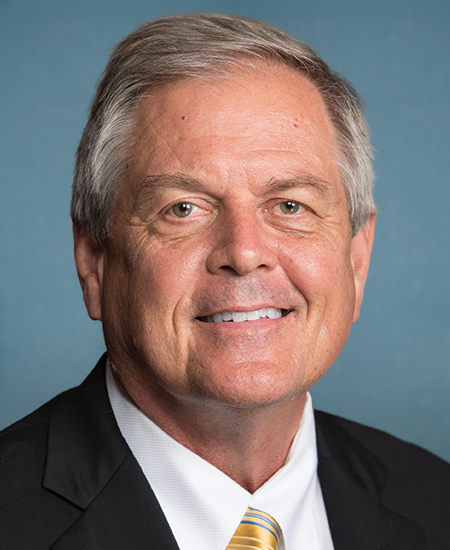
Rep. Ralph Norman
Sponsored bills
Maddy summaryThis resolution (HRES 288) urges the European Union to formally designate Iran's Islamic Revolutionary Guard Corps (IRGC) as a terrorist organization under EU legal framework Common Position 931. It does not create new laws but requests the EU take this specific action, noting the EU has previously sanctioned IRGC individuals but not the organization as a whole. The resolution cites the IRGC's role in human rights abuses, support for proxy groups, and involvement in conflicts like Ukraine as context for the request. Introduced in April 2023 by 20+ House members, it is a non-binding expression of congressional preference.
Maddy summaryHR 5921, the "No U.S. Financing for Iran Act of 2023," prohibits U.S. financial institutions from authorizing transactions related to Iran's imports or exports (excluding agricultural goods, food, medicine, and medical devices for civilians). It also requires the U.S. to oppose International Monetary Fund (IMF) financial aid to Iran and block Iran's access to IMF Special Drawing Rights. The bill amends the Export-Import Bank Act to ban U.S. financing for Iran's government or state-controlled entities. The law expires either 30 days after the President certifies Iran has stopped supporting international terrorism and is no longer a major money laundering concern, or 10 years from enactment.
Maddy summaryHRES 1148 is a resolution passed by the U.S. House of Representatives that condemns the Iranian government for supporting terrorism, regional proxy conflicts, and internal suppression of dissent - including its crackdown on protests following Mahsa Amini's death in 2022. It specifically calls for maintaining sanctions against Iran, supporting the Iranian Resistance's Ten-Point Plan (which advocates for a democratic, secular, nonnuclear Iran), and protecting Iranian political refugees in Albania. The resolution also affirms the Iranian people's right to self-determination under international law and urges the U.S. to recognize their struggle for freedom. As a non-binding resolution, it does not create new laws but formally expresses congressional stance.
Maddy summaryThis bill requires the Secretary of Agriculture to annually assess U.S. reliance on critical farm inputs - such as fertilizers, seeds, veterinary drugs, and agricultural equipment - that could be disrupted if China exploits supply chains. It mandates identifying domestic production capacity, supply chain vulnerabilities, and recommending ways to reduce dependency through onshore or nearshore production. The assessment must protect private company data, prohibiting disclosure of identifiable information and ensuring only anonymized aggregate data is used or shared. The law focuses on supply chain security for American agriculture without compelling businesses to provide sensitive information.
Maddy summaryHJRES 123 is a resolution seeking congressional disapproval of an Environmental Protection Agency (EPA) rule published on March 11, 2024, which would have required chemical facilities to implement new safety measures under the Clean Air Act to prevent accidental releases. The rule, titled "Accidental Release Prevention Requirements: Risk Management Programs Under the Clean Air Act; Safer Communities by Chemical Accident Prevention," aimed to strengthen existing risk management programs at chemical plants. If passed, this resolution would block the rule from taking effect by invoking a federal process for disapproving agency regulations. It directly affects the EPA's regulatory authority and the chemical industry's compliance obligations under the Clean Air Act.
Maddy summaryThis bill prohibits the use of federal funds to establish, implement, or enforce any requirement for wearing facial coverings to prevent COVID-19 spread. It directly affects federal agencies and any entities receiving federal funding that might enforce mask mandates. The key provision blocks all federal financial support for mask mandate enforcement, meaning no government money could be used to require or support such rules. This is a funding restriction, not a ban on mask mandates themselves, and applies only to federal resources.
Maddy summaryHR 7959, the SHIELD Act, adds trespass convictions to grounds for denying immigration entry or ordering deportation. It directly affects immigrants convicted of trespass under any state, local, tribal, or federal law, regardless of whether the trespass is classified as a misdemeanor or felony. The bill amends existing immigration law to make anyone convicted of trespass (or who admits to acts constituting trespass) inadmissible upon entry or deportable after entry. These provisions apply based on the jurisdiction where the trespass occurred, without considering the offense's classification under local law.
Maddy summaryHR 7900, the EPA Accountability to Farm Country Act, requires the Secretary of Agriculture to review EPA publications (like regulations or guidance) within 30 days if they could significantly impact farm production, food prices, or the agricultural economy. If a major economic impact is found, a review panel - including four farmer representatives from diverse regions - must analyze the rule and produce a report within 60 days, including cost estimates and recommendations. The EPA cannot finalize such rules until it implements the panel's recommendations to reduce negative economic effects on agriculture. This directly affects farmers, agricultural businesses, and food producers by giving them a formal role in shaping EPA regulations that impact their operations.
Maddy summaryH.J.Res. 116 seeks to block a Department of Labor rule finalized on January 10, 2024, which aimed to clarify how businesses classify workers as employees or independent contractors under the Fair Labor Standards Act (FLSA). If passed, this resolution would prevent the rule from taking effect, directly affecting businesses that use independent contractors and their workers, who rely on FLSA protections for minimum wage and overtime pay. The bill uses a specific congressional process (under Chapter 8 of Title 5, U.S. Code) to disapprove the rule, rather than creating new policy. This action would maintain the existing classification standards until a new rule is established.