

Maddy summaryThe Respect State Housing Laws Act amends the CARES Act by removing subsection (c) of Section 4024, which governed notice requirements for housing assistance programs. This change eliminates a specific federal notice provision that applied to tenants and landlords receiving CARES Act housing aid. The bill directly affects the administrative process for housing assistance under the CARES Act, streamlining or removing a requirement for notice delivery. It modifies an existing provision without creating new policy or altering broader housing protections.
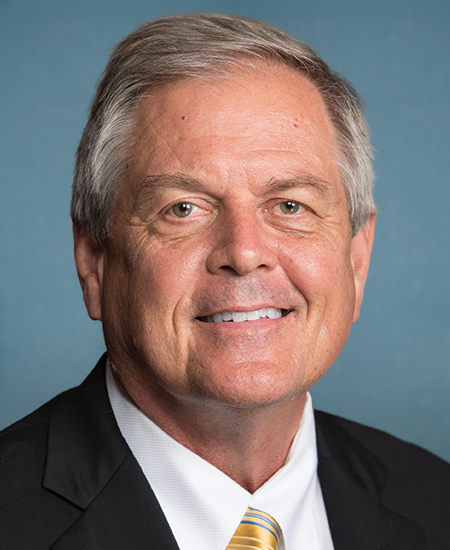
Rep. Ralph Norman
Sponsored bills
Maddy summaryThe HOUSE Act of 2024 withdraws a federal rule requiring new housing projects financed by HUD and USDA to meet specific energy efficiency standards. It prohibits federal agencies from using funds to implement or enforce this rule or similar rules, mandating a return to the previous energy efficiency standards for these housing programs. The bill also extends these restrictions to the Department of Veterans Affairs and the Federal Housing Finance Agency. Additionally, it amends a law to allow states with energy efficiency standards meeting or exceeding the previous federal requirements (if at least 26 states have adopted such standards) to be used instead of federal rules.
Maddy summaryHJRES 165 is a congressional resolution seeking to block a Department of Education rule issued in April 2024 that updated protections against sex discrimination in schools receiving federal funding. The resolution aims to disapprove this specific rule (published as 89 Fed. Reg. 33474), which would have required schools to address sex-based discrimination in educational programs. If passed, the rule would no longer be in effect, meaning schools would not need to comply with its requirements. This resolution directly affects all schools and educational programs receiving federal financial assistance, as it targets the implementation of the new nondiscrimination standard.
Maddy summaryHRES 1378 is a symbolic resolution passed by the U.S. House of Representatives expressing the chamber's stance on the July 13, 2024, attempted assassination of former President Donald Trump. It condemns the attack as an "abhorrent act of cowardice" that must be universally rejected and asserts that political disputes should only be resolved through elections, not violence. The resolution does not create new laws or affect any specific group; it is a non-binding statement intended to promote civility in political discourse. It was introduced by Republican members of Congress and passed without amendment.
Maddy summaryHR 9109, the IRS Overreach Prevention Act, prohibits the IRS from continuing its Direct File program or developing any successor program that offers free, public electronic tax filing. This bill directly affects taxpayers who might have used the free service, as it prevents the IRS from providing this specific option. The key provision explicitly bans the Secretary of the Treasury from maintaining or creating any free, public electronic return-filing service. The bill does not change tax laws or filing requirements but restricts the IRS’s ability to offer this particular service. It is a procedural measure focused solely on prohibiting the specific program described in the bill text.
Maddy summaryThe SAVE Act (HR 8281) requires U.S. citizens to provide documentary proof of citizenship when registering to vote in federal elections. It defines acceptable proof as documents like passports, REAL ID-compliant IDs, military IDs, or birth certificates, and mandates that states verify citizenship using information from government agencies like DHS and Social Security. States must establish processes for voters without required documentation to provide an attestation under penalty of perjury. The law also requires states to remove noncitizens from voter rolls when verified evidence shows they're not citizens. This bill directly affects all applicants registering to vote in federal elections and state election officials who must implement these requirements.
Maddy summaryThis bill requires the HUD Inspector General to provide annual testimony before the House Financial Services Committee and Senate Banking Committee by October 1 each year. The testimony must cover specific areas: efforts to detect fraud/waste, audit and investigation capabilities, program improvement opportunities, and ongoing oversight activities. It directly affects HUD's Inspector General and the designated congressional committees by establishing a formal reporting requirement. The bill does not change HUD programs but mandates regular transparency about oversight work.
Maddy summaryHR 9045, the Community Association Reporting Exemption Act, exempts certain community associations from a federal reporting requirement. It amends Title 31 of the U.S. Code to add a new exemption category for "entity subject to taxation under section 528 of the Internal Revenue Code," which covers qualifying homeowners' associations (HOAs) already taxed under that IRS provision. This change removes a specific reporting obligation these associations previously had to fulfill. The bill directly affects HOAs that meet the IRS Section 528 tax criteria, simplifying their federal compliance.
Maddy summaryHJRES 164 is a congressional resolution seeking to block a rule issued by the Department of Commerce regarding firearms license requirements. It directly targets the rule published in the Federal Register (89 Fed. Reg. 34680), which would have revised licensing procedures for firearms dealers. If passed, the resolution would prevent this rule from taking effect by invoking the congressional disapproval process under federal law. The bill does not create new regulations but aims to halt an existing rule affecting gun license applicants and dealers.
Maddy summaryHR 9017 lowers federal oil and gas royalty rates from 16.67% to 12.5% and reduces minimum lease bids from $10 to $2 per acre. It also cuts annual rental rates for leases (from $3-$15 to $1.50-$2 per acre) and eliminates a fee for expressing interest in leases. The bill creates new "noncompetitive leasing" options for existing leases producing low volumes (e.g., ≤15 barrels oil/day or ≤60,000 cubic feet gas/day), allowing leaseholders to continue operations without bidding. These changes directly affect oil and gas leaseholders on federal lands, particularly smaller producers with existing low-production leases.