

Maddy summaryHR 9757, the "No More Taxpayer Cash for the Taliban Act," bans U.S. federal funds from being used for direct cash assistance to individuals in Afghanistan or for providing U.S. currency to the United Nations to support such aid. The bill specifically prohibits federal agencies from funding direct cash payments to Afghans and stops the Federal Reserve from selling U.S. currency to the UN for this purpose. It aims to prevent billions of taxpayer dollars (as reported by SIGAR) from indirectly funding the Taliban through mechanisms like aid taxation and currency exchange fees at the Taliban-controlled central bank. The law applies directly to federal departments, the UN, and non-governmental organizations receiving U.S. funds for aid in Afghanistan.
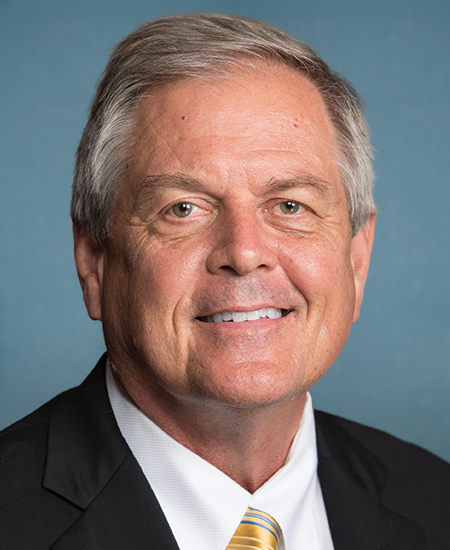
Rep. Ralph Norman
Sponsored bills
Maddy summaryHJRES 144 is a congressional disapproval resolution targeting a specific rule issued by the Bureau of Alcohol, Tobacco, Firearms, and Explosives (ATF) on April 19, 2024. The resolution seeks to block the ATF's rule that redefined the term "engaged in the business" for firearm dealers, which would have affected how federal licensing requirements apply to certain sellers. If enacted, this resolution would nullify the rule, preventing it from taking effect under procedures in Title 5 of the U.S. Code. The bill directly impacts firearm dealers operating under the current regulatory framework and the ATF's enforcement authority.
Maddy summaryHR 6319 (the 911 SAVES Act of 2023) requires the Office of Management and Budget to reclassify public safety telecommunicators as "Protective Service Occupations" within 30 days of enactment. This change corrects their current misclassification in the federal Standard Occupational Classification (SOC) system, which is used for statistical data on jobs. The bill directly affects how these professionals - critical in emergency calls involving missing children, active threats, and officer safety - are officially categorized in government workforce data. It does not create new benefits or funding but aims to better recognize their lifesaving role through accurate federal job classification.
Maddy summaryThis bill (HJRES 163) is a congressional disapproval resolution targeting an Environmental Protection Agency (EPA) rule finalized on May 9, 2024. The EPA rule established new emissions standards for greenhouse gases from fossil fuel power plants (both new and existing) and repealed a previous rule called the Affordable Clean Energy Rule. The resolution would block this EPA rule from taking effect by invoking the Congressional Review Act (Chapter 8 of Title 5, U.S. Code). If passed, it would prevent the EPA rule from being enforced, directly affecting fossil fuel power plant operators and the EPA’s regulatory authority over emissions.
Maddy summaryH.J. Res. 117 is a joint resolution that would disapprove an Environmental Protection Agency (EPA) rule concerning the reconsideration of National Ambient Air Quality Standards for particulate matter. The EPA rule, published on March 6, 2024, was part of the agency’s process to review these standards, which set limits for harmful air pollutants. This resolution invokes a congressional disapproval procedure under federal law to block the rule from taking effect. If enacted, the rule would have no force or effect, preserving the existing air quality standards for particulate matter.
Maddy summaryHRES 1457 is a symbolic House resolution (introduced September 17, 2024) that condemns Vice President Kamala Harris for her past statements and policy positions related to law enforcement and criminal justice. The resolution cites specific past remarks by Harris (as a U.S. Senator) regarding policing, immigration, and criminal justice reform - including supporting decriminalizing immigration, opposing ICE, and endorsing bail reform groups - and claims these policies "encouraged lawlessness." It does not create new laws or affect anyone legally, as it is purely a non-binding expression of disapproval. The resolution has no policy impact or enforcement mechanism.
Maddy summaryHR 9617, the KAMALA Act, prohibits federal housing and community development grants from being used to assist individuals who are not U.S. citizens or lawfully present in the U.S. (specifically, those not admitted for permanent residence under immigration law). This directly affects state and local governments, municipalities, and tribal entities receiving federal housing funds under the Housing and Community Development Act of 1974, preventing them from using those funds for housing or community programs aiding undocumented immigrants. The bill amends two sections of the 1974 Act: it blocks grant funds from assisting undocumented people (Section 105) and bars grants to any recipient entity that provides such assistance (Section 103). These changes apply to all fiscal years starting in 2024 and later.
Maddy summaryHR 1425, the "No WHO Pandemic Preparedness Treaty Without Senate Approval Act," requires the U.S. Senate to approve any World Health Organization (WHO) pandemic preparedness treaty through a two-thirds vote. The bill deems any convention, agreement, or international instrument on pandemic prevention drafted by the WHO’s International Negotiating Body (INB) as a treaty subject to Senate ratification, rather than allowing it to take effect as an executive agreement. This directly affects U.S. foreign policy implementation regarding WHO agreements, ensuring Congress has a formal role in approving such binding international commitments. The bill stems from congressional concerns about WHO’s pandemic response and public skepticism toward the organization, as outlined in its findings.
Maddy summaryThis resolution (HRES 1450) reaffirms the constitutional rule that revenue and spending bills must originate in the House of Representatives, as specified in Article I, Section 7 of the Constitution. It states the House’s priority over the Senate in budget decisions, reiterates the House’s authority to set spending suballocations, and emphasizes prioritizing fiscal responsibility in the 2025 budget process. As a procedural resolution, it does not change existing law or create new policies but formally declares the House’s position on budget process authority. It directly affects how the House and Senate coordinate on tax and spending legislation under established constitutional and statutory frameworks.
Maddy summaryHR 705, the Veterans 2nd Amendment Protection Act, prohibits the Department of Veterans Affairs (VA) from automatically sending veterans' personal information to the national background check system solely because a fiduciary (like a guardian) manages their benefits. It specifically blocks the VA from sharing this data with the Justice Department without a court order finding the veteran a danger to themselves or others. This directly affects veterans who have a fiduciary appointed due to incapacity but are not deemed dangerous, preventing automatic barriers to firearm purchases based only on their fiduciary status. The bill amends 38 U.S.C. § 5501B to require judicial authorization before such data can be transmitted.