

COVID-19 Individual Liberty Act of 2021 This bill nullifies executive orders and otherwise limits the authority of the federal government and federally funded entities to mandate COVID-19 vaccines and other prevention measures. Specifically, the bill nullifies two executive orders issued on September 9, 2021, which (1) mandate COVID-19 vaccines for federal employees, and (2) require federal contractors to comply with workplace safety guidance for preventing COVID-19. In addition, the bill bars the use of federal funds for implementing or enforcing a COVID-19 vaccine mandate, including employer-based mandates. The bill also prohibits requiring, as a condition of participation in Medicare or Medicaid, that health care providers mandate COVID-19 vaccinations for their employees. Furthermore, the federal government may not (1) issue any standardized documentation that certifies an individual's COVID-19 vaccination status to a third party, or (2) condition the provision of any service or benefit on the receipt of documentation certifying an individual's COVID-19 vaccination status or post-transmission recovery. These prohibitions apply to state, tribal, and local governments (excluding schools and institutions of higher education) as a condition of receiving federal COVID-19 relief funds. The bill also requires the Department of Health and Human Services to publish guidelines on the extent to which natural immunity to COVID-19 prevents contracting or spreading the disease.
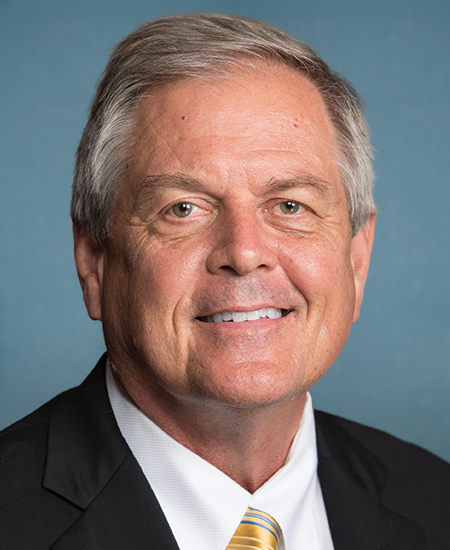
Rep. Ralph Norman
Sponsored bills
National Patient ID Repeal Act This bill repeals the requirement that the Department of Health and Human Services adopt a standard unique health identifier for each individual, employer, health plan, and health care provider. The provision has not been implemented to date because language included in annual appropriations acts has prohibited the use of federal funds for developing a unique identifier. However, some appropriations bills introduced in recent years have not included this funding restriction.
National Informed Consent Exemption (NICE) Act This bill restricts the federal government and federally funded entities from mandating that U.S. citizens receive a vaccination or a test for an infectious disease in order to participate in federal programs or activities such as travel. It also specifies that laws, regulations, or policies that discriminate on the basis of a citizen's vaccination status are unenforceable, subject to limited exceptions. The bill establishes a national vaccination exemption that may be exercised by any individual, including on behalf of the individual's children or dependents. Further, the bill prohibits vaccinating a child without the consent of each parent or guardian. One parent or guardian may consent if the other parent or guardian received, at least three days prior, written notice of the child's vaccination appointment. The bill's provisions do not apply (1) to lawfully incarcerated or institutionalized individuals, (2) to a specific individual subject to an individualized court order that meets due process protections, or (3) during declared emergencies if the jurisdiction's governing authority formally applies to the President for an exception to the national vaccination exemption that meets specified standards. An aggrieved individual may enforce the bill through a private right of action. Additionally, an entity that provides false information to influence an individual's decision about receiving a vaccine shall be liable for damages resulting from the vaccination. The Surgeon General must establish an independent commission to evaluate the safety of COVID-19 vaccines and other vaccines recommended by the Centers for Disease Control and Prevention.
No Vaccine Mandate Act This bill prohibits certain funding made available for the Departments of Labor, Health and Human Services, and Education and related agencies from being used for implementing or enforcing a rule that requires a COVID-19 vaccine.
Maddy summaryHRES 754 is a non-binding resolution expressing the House of Representatives' opposition to proposed "punitive natural gas taxes" on U.S. businesses, families, and workers. It cites claims that such taxes would raise average energy bills by 17%, reduce GDP by $9 billion, and eliminate 90,000 jobs, while disproportionately harming low-income households. The resolution argues that opposing these taxes supports U.S. energy security, national security, and continued leadership in reducing emissions through domestic natural gas production. As a procedural resolution, it does not create law but formally states the House's position against this policy approach.
Nullify Occupational Safety and Health Administration Act or the NOSHA Act This bill abolishes the Occupational Safety and Health Administration (OSHA). OSHA, which is part of the Department of Labor, sets and enforces workplace safety and health standards and provides related training, outreach, education, and assistance.
Promoting Responsibility Over Moderation In the Social-media Environment Act or the PROMISE Act This bill requires interactive computer services (e.g., social media companies) to establish and publicly disclose policies for moderating content on their services. This includes the categories of information that are not permitted on the service, the process by which information posted on the service is moderated, and how the service provider notifies users that information has been moderated. These moderation policies are enforced by the Federal Trade Commission.
This bill prohibits the use of federal funds to require a member of the Armed Forces to receive a COVID-19 vaccination. The bill also prohibits adverse action (e.g., punishment) being taken against a member of the Armed Forces because the member refuses to receive a COVID-19 vaccination.
Stop Appropriations for Obsequy Costs Act or the Stop AOC Act This bill prohibits the use of federal funds for financial assistance to an individual or household for funeral expenses if the eligibility for such assistance is derived from a cause of death related to COVID-19.
Fire Fauci Act This bill reduces the annual rate of pay of the Director of the National Institute of Allergy and Infectious Diseases (NIAID) to $0. This reduction applies until there is a new director who is not Anthony Fauci, MD. In addition, the Government Accountability Office must audit digital correspondence, policy memoranda, and financial transactions of the Office of the Director of NIAID from October 1, 2019, through December 31, 2021.