

Maddy summaryHRES 1114 is a non-binding House resolution expressing support for recognizing "National Police Week" as a way to honor law enforcement officers across the United States. The resolution acknowledges the service and sacrifices of law enforcement officers, particularly those who have died in the line of duty, and specifically references 619 officers who died in 2021 as listed in the resolution. This resolution does not create new laws or allocate funds but serves as a symbolic gesture to encourage public recognition of law enforcement personnel. It calls for Americans to observe National Police Week by honoring officers and raising awareness about their essential role in community safety. The resolution was introduced by multiple members of Congress and referred to the Committee on the Judiciary.
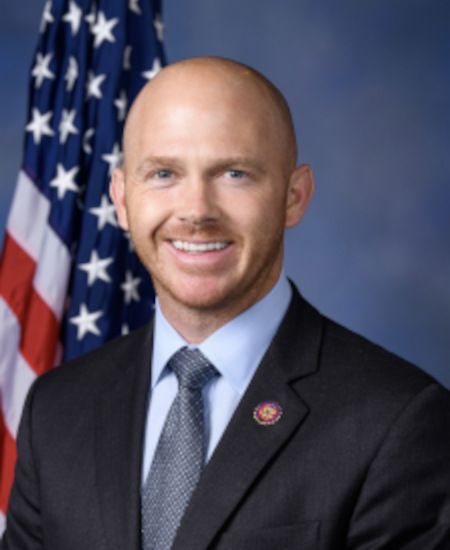
Rep. William R. Timmons IV
Sponsored bills
Protect Children's Innocence Act This bill places restrictions on the provision of gender affirming care. Gender affirming care includes performing surgery, administering medication, or performing other procedures for the purpose of changing the body of an individual to correspond to a sex that differs from the individual's biological sex. Specifically, the bill makes it a felony to perform any gender affirming care on a minor and it permits a minor on whom such care is performed to bring a civil action against each individual who provided the care. Additionally, the bill prohibits the use of federal funds for gender affirming care or for health insurance that covers such care. Such care may not be provided in a federal health care facility or by a federal employee. The bill also prohibits qualified health plans from including coverage for gender affirming care. Further, plans that include coverage for such care are not eligible for federal subsidies. Finally, the bill prohibits institutions of higher education from offering instruction in gender affirming care. It also makes any non-U.S. national ( alien under federal law) who performs gender affirming care on a minor deportable and inadmissible to the United States. The restrictions under this bill do not apply to the provision of care under certain circumstances such as when an individual does not have normal sex chromosome structure, sex steroid hormone production, or sex steroid hormone action.
American Confidence in Elections Act or the ACE Act This bill addresses election administration and security, campaign finance, and other related provisions. Among other provisions, the bill reduces certain election assistance payments for states and local jurisdictions that allow noncitizens to vote in state and local elections, establishes certain requirements related to election and political mail, prohibits foreign nationals from making contributions or donations in connection with state or local ballot initiatives or referenda, repeals certain limits on coordinated party expenditures and aggregate contributions by individuals, terminates the Presidential Election Campaign Fund and requires remaining funds to be transferred to the 10-Year Pediatric Research Initiative Fund, and prohibits the use of federal funds to establish a Disinformation Governance Board.
Residential Protest Prohibition Act of 2022 This bill establishes a new criminal offense for picketing or protesting before or about the dwelling of any person with the intent to harass or disturb that person in his or her dwelling. A violation is subject to a fine and a prison term of not more than one year.
Safety From Violence for Healthcare Employees Act or the SAVE Act This bill establishes a new criminal offense for knowingly assaulting or intimidating hospital personnel during the performance of their official duties in a manner that interferes with their performance of the duties or limits their ability to perform the duties. Additionally, the bill authorizes grants to reduce the incidence of violence at hospitals, including violence or intimidation against hospital personnel in the performance of their duties.
Secure Every School and Protect Our Nation’s Children Act or the STOP II Act This bill reauthorizes and supports various grants to enhance school safety and security initiatives. It also provides statutory authority for the federal clearinghouse of school safety resources. (The clearinghouse identifies and publishes best practices and recommendations for school safety for use by state and local educational and law enforcement agencies, institutions of higher education, health professionals, and the public.)
Leak and Lose Act of 2022 This bill establishes federal criminal offenses for acts involving the concealment, removal, or destruction of an opinion or draft opinion of the Supreme Court before it is published. Specifically, the bill prohibits the willful and unlawful (1) concealment, removal, mutilation, obliteration, or destruction of an opinion or draft opinion; (2) attempt to conceal, remove, mutilate, obliterate, or destroy an opinion or draft opinion; and (3) taking or carrying away of an opinion or draft opinion with the intent to conceal, remove, mutilate, obliterate, or destroy. An individual who violates the prohibition is subject to a $5,000 fine and, if applicable, the permanent forfeiture of his or her admission to federal courts for the practice of law.
Supreme Court Police Parity Act of 202 2 This bill grants the Marshal of the Supreme Court and the Supreme Court Police the authority to protect any member of the immediate family of the Chief Justice, any Associate Justice, or any officer of the Supreme Court if the Marshal determines that such protection is necessary.
Traveler's Gun Rights Act This bill allows an individual who does not have a physical residence in a state to use the address for a private mailbox or post office box maintained by that individual for purposes of obtaining a firearm from a federally licensed dealer.
Build the Wall Now Act This bill addresses issues related to the construction of a barrier along the U.S.-Mexico border, such as (1) requiring the Department of Homeland Security to resume any project related to the construction of such a barrier (and any related infrastructure); and (2) exempting such construction projects from various legal requirements, including requirements stemming from the Administrative Procedure Act, the Clean Air Act, and the Clean Water Act.