Investing in Our Communities Act This bill reinstates the exclusion from gross income for interest on certain bonds issued to advance the refunding of a prior bond issue. The exclusion was repealed for bonds issued after 2017.
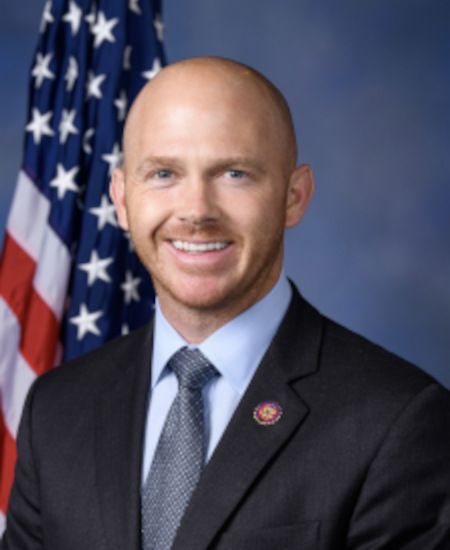
Rep. William R. Timmons IV
Sponsored bills
Maddy summaryHR 1831 would award Billie Jean King a Congressional Gold Medal to honor her lifelong advocacy for equal rights in sports and society. The bill directs the Secretary of the Treasury to strike the medal and have it presented by congressional leaders, recognizing her pivotal role in advancing women's equality through tennis (including founding the Women’s Tennis Association and securing equal prize money) and her broader impact on society through initiatives like Title IX advocacy.
Let Experienced Pilots Fly Act of 2023 This bill raises the mandatory retirement age for pilots engaged in commercial aviation operations from 65 to 67 years of age, unless the operation takes place in (1) the territorial airspace of a foreign county where such operations are prohibited by the foreign country, or (2) international airspace where such operations are not in compliance with the Annexes to the Convention on International Civil Aviation. The Federal Aviation Administration must also submit a report to Congress on further increasing the age limitation for pilots engaged in commercial aviation operations.
Maddy summaryHCONRES 28 is a symbolic resolution expressing Congress's view that tax-exempt fraternal benefit societies - organizations providing life, health, and accident benefits to members - have long delivered critical community support. It states these societies, with about 7 million members nationwide, generate significant annual value through charitable work and volunteer activities (estimated at over $3.8 billion yearly). The resolution affirms that their tax-exempt status under Section 501(c)(8) of the tax code is essential for sustaining their volunteer-driven model and relieving pressure on government safety programs. As a non-binding expression of congressional sentiment, it does not alter existing laws or create new obligations.
Maddy summaryThe Kids in Classes Act requires states receiving Title I federal education funds to provide those funds directly to parents and guardians if in-person instruction is unavailable for more than three days during a school year due to public health emergencies or collective bargaining actions. This provision allows families to use the money for educational expenses such as tutoring, curriculum materials, online learning resources, private school tuition, and educational therapies for students with disabilities. The bill is designed to ensure that disadvantaged students, who are disproportionately affected by school closures, continue to receive educational support when regular classroom instruction is not available. By mandating that Title I funds follow eligible children, the legislation aims to prevent widening educational gaps between low-income students and their peers during periods when schools cannot operate normally.
Building Credit Access for Veterans Act of 2023 This bill requires the Department of Veterans Affairs (VA) to implement a pilot program to assess the feasibility and advisability of using alternative credit scoring information or models to improve the determination of creditworthiness of certain individuals and to increase the number of such individuals who are able to obtain VA housing and small business loans. Specifically, the program is for veterans or members of the Armed Forces who are eligible for VA housing or small business loans and have insufficient credit history. Under the program, the VA must assess the feasibility and advisability of establishing criteria for acceptable commercially available credit scoring models to be used by lenders for the purpose of guaranteeing or insuring a VA housing or small business loan. Participation is voluntary on an opt-in basis for lenders, borrowers, and individuals. The VA must conduct outreach to lenders and individuals to inform them of the pilot program.
Maddy summaryHR 1141, the Natural Gas Tax Repeal Act, repeals a specific provision (Section 136) of the Clean Air Act that established an incentive program for reducing methane emissions and waste in natural gas systems. This bill directly affects natural gas producers and operators who previously participated in or were subject to the methane emissions reduction program. The key mechanism is the removal of this incentive program, eliminating federal requirements and financial incentives related to methane waste reduction for the natural gas industry. The bill also rescinds unobligated funds allocated for this program. This is a policy change removing a regulatory incentive, not a tax repeal.
Maddy summaryThe Build the Wall Now Act requires the Department of Homeland Security to immediately resume construction of physical barriers (such as reinforced fencing and levee walls), tactical infrastructure (including access gates and lighting), and border surveillance technology along the US-Mexico border that was underway or planned before January 20, 2021. It prohibits canceling existing contracts for border barrier projects and mandates using funds appropriated for border construction since October 2016. The bill grants the Secretary of Homeland Security new authority to waive numerous environmental, historic preservation, and land management laws to expedite construction, including exemptions from the Clean Air Act, Endangered Species Act, and National Environmental Policy Act. It also prohibits using federal funds to implement or enforce Presidential Proclamation 10142 from January 2021.

No Federal Funds for Abortion Travel Expenses Act of 2023 This bill prohibits the use of federal funds to support interstate travel to obtain an abortion.
Maddy summaryThis bill authorizes a Congressional Gold Medal to honor the "Hello Girls" - female telephone operators who served in the Army Signal Corps during World War I. They provided critical battlefield communications in France (connecting 26 million calls), wore military uniforms, and faced combat risks, but were denied veteran benefits for 60 years due to being classified as civilian contractors. The medal recognizes their pioneering service, devotion, and the decades-long struggle to gain military recognition. The award follows similar recognition for other WWII women veterans and aims to correct the historical injustice they faced.