

Maddy summaryHRES 927 is a symbolic resolution passed by the U.S. House of Representatives condemning antisemitism on college campuses and criticizing the testimony of three university presidents (Harvard’s Claudine Gay, MIT’s Sally Kornbluth, and Penn’s Elizabeth Magill) before the House Education Committee. It specifically addresses their evasive responses when asked whether calls for the genocide of Jews violate campus policies, noting their statements about "context" and lack of clear condemnation. The resolution does not create new laws or policies but formally expresses the House’s stance against antisemitism and holds university leadership accountable for their testimony. It directly affects the referenced university presidents and their institutions by publicly criticizing their handling of campus antisemitism.
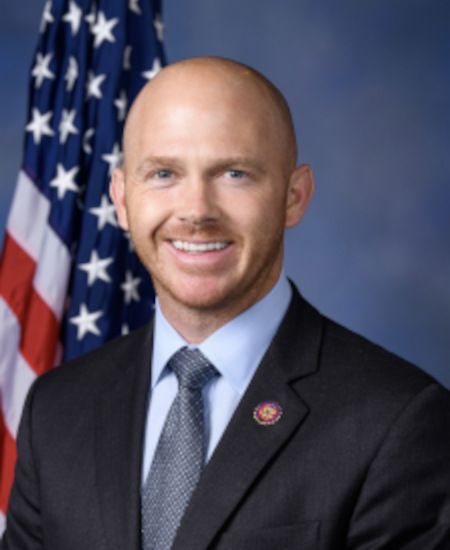
Rep. William R. Timmons IV
Sponsored bills
Maddy summaryHR 6734 prohibits the use of federal funds to finalize, implement, or enforce the Bureau of Alcohol, Tobacco, Firearms, and Explosives' (ATF) proposed rule (2022R-17) defining "engaged in the business as a dealer in firearms." This bill directly affects the ATF by blocking funding for this specific regulatory rule, which was proposed in August 2023. The legislation does not create new requirements but prevents federal resources from being used to advance this particular ATF regulation.
Maddy summaryHR 6728, the Save Women’s Sports Act of 2023, requires schools receiving federal funding to designate athletic teams as male, female, or coed based strictly on biological sex at birth. Female-designated teams must be composed exclusively of students biologically female at birth. Schools failing to comply risk losing all federal financial assistance. The bill directly affects public and private schools participating in federally funded sports programs.
Maddy summaryHRES 921 is a ceremonial resolution honoring the 30th anniversary of the National Guard Youth Challenge Program. It recognizes the program’s work supporting at-risk youth aged 16-18 by providing free, structured education and discipline through a 5.5-month residential phase (covering life skills, leadership, academics, and physical fitness) followed by a 12-month mentoring phase. The resolution highlights that the program, operating in 28 states and territories, has served over 8,000 cadets annually and helped more than 200,000 youth graduate with academic credentials since its inception. The resolution expresses the House’s reaffirmed commitment to the program’s mission of developing character and preparing youth for societal success.
Maddy summaryHR 6625, the Chinese Spy Balloon Assessment Act, requires the Secretary of Defense to submit a report to Congress within 90 days of the bill's enactment. The report must detail the national security effects of surveillance conducted by China via a high-altitude balloon shot down in U.S. airspace in February 2023, including impacts on military installations and an analysis of recovered technology's country of origin. This bill directly affects the Department of Defense and Congress by mandating a specific, time-bound assessment of a single incident. It does not create new policies or funding but establishes a procedural requirement for transparency about the 2023 balloon event. The report must be unclassified, though it may include a classified annex.
Maddy summaryThis bill restores the Office of Innovation within the Consumer Financial Protection Bureau (CFPB) and revives three specific regulatory tools established in 2019. It terminates the Bureau's separate "Office of Competition and Innovation" and requires the restored Office to reinstate the Compliance Assistance Sandbox (allowing companies to test new products with limited oversight), the No Action Letter Policy (providing clarity on regulatory compliance), and the Trial Disclosure Policy (testing new consumer disclosure methods). These provisions directly affect financial service companies seeking to innovate in consumer financial products while operating under CFPB guidance. The bill mandates these policies be fully operational within 180 days of enactment, aiming to streamline regulatory engagement without altering the Bureau's core mission.
Maddy summaryHRES 905 is a House resolution commemorating the 200th anniversary of the Monroe Doctrine, first articulated by President James Monroe in 1823. The resolution formally recognizes the doctrine's historical significance in establishing U.S. policy against foreign colonization in the Western Hemisphere and its enduring influence on U.S. foreign policy. It resolves that the House will "commemorate" the anniversary, "reassert" the U.S. position against foreign malign influence threatening Western Hemisphere democracies, and "recognize" the doctrine's principles as a foundational element of U.S. foreign policy. This is a purely ceremonial resolution with no new policy or funding implications.
Maddy summaryHR 6459, the "No Abortion Coverage for Medicaid Act," permanently prohibits Medicaid and CHIP funds from covering abortions, except in specific medical circumstances. It directly affects Medicaid recipients and state Medicaid programs by blocking federal funding for abortion services, including travel or lodging to obtain one, and prevents states from using Medicaid demonstration waivers to expand abortion coverage. The bill codifies the existing Hyde Amendment restrictions, ensuring taxpayer dollars cannot pay for abortions except when a pregnancy results from rape or incest, poses a life-endangering physical condition, or involves miscarriage or ectopic pregnancy. This policy change would restrict abortion coverage under Medicaid nationwide, with exceptions limited to the three medical scenarios outlined in the bill.
Maddy summaryThis bill prohibits the use of federal funds to cover abortions or related expenses (like travel or lodging) for unaccompanied immigrant minors. It directly affects unaccompanied alien children, as defined by immigration law, by blocking federal rules or guidance that would facilitate access to abortion services for them. The key provision bans the Health and Human Services Secretary from issuing, implementing, or enforcing any rule that enables such access using taxpayer money. This is a policy change limiting federal funding for abortion-related costs for this specific group, not a general abortion ban.
Maddy summaryThis bill appropriates $14.3 billion in supplemental security funding to Israel following the October 7, 2023 attacks. The funding includes $4 billion for Iron Dome and David's Sling defense systems, $1.35 billion for the Iron Beam defense system development, and $3.5 billion for foreign military financing. The bill requires regular reporting to Congress on security assistance provided to Israel and designates all funds as "emergency requirements" under federal budget law. It also modifies existing laws to facilitate the transfer of defense articles and services to Israel, aiming to strengthen Israel's defense capabilities against rocket threats.